
Chinese state-owned companies are resuming oil purchases from Russia
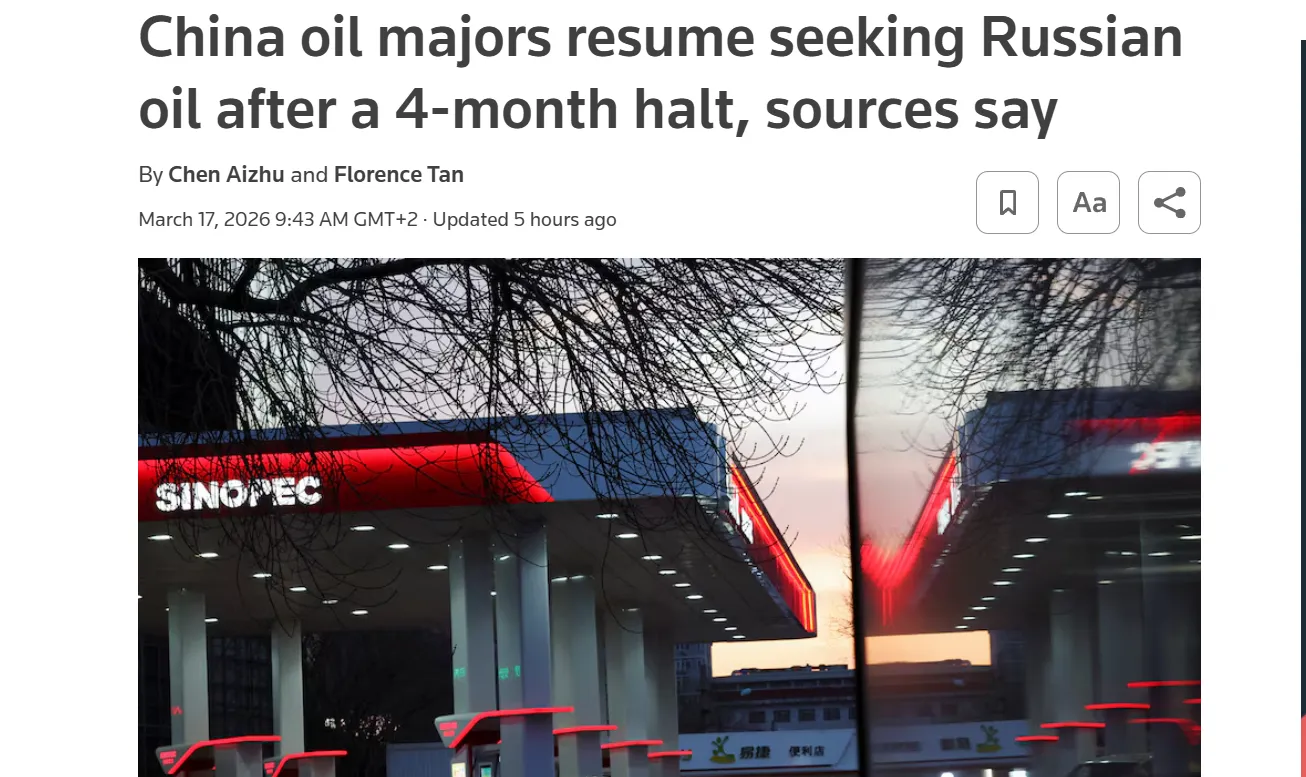
China's leading state-owned oil giants plan to resume imports of Russian crude oil after a four-month hiatus.
This decision is driven by an acute shortage of energy resources on the global market, caused by the outbreak of full-scale war between the U.S. and Iran in late February.
According to Reuters, subsidiaries of Sinopec and PetroChina have already approached suppliers to discuss new contracts.
This could mark the first official return of Chinese state-owned traders to purchasing Russian oil since last November.
Despite the general rise in energy prices, Russian crude remains more economically advantageous for Beijing than alternatives.
Supplies from Brazil or West Africa are currently significantly more expensive, forcing China to seek ways to circumvent the restrictions.
To implement these plans, the Chinese side is taking advantage of a 30-day period of relaxation of U.S. sanctions that began on March 12.
This “window” allows for legal transactions involving already loaded oil shipments, which significantly simplifies financial settlements.
A representative of Chinese state-owned traders confirmed that companies are currently evaluating payment and logistics options in detail.
Experts are trying to make the most effective use of the temporary easing of U.S. sanctions pressure to replenish their own reserves.
To compare the economic benefits: the Russian ESPO blend is offered at a premium of about $8 per barrel to the ICE Brent contract.
At the same time, the similar Brazilian Tupi grade is priced significantly higher—at a premium of $12–15, making Beijing’s choice obvious.
In addition to direct contracts, large corporations are considering purchasing options through intermediaries—independent refineries.
Some private Chinese companies already have allocated volumes of Russian oil that they are ready to resell to state-owned giants.
“Some independent refiners are willing to resell oil because it brings them more profit than refining,” a source told Reuters.
This scheme allows major players to avoid direct reputational risks while maintaining the necessary supply pace.
Recall: Record-breaking oil price hikes: what’s happening, who stands to gain, and what to expect.
Also, Russian oil prices in India have reached a historic high amid the easing of sanctions.
