
Key goals of Trump’s Gaza plan remain unfulfilled after a year — Jerusalem Post
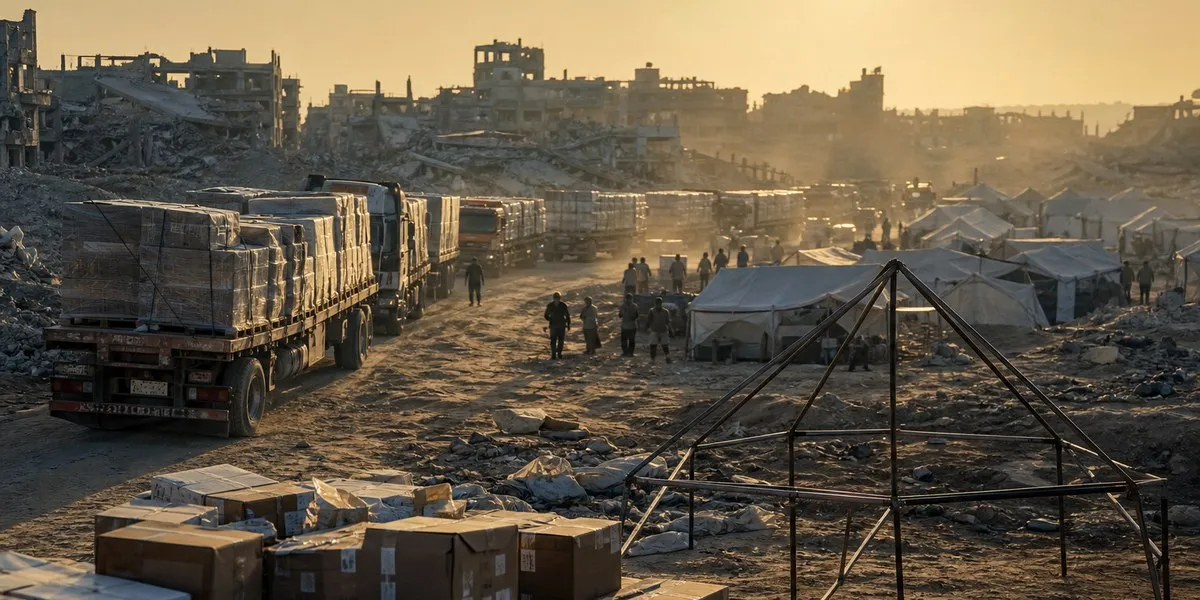
In Israel and the Gaza Strip, a year after the launch of US President Donald Trump’s plan to end the war, its key objectives have not been fulfilled: Hamas has not been disarmed, Israeli troops control about two-thirds of the territory, and reconstruction remains far from meeting needs. This was reported by The Jerusalem Post.
The initial phase of the 20-point plan provided for the cessation of military operations, a partial withdrawal of Israeli forces, an exchange of hostages and prisoners, and an increase in humanitarian aid. The ceasefire began on October 10, 2025. At that time, the last hostages seized during Hamas’s attack on Israel in 2023 were released in exchange for hundreds of Palestinian prisoners and detainees held in Israel.
Strikes and territorial control
Full-scale hostilities have not resumed, but Israeli strikes on the Gaza Strip continue. Gaza’s Hamas-controlled Health Ministry says that at least 1,400 Palestinians have been killed since the ceasefire, including many women and children. The ministry does not provide separate data on casualties among members of the group.
Israel says it is striking Hamas, accusing the group of attempting to carry out attacks and rearm. According to the Israel Defense Forces, five Israeli servicemen have been killed since the ceasefire began — in attacks and in combat.
The plan envisaged the withdrawal of Israeli forces to the so-called Yellow Line, beyond which they were to retain control of 53% of the Gaza Strip. Since then, Israeli forces have expanded their effective control to approximately two-thirds of the territory. Israel-backed Palestinian groups opposed to Hamas are launching attacks from this zone on areas controlled by the group.
More current news is available on the UA.News Telegram channel Telegram.
Aid, disarmament and reconstruction
According to an assessment by the global IPC food security monitoring system, more than 1.2 million people in Gaza still face acute hunger despite increased aid volumes. An August IPC report said that from the start of the ceasefire through the end of May, an average of 227 trucks carrying humanitarian and commercial cargo arrived in Gaza daily — less than half of the minimum 600 trucks stipulated by the plan.
Israel, in turn, says that about 600 trucks carrying humanitarian and commercial goods enter Gaza every day and that these deliveries are sufficient for the population’s needs. Humanitarian organizations say Israel restricts the import of certain necessary items, including metal tent poles, engine lubricant and spare parts, over concerns about their possible military use by Hamas.
Trump said that Hamas and other groups had agreed to the Board of Peace’s 15-point roadmap for surrendering weapons. Hamas said it was ready to hand over weapons for safekeeping to a US-backed Palestinian technocratic government but did not agree to call this disarmament. Israel called such a plan unacceptable and said it would not withdraw its troops until Hamas is fully disarmed.
The temporary International Stabilization Force has not yet been formed. US Major General Jasper Jeffers was appointed its commander; Indonesia, Morocco, Kazakhstan, Albania, Kosovo and Uganda have pledged to provide personnel. The long-term plan calls for 20,000 military personnel and the training of 12,000 Palestinian police officers. In September, the Board of Peace presented a $2.45 billion plan for Gaza’s initial reconstruction, while the EU and UN in April estimated recovery needs for the next decade at $71.4 billion.




