
Columnist urges EU to develop battery production — Taipei Times
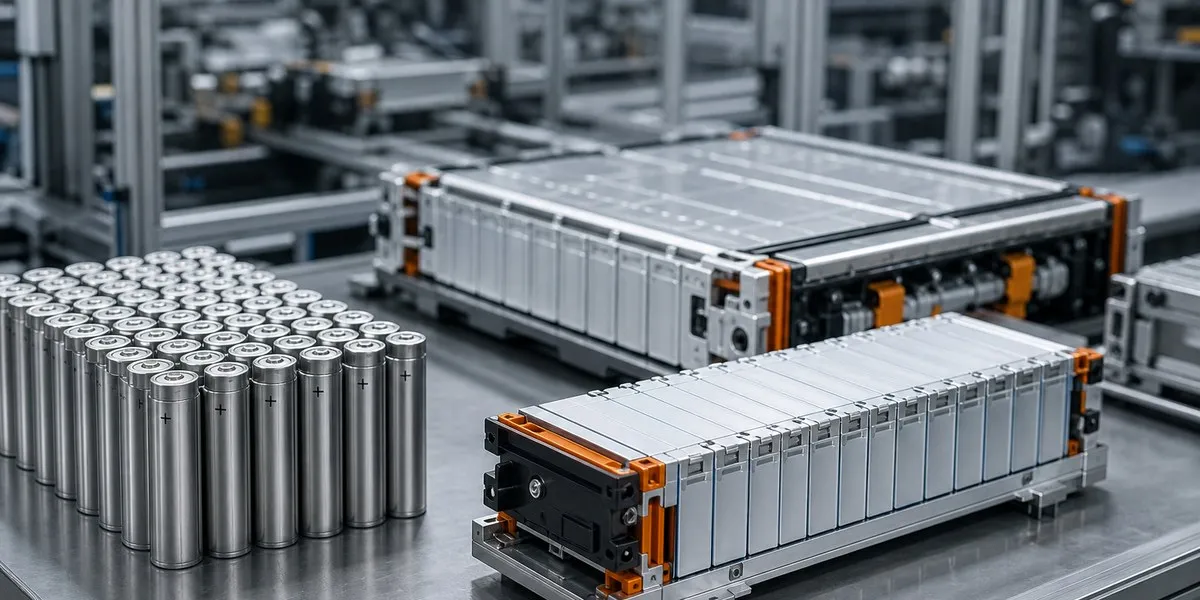
Taiwanese outlet Taipei Times published a Bloomberg Opinion column in which David Fickling argues that the European Union should focus on developing its own battery production rather than only restricting imports of Chinese electric vehicles. According to the author, the current policy protects automakers while preserving their dependence on cheaper Chinese batteries.
In 2024, the EU introduced tariffs on Chinese electric vehicles, which in some cases reached 45%. Fickling estimates that imports of hybrid vehicles, which are not covered by such tariffs, increased afterward. Chinese car brands account for 6.6% of sales in the EU, while the share of Chinese batteries in the local market has nearly doubled in two years and exceeded 50%.
Batteries as an industrial priority
The author notes that batteries are the foundation of an industrial chain that encompasses not only passenger cars, but also trucks, ships, drones, power grids and data centers. According to his data, Europe produces nearly nine times more rechargeable vehicles than in 2019, while production of vehicles with traditional engines has declined by about 40%.
More current news is available on the UA.News Telegram channel Telegram.
According to Bloomberg, European passenger cars may require another 255 gigawatt-hours of batteries over the five years through 2031. The forecast for China over the same period is 250 gigawatt-hours.
Plans of European manufacturers
Fickling points out that Automotive Cells Co, a joint venture of Stellantis, Mercedes-Benz Group and TotalEnergies, has reduced its planned scale to about a quarter. At the same time, its investors have established cooperation with China’s CATL. Volkswagen, through PowerCo SE, postponed four planned gigafactories in favor of cooperation with CATL and Gotion High-Tech.
The columnist proposes increasing funding for the EU’s Battery Booster program from €1.5 billion to €10 billion and supporting companies until they reach a capacity of 100 gigawatt-hours. In his view, if subsidies are clearly established, countervailing tariffs should be applied to Chinese batteries rather than to cars in general. He also believes that Chinese investment and technological expertise could be useful for developing the European industry.




