
Russian trawlers operated over Britain’s cables more than 500 times — Anadolu Agency
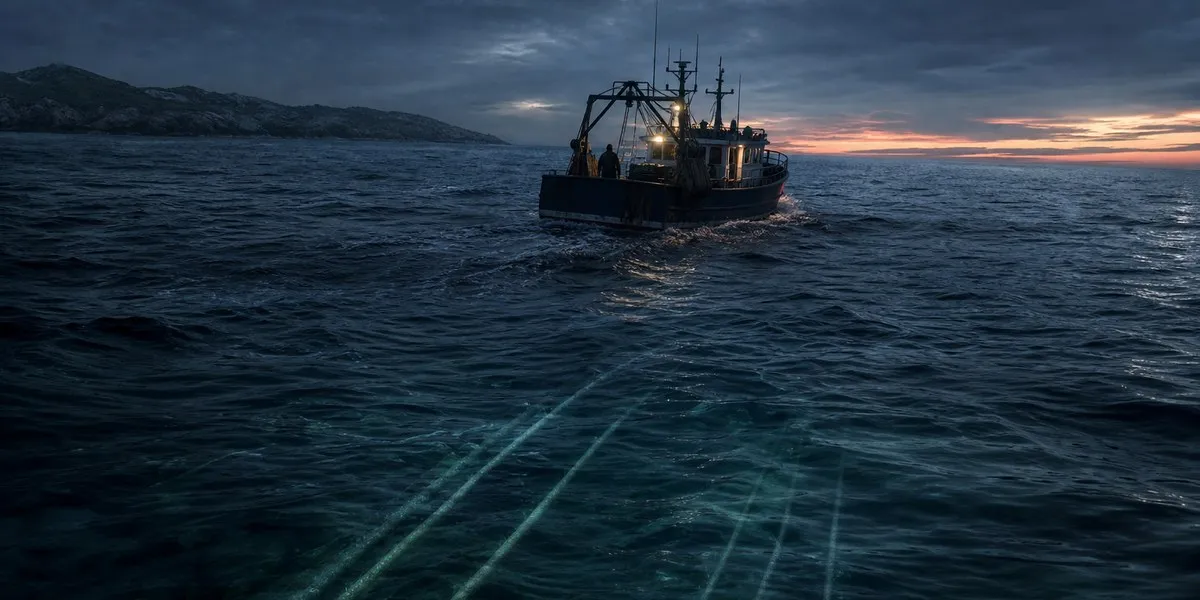
In the United Kingdom, more than 500 cases have been identified in which trawlers from Russia, the aggressor state, operated over critical undersea communications cables connecting the country with Europe and the United States. Anadolu Agency reported this, citing an investigation by The Telegraph and data from the vessel-tracking platform Global Fishing Watch.
Vessel movement data
According to Global Fishing Watch, Russian trawlers systematically tracked cable routes for four and a half years. A NATO source told The Telegraph that the Alliance is aware of the activity of Russian civilian fishing vessels and their locations. According to the source, there “has never been a single fish” on the decks of some of these vessels.
Protection of undersea infrastructure
In September, the United Kingdom, Norway and the United States conducted a joint operation during which they tracked and intercepted Russian underwater vehicles of the Main Directorate of Deep-Sea Research near the Arctic archipelago of Svalbard. According to Anadolu Agency, these vehicles were practising the deployment of secret weapons against cables.
More current news is available on the UA.News Telegram channel Telegram.
Former Minister for the Digital Economy Liz Lloyd said in May at the Royal United Services Institute that the United Kingdom already has strong protection for undersea cables, but the country cannot stop amid greater uncertainty. A spokesperson for the UK Ministry of Defence said the department takes a sober view of the threat posed by Russia.
The UK government has also published a White Paper proposing to update legislation that is more than 140 years old in order to strengthen the protection of critical undersea infrastructure. The initiatives include tougher penalties and new requirements for the telecommunications industry. Tanmanjeet Singh Dhesi, chair of the House of Commons Defence Committee, noted that insufficient protection of the High North could leave vulnerable the cables and pipelines through which vital data and energy reach Britain.




