
Kubilius stated that Article 5 of the NATO Treaty could be invoked in the event of a Russian strike on a factory in Europe
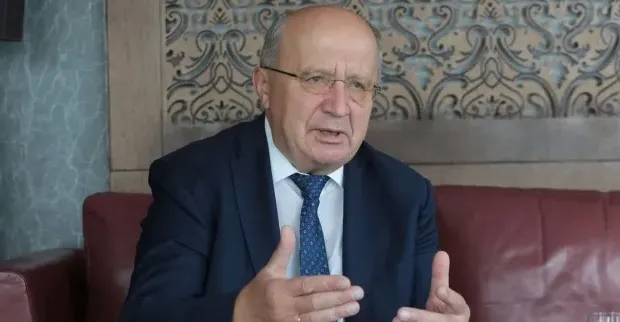
European Commissioner for Defense Andrius Kubilius stated that a Russian strike on an arms factory on the territory of a NATO country should serve as grounds for invoking Article 5 of the Alliance. This was his response to Moscow’s statements that European companies producing weapons for Ukraine could be considered Russian military targets. However, this is Kubilius’s personal position, not an official NATO decision.
European Commissioner for Defense and Space Andrius Kubilius stated that a Russian strike on an arms factory in Europe should trigger a military response from NATO. According to him, if Russia attacks a factory on the territory of a European country that is a NATO member, this could fall under Article 5 of the North Atlantic Treaty. Kubilius made these remarks to Polish television on the sidelines of a meeting of the European Parliament’s Committee on Security and Defense. “If Russia strikes our factories on European territory, it would fall under Article 5,” Kubilius stated.
Later, his aide clarified that the European Commissioner was referring specifically to an air or missile strike on a factory. In other words, he was not talking about just any incident at a facility, but specifically a direct military attack. Kubilius’s statement came after new threats from Russia. The day before, Russian Foreign Ministry spokeswoman Maria Zakharova stated that Moscow views European factories producing weapons for Ukraine as potential military targets.
Against this backdrop, Europe is also investigating a series of suspicious incidents at defense industry facilities. In particular, Estonia has reported a Russian connection to the arson attack on the building of the defense company Milrem Robotics in Tallinn. Similar cases are also being investigated in Bulgaria, Poland, Slovakia, and other countries. This is precisely why Kubilius’s remarks caught NATO’s attention. At the same time, he is not a representative of the Alliance and cannot independently determine when Article 5 will be invoked.
One NATO diplomat, quoted by Politico, reacted to Kubilius’s statement with irony: “When Kubilius becomes NATO Secretary General, he may be able to determine what exactly constitutes grounds for invoking Article 5 and what does not.” NATO emphasizes that Article 5 deliberately lacks a predefined scenario for automatic invocation. NATO Secretary General Mark Rutte previously explained that NATO does not disclose the specific circumstances under which Article 5 would be invoked, so as not to provide adversaries with additional information.
According to the NATO Treaty itself, Article 5 stipulates that an armed attack against one member of the Alliance is considered an attack against all. At the same time, assistance does not necessarily mean the automatic use of military force: each country determines the necessary actions to support an ally. A NATO spokesperson, in comments to Politico, also referred to Rutte’s earlier remarks that the wording of Article 5 intentionally leaves room for various response options.
Thus, Kubilius effectively outlined a potential red line for Russia: a direct missile or air strike against a defense facility on the territory of a NATO country, in his view, should be considered grounds for a collective response by the Alliance. At the same time, the final decision on invoking Article 5 is made by NATO member states, not the European Commission, according to Politico.
Russian President Vladimir Putin effectively rejected proposals for a mutual cessation of strikes on energy facilities in Russia and Ukraine. He also did not support the idea of halting strikes on ships in the Black Sea in exchange for stopping attacks on Russian oil refineries. During a speech at the Valdai Club, Putin called such a proposal illogical, and when asked directly if this meant “no,” he replied, “Yes, no.”




