
Kushner Combines Negotiations on Ukraine with a Billion-Dollar Business — The New Yorker
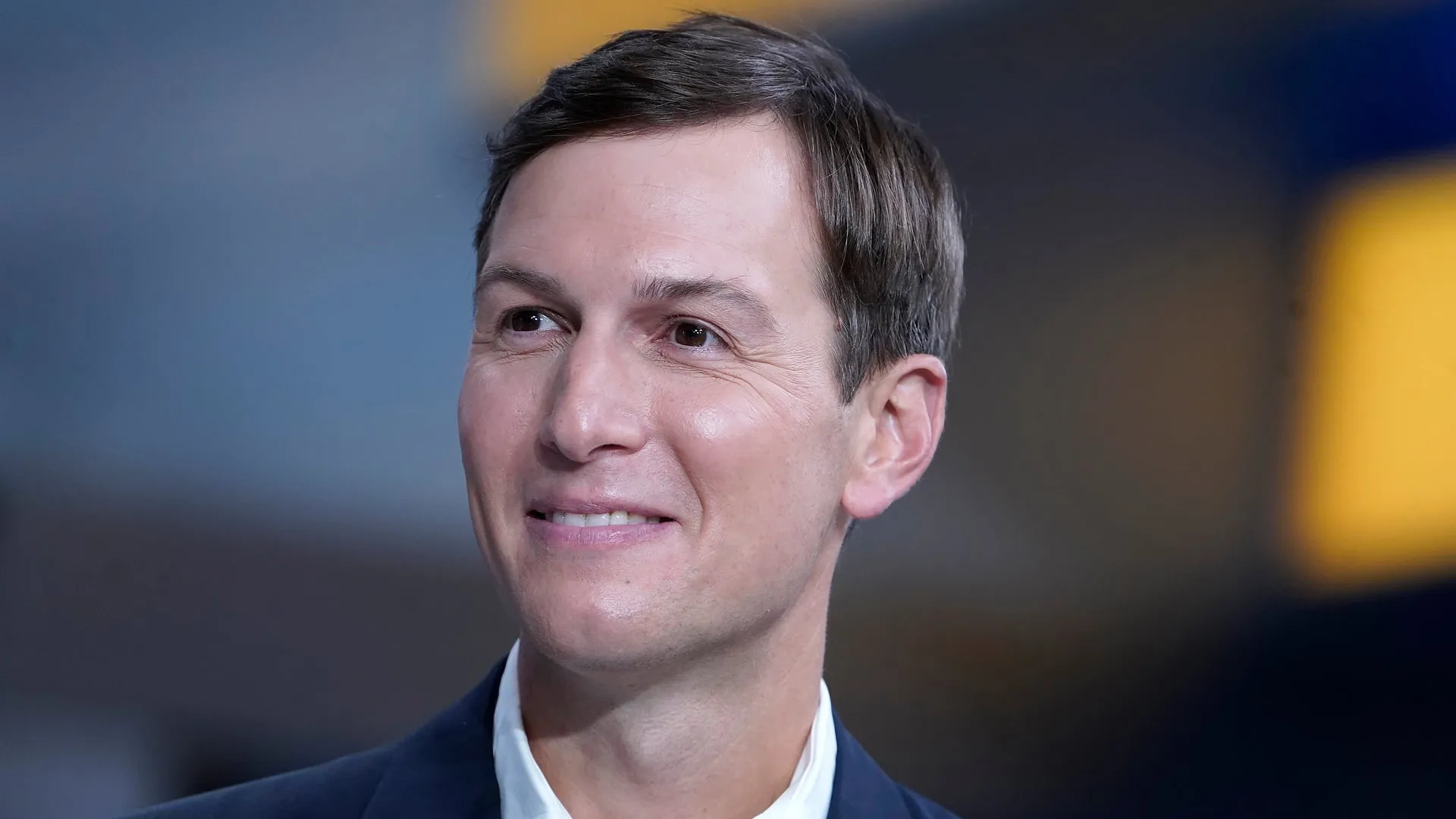
Jared Kushner, the son-in-law of U.S. President Donald Trump, has become one of the key informal diplomats in his second administration and is involved in negotiations regarding Ukraine, Iran, and the Middle East. At the same time, he continues to run the private investment fund Affinity Partners, which has received billions of dollars from Gulf states.
This is detailed in an in-depth investigation by journalist Dexter Filkins for *The New Yorker*. The author describes a model in which Kushner attempts to apply the principles of business negotiations to international conflicts while simultaneously maintaining extensive private financial interests.
One of the main points of the article is that, for Kushner, diplomacy is in many ways similar to real estate negotiations. He himself has said that peace agreements, like business deals, involve bargaining, pressure, and sometimes bluffing. With this approach, he considers knowledge of the conflict’s long history or all the technical details of negotiating positions to be less important than the ability to listen to the parties and find a compromise.
Kushner himself has repeatedly rejected criticism from traditional diplomats. Even during Trump’s first administration, he stated that previous American negotiators had been unable to resolve the problems of the Middle East for years, and therefore their experience was not necessarily an advantage.
Kushner and Witkoff began working on the Ukraine issue with little knowledge of the war
A separate section of the article is devoted to the Russia-Ukraine war. In late 2025, Kushner was brought into the negotiation process alongside U.S. President’s Special Envoy Steve Witkoff.
A former high-ranking official in the Trump administration, quoted by *The New Yorker*, claims that when they first began working on the Ukrainian issue, both negotiators had a limited understanding of the war. According to the publication’s source, they viewed the negotiations primarily through the lens of a business deal.
“They think this is a real estate deal. It seems they don’t understand that this is a war,” the former U.S. official said.
After meetings with representatives from Ukraine and Russia in Florida, Kushner and Witkoff presented a draft peace plan. According to The New Yorker, it called for significant concessions from Ukraine—including territorial ones—a renunciation of NATO membership, and a substantial reduction of the Ukrainian military.
White House Press Secretary Caroline Levitt described the proposal at the time as a good plan for both Ukraine and Russia. However, once details emerged, the plan drew significant criticism.
The New Yorker also reports on an unnamed document from a European intelligence service. According to the publication’s source, it contained information about potential economic projects between American and Russian entities that could be implemented after a peace agreement was reached.
Among such projects, the article mentions the possible resumption of the “Nord Stream 2” project under U.S. control, ExxonMobil’s return to Sakhalin, oil production in the Sea of Okhotsk, and the possible unfreezing of some Russian assets.
At the same time, this claim is based on the contents of an unnamed intelligence report and the statements of a source interviewed by *The New Yorker*. A spokesperson for Kushner denied that U.S. officials stood to profit from potential deals with Russia.
During one of his recent trips to Kyiv, Kushner himself continued to speak about a possible end to the war in business terms.
“In the business world, you look at things in terms of a ‘win-win,’” he said.
Kushner and Witkoff discussed a “peace package” that, once the war ended, would allow Ukraine and Russia to focus on economic development and “mutual benefit.”
Before the war with Iran, U.S. negotiators arrived without a technical expert
Another major part of the report focused on the U.S.-Iran negotiations before the war began in February 2026. According to The New Yorker, Kushner and Witkoff met with the Iranian delegation in Geneva at a time when Washington was demanding that Tehran hand over its stockpiles of enriched uranium and cease further enrichment.
The negotiations involved extremely complex technical issues—the operation of centrifuges, uranium stockpiles, monitoring capabilities, and methods for verifying compliance with a potential agreement.
The New Yorker claims that there was no technical advisor present in the negotiating room with Kushner and Witkoff. The White House has denied this. One of the former diplomats also told the publication that when Iranian Foreign Minister Abbas Araghchi proposed possible concessions, the American negotiators were unable to immediately assess their true significance.
They sought advice from IAEA Director General Rafael Grossi, who participated in the process as a neutral party. The views of The New Yorker’s sources on whether a deal was actually possible differ.
After the talks, Kushner stated that Iran was merely trying to buy time. One former U.S. official agreed with this assessment and claimed that Tehran wanted to secure sanctions relief without actually dismantling its nuclear infrastructure.
At the same time, other experts considered Iran’s proposals substantial. In their assessment, Tehran was prepared, among other things, to completely suspend uranium enrichment and dilute its existing stockpiles.
A few hours after Kushner and Witkoff briefed Trump on the results of the negotiations, the U.S. and Israel launched strikes against Iran. One former White House official quoted by the publication emphasized that he did not hold Kushner and Witkoff directly responsible for the failure of the negotiations, but considered the decision to go to war too hasty.
Saudi Arabia invested $2 billion in Kushner’s fund
The authors’ main criticism concerns not only Kushner’s diplomatic style but also his business dealings. After Trump’s first presidential term ended in 2021, Kushner founded the private investment fund Affinity Partners. He soon approached the Saudi Arabian sovereign wealth fund with a request to invest $2 billion.
The Saudi fund’s internal investment committee initially opposed this decision. Documents that were previously made public cited concerns such as a lack of sufficient investment experience, high risk, and significant commissions.
However, the fund’s management ultimately approved the investment. The $2 billion Saudi investment was also mentioned in U.S. congressional documents. These documents noted that the deal was concluded despite the reservations of the Saudi PIF’s investment committee.
Subsequently, entities from the UAE and Qatar also invested in Affinity Partners.
In 2024, the Qatar Investment Authority and an entity from Abu Dhabi provided Affinity with an additional $1.5 billion. According to regulatory filings, assets under management at Kushner’s company had grown to approximately $4.8 billion by the end of 2024.
The fund received tens of millions of dollars in commissions
The article also cites data from an investigation by the U.S. Senate Finance Committee. According to the data, nearly three years after its launch, Affinity managed approximately $3 billion in client funds but had invested only about one-third of that capital.
At the same time, the fund had already earned about $157 million in fees. Some U.S. lawmakers speculated that large investments from Persian Gulf countries could give them additional leverage over Kushner.
Kushner himself rejects such claims. He insisted that the decisions he made while working in the Trump administration were in the interests of the United States. There is also no direct evidence that Saudi Arabia invested in his fund as a reward for specific political decisions.
Upon returning to diplomacy, Kushner retained his private investment fund
After the start of Trump’s second presidential term, Kushner rejoined the foreign policy team but does not formally receive a salary for his work. The White House uses this as an argument against claims of a conflict of interest.
However, experts on government ethics, as quoted by *The New Yorker*, believe that the absence of a salary does not solve the main problem: Kushner is working on relations with countries that are also major investors in his private business.
Former White House legal counsel Virginia Kanter told the publication that Kushner has significant financial incentives tied to the interests of his investors.
Kushner and Witkoff deny any conflict of interest. White House Press Secretary Caroline Levitt, for her part, emphasizes that Kushner volunteers his time to work for the administration and assists the president in international negotiations.
Kushner Proposed a $112 Billion Reconstruction Plan for Gaza
Kushner is applying a similar business approach to Gaza. At the World Economic Forum in Davos, he presented a concept for the post-war reconstruction of the territory called “Project Dawn.”
According to Kushner’s vision, new residential complexes, office towers, a high-speed railway, and large-scale infrastructure are to be built along the coast over the course of ten years. He estimated the program’s cost at $112 billion, a significant portion of which would be provided by international donors and countries in the region. At the same time, Kushner spoke of great opportunities for private investors.
Some former U.S. officials viewed the project with skepticism. However, a former high-ranking official in Joe Biden’s administration, quoted by The New Yorker, acknowledged the role of Kushner, Witkoff, and Trump in reaching agreements that helped reduce the intensity of hostilities in Gaza.
Kushner—an example of the new “dollar diplomacy”
The main point of The New Yorker’s article is that Kushner has become one of the most striking examples of the blurring of lines between private business and U.S. foreign policy. On the one hand, he has direct access to the U.S. president and participates in negotiations on major international conflicts—from Ukraine to Iran and Gaza.
On the other hand, his investment fund relies heavily on money from foreign governments, particularly Saudi Arabia, Qatar, and the UAE.
Kushner himself sees his business experience as an advantage. In his view, it is precisely his ability to think not as a traditional diplomat, but as a negotiator and entrepreneur, that allows him to find solutions that professional diplomats have been unable to achieve for years. Critics, however, argue that this model raises questions about the line between U.S. public policy and the private financial interests of those in the president’s inner circle. Kushner and the White House reject these allegations.




