
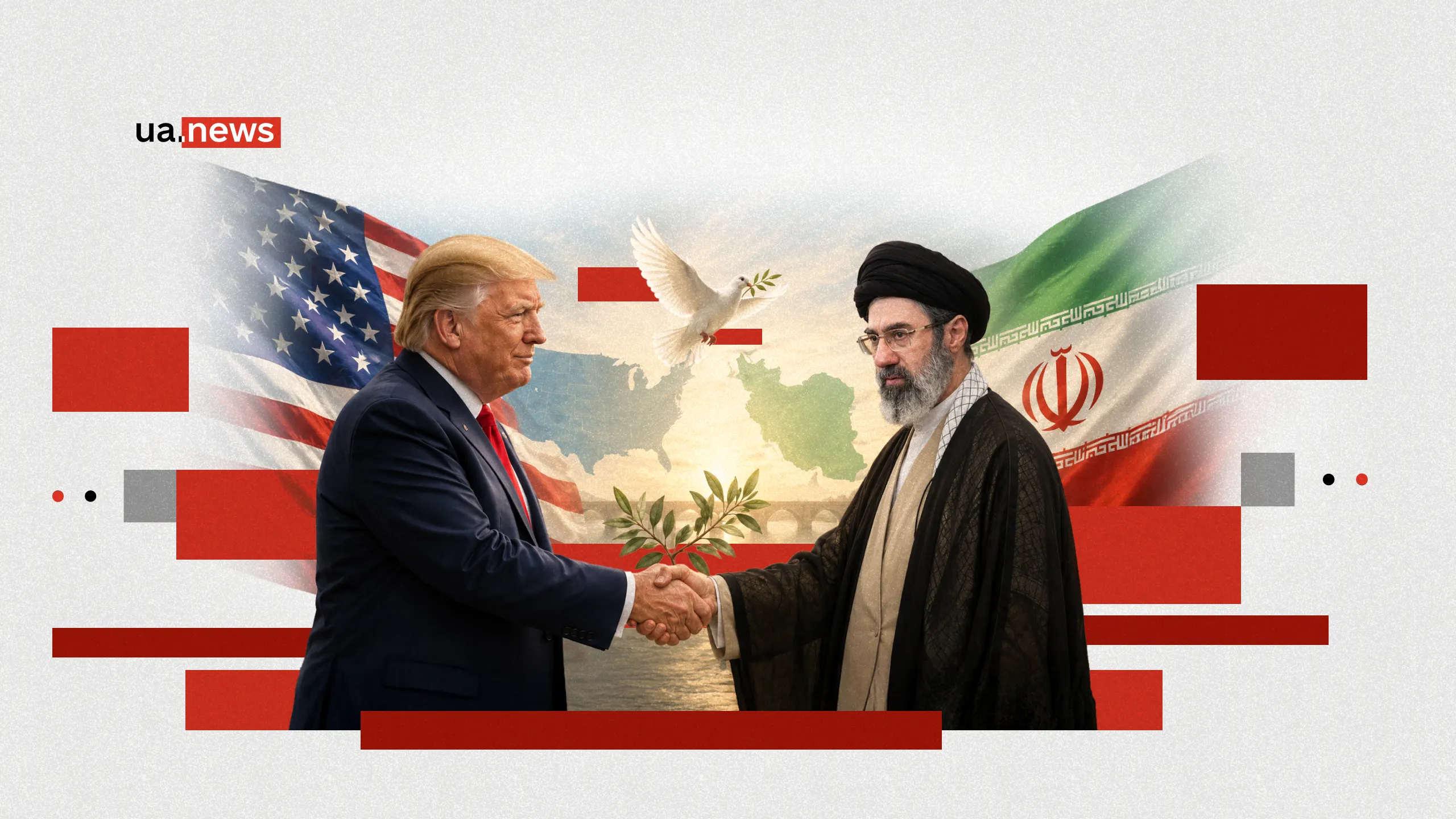
It appears that one of the most dangerous conflicts of recent times is nearing its end. After four months of fighting, missile strikes, a naval blockade, and diplomatic efforts, the United States and Iran are likely ready to sign a peace agreement. U.S. President Donald Trump announced on his social media platform Truth Social that the parties have reached an agreement that will completely prevent Iran from obtaining nuclear weapons—whether through development, purchase, or any other means. A separate clause emphasizes that after the agreement is signed, the Strait of Hormuz will be opened to all ships. Trump also added that Washington is counting on further cooperation with Iran and the countries of the Middle East, but in the event the agreements fail, there is a “final alternative,” which he described as a last resort.
This information was later confirmed by Pakistani Prime Minister Shahbaz Sharif, who noted that the official signing of the agreement is scheduled to take place in Switzerland on June 19. Pakistan has acted as a mediator in this dialogue—a role that once again underscores the tectonic shifts in global politics.
At the same time, Iranian media published their own version of the agreements, which shocked many observers. If this document truly reflects reality, the outcome of the war cannot under any circumstances be called a “U.S. victory.” Washington’s only achievement is Tehran’s formal renunciation of nuclear weapons, although the Islamic Republic had previously claimed that it was not developing weapons of mass destruction. In all other respects, we see a triumph of Iranian diplomacy and military resilience.
So what did this war, which began in February 2026, lead to? What are its true results, and who ultimately paid the highest price? UA.News political analyst Mykyta Trachuk examined the issue.
How the war began
The conflict between the U.S. and Iran had been smoldering for decades, but it reached a critical phase in February 2026. The formal pretext was the escalation surrounding Tehran’s nuclear program and accusations of supporting proxy forces in the Middle East. However, Washington’s real goals were far more ambitious: the Trump administration made no secret of its desire to dismantle the Iranian regime itself. The aim was a complete overhaul of the political landscape of the Islamic Republic of Iran, the destruction of the military capabilities of the Islamic Revolutionary Guard Corps (IRGC), and the creation of conditions for the emergence of a “new Iran”—preferably democratic, pro-Western, and free of nuclear ambitions.
The war began with massive airstrikes on Iranian infrastructure. The U.S. military planned a lightning campaign, counting on the regime to collapse under the pressure and begin to crumble from within. On the very first day, the U.S. managed to kill many prominent government officials, including the Supreme Leader, Ayatollah Ali Khamenei.
In response, Iran demonstrated something no one had expected: instead of collapsing from within, the country consolidated, and its military launched an asymmetric campaign, striking American bases in the region and the oil infrastructure of the Gulf monarchies. What was planned as a short, victorious operation turned into a grueling four-month war of attrition.

Iran’s 14 Points: Terms Dictated by the Victors
The version of the peace agreement published by Iranian media consists of 14 points. We will list them in full, as this list provides a comprehensive picture of who emerged from the war in a more advantageous position. Thus, the Mehr news agency provides the following provisions of the potential agreement:
1. A permanent and immediate cessation of hostilities on all fronts, including Lebanon (which Israel actively opposes);
2. The U.S. commits to not interfering in Iran’s internal affairs and to respecting its sovereignty;
3. Complete lifting of the naval blockade within 30 days;
4. The U.S. commits to withdrawing its troops from areas surrounding Iran;
5. Resumption of operations in the Strait of Hormuz within 30 days, subject to Iran’s consent;
6. Suspension of sanctions on oil sales;
7. The United States and its allies shall provide plans for Iran’s reconstruction totaling at least $300 billion;
8. Negotiations within 60 days to reach a final agreement on nuclear issues;
9. Iran reaffirms its commitment to the Treaty on the Non-Proliferation of Nuclear Weapons and pledges not to produce nuclear weapons;
10. The U.S. commits not to increase its troop levels in the region or impose new sanctions;
11. Unfreezing $24 billion in frozen Iranian funds during the 60-day period of final negotiations;
12. Half of this amount must be provided to Iran before the start of negotiations;
13. Establishment of a monitoring mechanism to ensure implementation of the agreement;
14. The final agreement will be approved by a UN Security Council resolution. Final negotiations will not begin until half of Iran’s frozen funds are released, sanctions on Iranian oil are suspended, and the naval blockade is lifted.
As we can see, Tehran is getting practically everything it sought. Financial injections, the lifting of sanctions, the withdrawal of U.S. troops, international guarantees—and all of this in exchange for a promise not to build a nuclear bomb, which, by the way, will still need to be verified. After all, nothing prevents the Ayatollahs’ regime from declaring that the bomb is not being produced, while in reality continuing to manufacture it in secret.
Be that as it may, almost none of the above points even remotely resembles the surrender of a defeated party.
The Results of the War: How Iran Won “on Points”
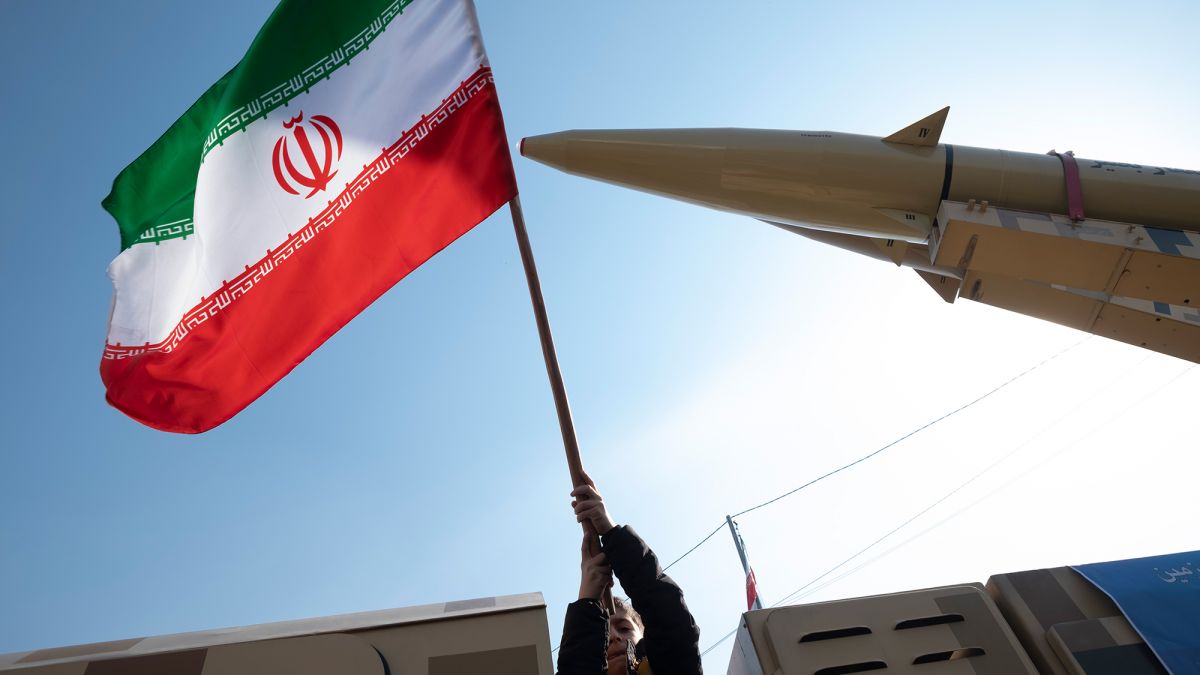
If we assess the results with a cool head, it seems that Iran has technically won this war. Yes, it is weaker than the United States in all military and economic terms. But “on points,” following the four-month standoff, it is Tehran that can claim victory.
Let’s start with the main issue—the nuclear program. Yes, Iran officially renounces the development of nuclear weapons and reaffirms its commitment to the JCPOA. This is indeed the only significant concession. But the final nuclear agreement has not yet been signed; 60 days of negotiations have been set aside for it. And monitoring compliance with these commitments is a separate issue that will require a complex monitoring mechanism. In other words, even this concession is, for now, more declarative than substantive.
Now, regarding the Strait of Hormuz. Its opening is being presented by the American side as a huge achievement. But everyone seems to forget that before the war, the strait was already open to all vessels, and merchant ships moved through it quite freely. It was the war, unleashed by the United States and Israel, that closed it. So to consider a return to the pre-war status quo a “victory” is sheer absurdity. It’s like smashing a perfectly intact window with a rock and then presenting the replacement glass as a huge achievement.
Now for the main point. The key strategic goal of the U.S. and Israel was regime change in Iran, and ideally—the complete destruction of the Islamic Republic. However, the regime in the Islamic Republic of Iran not only survived but even significantly strengthened itself. All moderate politicians, all so-called “Western-oriented liberals”—that is, people who advocated for a softening of the regime and dialogue with the West—were either pushed out of politics or physically eliminated. The IRGC—a military-political force that now controls all levers of power—has finally come to power. Mojtaba Khamenei—the son of the Supreme Leader and likely successor—is a protégé of the IRGC.
In short, the regime has become more radical, and power has been seized by even greater fanatics of the Islamic Revolution and hardline ideologues. This is not merely a failure of the original goals. It is the achievement of directly opposite results. Washington wanted to weaken the theocracy, but instead destroyed any internal opposition that might one day have transformed that theocracy.

The Israel Factor: Tel Aviv Feels “Left in the Lurch”
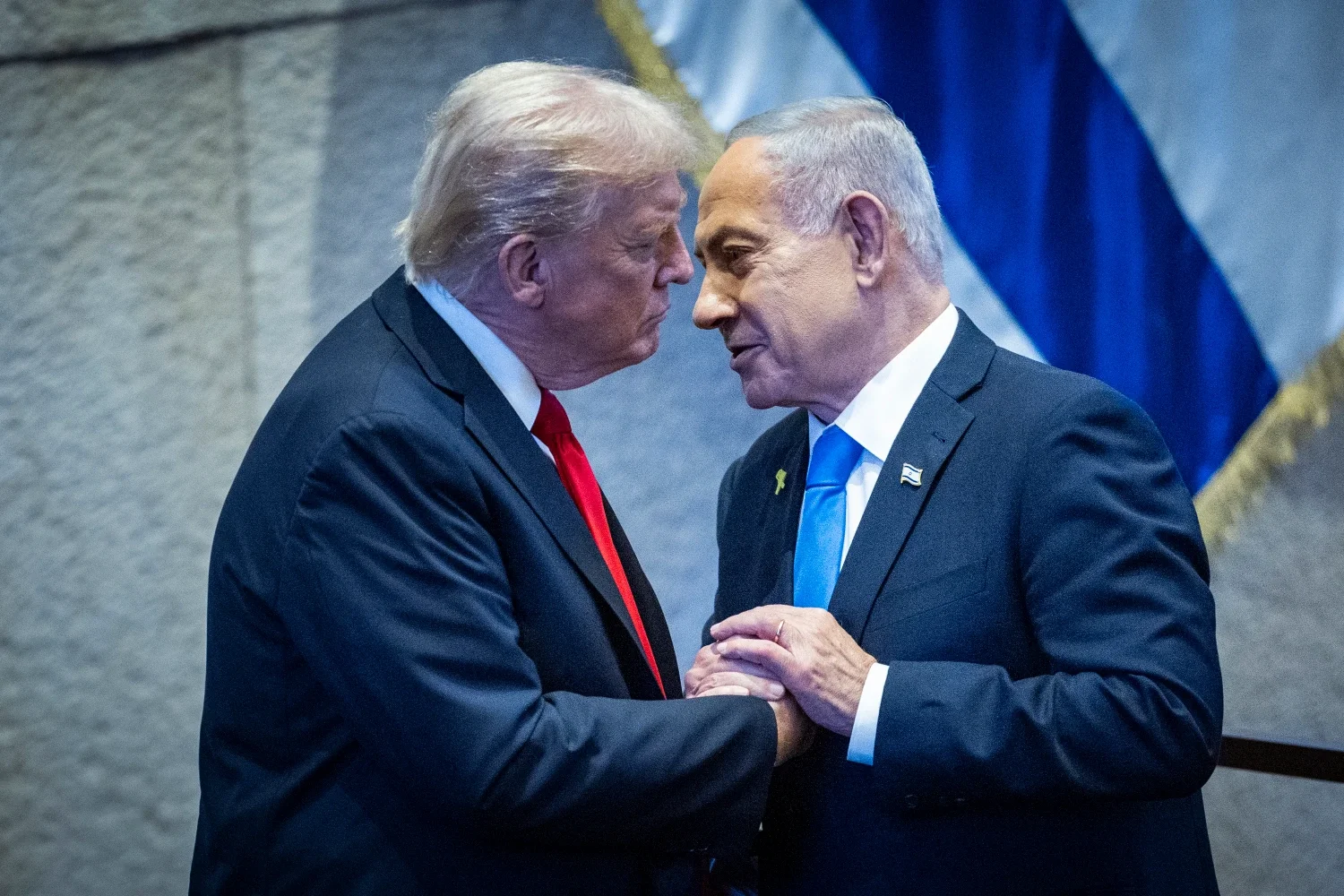
The case of Israel deserves special mention. This state, represented by Prime Minister Netanyahu and his government, was arguably the party most interested in continuing the war. For Tel Aviv, Iran’s nuclear program is an existential threat, and partial, declarative restrictions do not eliminate this threat. Therefore, an agreement that leaves Tehran with colossal financial resources and an intact military infrastructure is unequivocally perceived by the Israeli authorities and radical circles as a betrayal by the U.S.
In essence, Israel is being left alone to face a strengthened Iran. Tehran could receive $300 billion for reconstruction, the unfreezing of $24 billion in frozen assets, and the lifting of oil sanctions—in other words, a financial boost that will inevitably translate into military might and support for proxy forces. In addition, the war with Iran helps Netanyahu’s government shelve a number of important socio-political issues—in particular, the case regarding the prime minister’s possible corruption.
So Israel wanted to continue the war and still wants to do so. The agreement in Switzerland, if it is indeed signed, will be a very unpleasant development for Tel Aviv. The government is already calling for the terms of the agreement not to be adhered to and for the operation in Lebanon to continue, which calls into question the realism and durability of peace in the Middle East. The belligerence of the current Israeli administration is causing serious outrage for Trump; he even quarreled with Netanyahu over it. Further allied relations with the U.S. in this context no longer look as rosy as they once did.
A war in which everyone lost
In summary, it can be stated: this war actually has no winners. The United States lost on all fronts: the regime was not overthrown, the bombings led to nothing, they were unable to unblock the Strait of Hormuz on their own, they never dared to launch a ground operation, and they openly betrayed their main ally—Israel. Washington’s international authority has also taken a serious blow, as Iran fought back and is carrying on quite well. This means that it is possible to wage war against a hegemon and to win.
Israel also lost. Its strategic goals were not achieved, and the prospect of having a financially bolstered and diplomatically rehabilitated Iran on its borders is, perhaps, even worse than the pre-war scenario. Netanyahu envisioned a different ending to this story, but Trump decided otherwise. However, this story is certainly not over yet.
The Middle East as a region has also lost. Throughout the war, Iran launched massive attacks on the Gulf’s oil monarchies, shattering their carefully cultivated image as an “oasis in the desert”—a safe, expensive, and comfortable place to live and invest. Now investors will think twice before putting money into a region that could turn into a battlefield at any moment.
And, in the end, Iran lost. Yes, on the diplomatic front, Tehran appears to be securing very favorable peace terms. But a huge price has been paid for them.
Thousands of people—both military and civilian—have been killed. The country has suffered unprecedented destruction of its infrastructure. The regime has become even more harsh and repressive; there is no legal opposition left within the country, no room for dissent. The lives of ordinary Iranians have become even worse and poorer, and the prospects for democratic change have been pushed back indefinitely.
In modern warfare, it is generally very difficult to identify winners. It always leaves ruins in its wake: physical, economic, and human. Four months of fighting in the Middle East are yet another reminder to humanity that wars should not even be started; they lead to literally nothing good. However, whether any conclusions will be drawn is a rhetorical question.


