
Muon detector installed at Wawel to scan underground chambers — RMF24
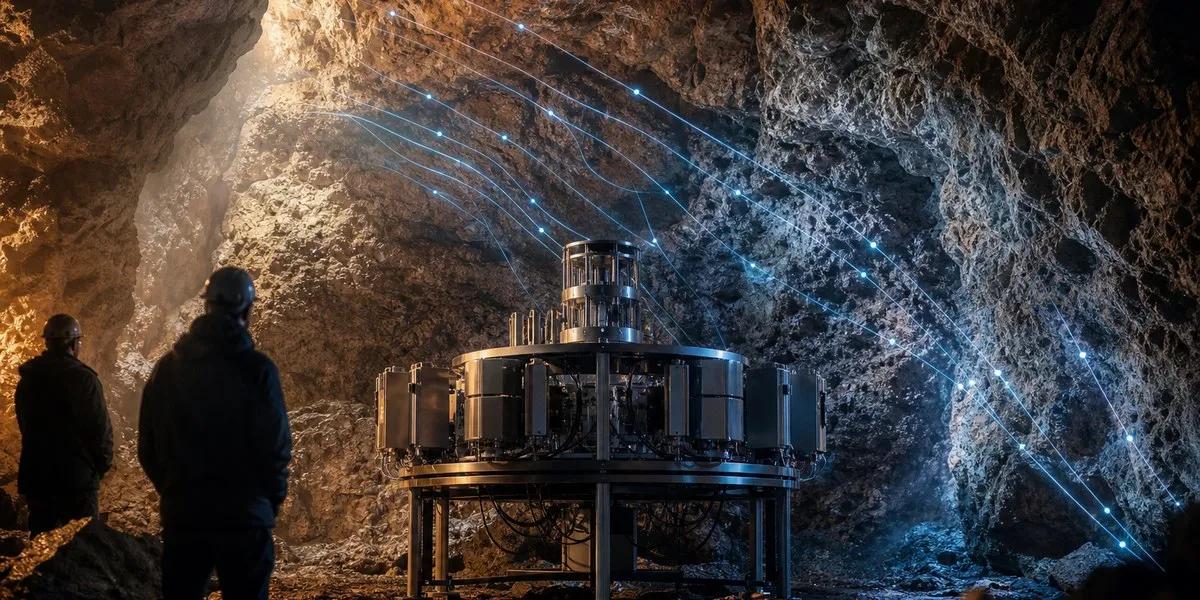
A detector that uses cosmic particles — muons — to study the internal structure of the hill has been installed in the underground chambers of Wawel Royal Castle in Poland. The device was placed in the Dragon's Den as part of the VIEW project. It makes it possible to search for voids, corridors and cracks without drilling or other interference with the historic monument, RMF24 reports.
How the muon detector works
Muons are natural particles produced as a result of the interaction of cosmic radiation with the atmosphere. The detector records the number of muons passing through rock from different directions. A higher number of registered particles may indicate the presence of an empty space, including a corridor or crack.
Comparing measurement results with a model of the hill makes it possible to create a density map of its interior. Astrophysicist and Muotech director Noemi Zabari compared the method to computed tomography, in which natural muons are the radiation source.
More current news is available on the UA.News Telegram channel Telegram.
Study of the monument
Wawel Hill became the first historical site in Poland to be studied using this method. According to Monika Kamińska, head of the archaeology department at Wawel Royal Castle, there are caves and structures on the hill whose exact locations are still not fully known. The results are expected to help identify areas for possible future archaeological excavations and reduce the risk of damaging valuable structures.
Physicists from the Swiss Federal Institute of Technology in Lausanne, which cooperates with CERN, took part in installing the detector. Similar technology was used in 2017, when a previously unknown void was discovered above the Great Gallery of the Pyramid of Khufu in Egypt. Recently, the method was also used to study the hill of the Royal Castle in Budapest.




