
Inscription from the time of Ramesses II may point to the location of the ancient city of Mesn
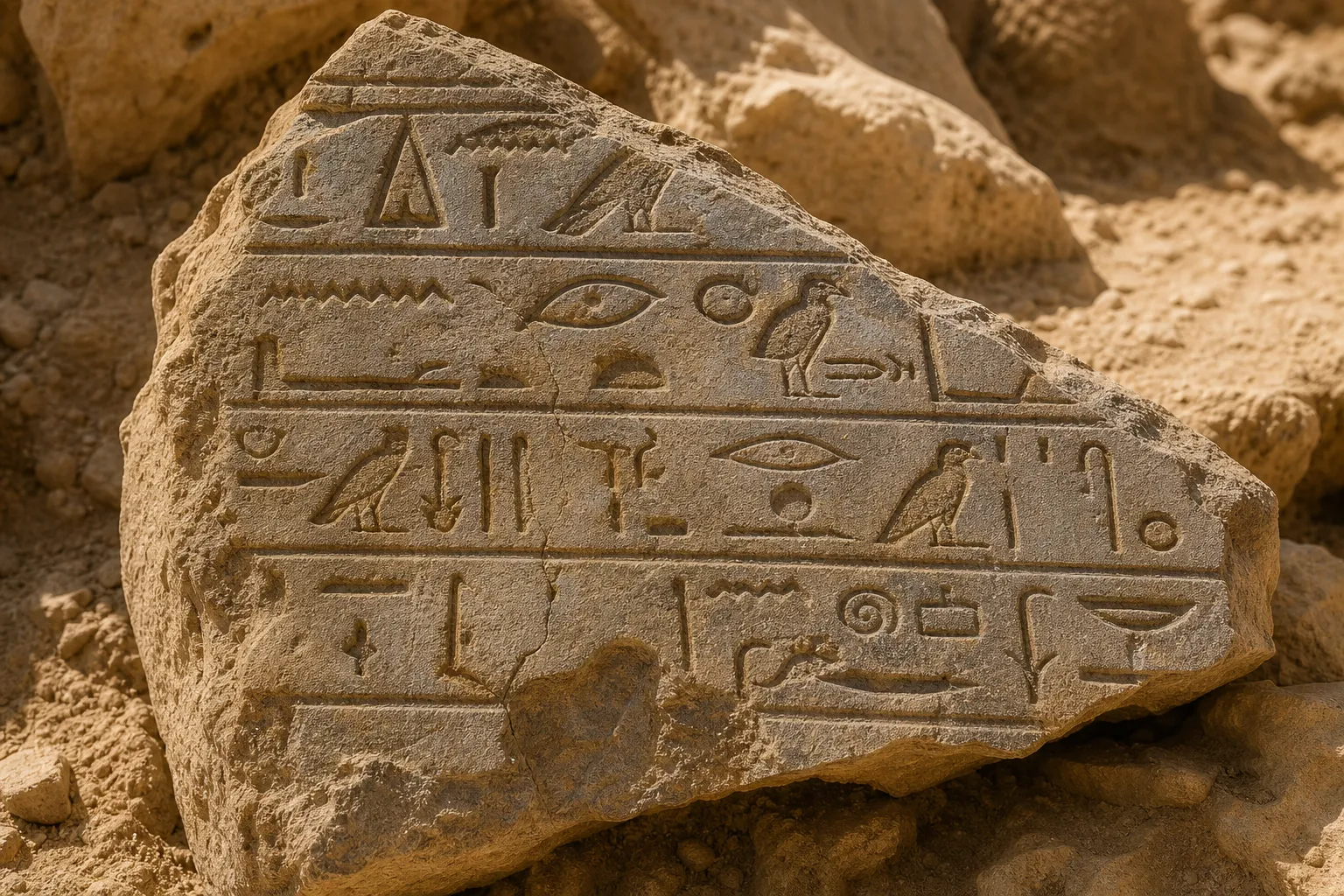
Archaeologists have found a 3,200-year-old hieroglyphic inscription at Tell Abu Seifi in Egypt that may help establish the location of the long-lost city of Mesn. The inscription, created during the reign of Ramesses II, calls the god Horus “lord of the city of Mesn,” Live Science reports, citing Egypt’s Ministry of Tourism and Antiquities.
The inscription and the Temple of Horus
Tell Abu Seifi is located near the Suez Canal, close to the northern part of the Sinai Desert and the eastern Nile Delta. The site also contains the remains of a temple dedicated to Horus, the ancient Egyptian god of the sky and war, who was depicted with a falcon’s head.
Hisham Hussein, director general of the Delta and Sinai Archaeology Department at Egypt’s Ministry of Tourism and Antiquities, said the temple is almost completely destroyed, making it difficult to obtain detailed information about it. According to him, further research is needed to conclusively identify Tell Abu Seifi as Mesn. Since the archaeological identification of the city remains uncertain, its area and population cannot currently be reliably estimated.
More current news is available on the UA.News Telegram channel Telegram.
Previous discoveries and cautions
Earlier, a bronze seal from the Ptolemaic period, dated to approximately 304–30 BCE, bearing the inscription “Horus, lord of Mesn,” was found at Tell Abu Seifi. Similar inscriptions also appeared on coffins from the same period. Historian Peter Brand of the University of Memphis also noted that the new inscription mentions Ramesses II restoring a statue of Horus of Mesn, while the pedestal of a similar statue was previously discovered at the site.
Tell Abu Seifi lies next to the ancient “Way of Horus,” a road that connected the eastern Nile Delta with the southern Levant and was fortified with forts. Brand believes the discoveries point to a possible identification of the site as Mesn, which may have been one of the departure points for Egyptian troops heading to Canaan, Lebanon and Syria.
At the same time, other experts urge against rushing to conclusions. Archaeologist James Hoffmeier noted that additional evidence, including pottery from the site, is needed for a confident identification. Anthropologist Gregory Mumford pointed out that inscriptions bearing the name Mesn were also found at other sites in the region, including the forts of Kom el-Qulzum and Tjaru. In his view, Mesn may have referred to a broader area encompassing several sites.




