
NATO held its first exercise near Iceland without the United States
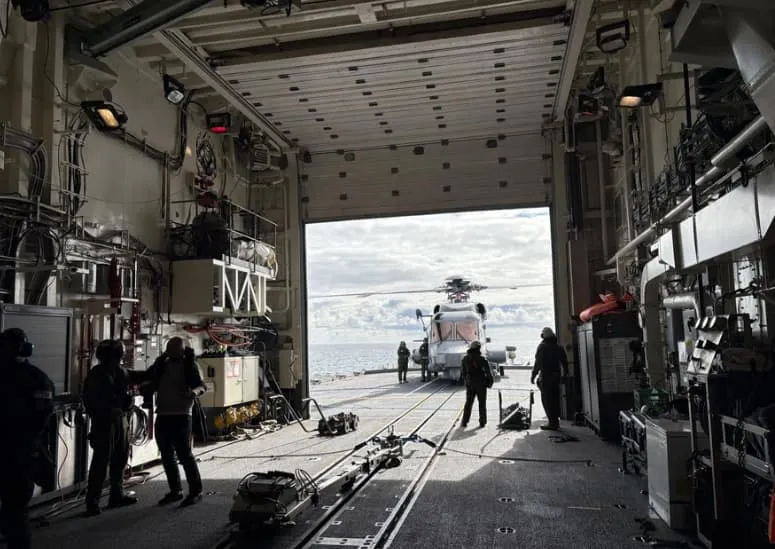
In August, NATO’s annual Northern Viking exercises took place off the coast of Iceland, but this time without the participation of U.S. ships and aircraft. The allies practiced searching for Russian submarines, with European countries and Canada taking the lead in the exercises. For NATO, this served as a telling indicator of whether Europe is capable of acting independently in the North Atlantic without American leadership.
This year’s annual NATO Northern Viking military exercises took place off the coast of Iceland under an unusual scenario. For the first time in a decade, no U.S. warships or aircraft participated. The exercises took place in August. Their main goal was to test how allies can operate in the North Atlantic and counter a potential threat from Russian naval forces.
In particular, the military practiced searching for Russian submarines in the waters around Iceland. This time, European countries and Canada shouldered the bulk of the effort. German reconnaissance aircraft, Canadian warships, and Belgian fighter jets were deployed for Northern Viking. Command of the exercises was also handed over to a French officer.
Europe Is Learning to Operate Without the U.S.
For decades, the United States had led Northern Viking. Therefore, the absence of U.S. forces this year marked a significant change. According to the allies’ plan, the exercise was intended to demonstrate two things. First, European countries need to test their own capabilities. Second, NATO wants to demonstrate to Russia that its European allies are capable of defending the northern flank even without direct U.S. military leadership.
“We see how Europe and Canada are stepping up their efforts, and we literally see it here in Iceland,” said Jonas Allansson, head of the Defense Directorate at the Icelandic Ministry of Foreign Affairs. This is particularly important amid discussions about the future role of the U.S. in European security. In recent years, European countries have increasingly emphasized the need to strengthen their own defenses and be prepared for situations in which Washington does not take the lead. Northern Viking has become one of the practical tests of this capability.
Why Iceland?
Iceland occupies a very important position on the map of the North Atlantic. The country is located roughly halfway along the route that Russian naval forces could use to move their nuclear submarines from bases on the Kola Peninsula into the Atlantic Ocean.
That is precisely why the area around Iceland is of great importance for monitoring the movements of Russian submarines. For NATO, this is effectively one of the key frontiers in the northern direction. Submarines are difficult to detect and track. They can remain undetected for long periods of time, so it is important for the allies to regularly train in locating such targets.
This is exactly what the military did during Northern Viking. They practiced coordination between ships, aircraft, and other forces that may be involved in monitoring the maritime situation.
The U.S. Has Not Left Iceland After All
The absence of U.S. ships and aircraft from the exercises does not mean that the U.S. has completely ceased military activities in Iceland. U.S. military construction crews continue to work on the island. In particular, they are building new facilities at the military section of Keflavík Airport.
In addition, the U.S. side helped plan this year’s Northern Viking exercises. In other words, the United States remains involved in Iceland’s security infrastructure, even though U.S. ships and aircraft did not directly participate in the exercises this time. This is an important detail, as there is currently no basis for claiming a complete U.S. withdrawal from Iceland’s defense.
What This Means for NATO
This year’s exercises served as a test of how ready European allies are to take on more responsibility. For decades, U.S. military capabilities have been one of the cornerstones of NATO’s defense. The U.S. possesses a large number of ships, combat aircraft, reconnaissance systems, and other resources. It would be difficult for European countries to quickly replace all of this capability.
But Northern Viking demonstrated that the allies are already capable of independently organizing large-scale exercises and coordinating their forces in a strategically important area. This year, command passed to France, and Germany, Belgium, and Canada participated in the operation. Such cooperation is also important for Iceland. The country does not have its own army, so its security depends largely on its NATO allies.
Russian submarines remain the main threat
The main focus during the exercises was on Russian submarines. Russia has a powerful submarine fleet, part of which is based on the Kola Peninsula. From there, submarines can head out into the North Atlantic. It is important for NATO to understand where they are and what routes they might take. That is why the waters around Iceland are of strategic importance.
If Russia attempts to make more active use of its submarine forces in the Atlantic, the allies will need to be able to quickly detect them and track their movements. Northern Viking allows them to practice this coordination before a real crisis arises.
At the same time, this year’s exercises do not mean that NATO expects an imminent attack by Russia. The goal is to prepare for possible scenarios and test how well the allies can operate together.
Europe Is Taking on More
The change in the format of Northern Viking is part of a broader process in which European countries are striving to strengthen their own defense capabilities. For them, it is important not only to increase defense spending but also to learn how to plan operations independently, command troops, and coordinate the actions of different countries. That is why the current exercises off the coast of Iceland hold symbolic significance.
For the first time in many years, U.S. forces did not form the backbone of Northern Viking. Instead, European allies and Canada took on key roles. That said, the U.S. has not completely disappeared from Iceland—it continues to work on military infrastructure and assisted with the preparation of the exercises.
Thus, this year’s Northern Viking was not merely a submarine-hunting exercise. It also highlighted a new reality for NATO, in which European countries must prepare to shoulder greater responsibility for the security of the continent and the North Atlantic. Politico reports on this.
A majority of voters in Iceland’s referendum rejected continuing negotiations on the country’s accession to the European Union. 52.8% voted against continuing the negotiations, while 47.2% supported the idea. Voter turnout exceeded 80%.




