
Nullarbor caves could help search for life on Mars — ABC News Australia
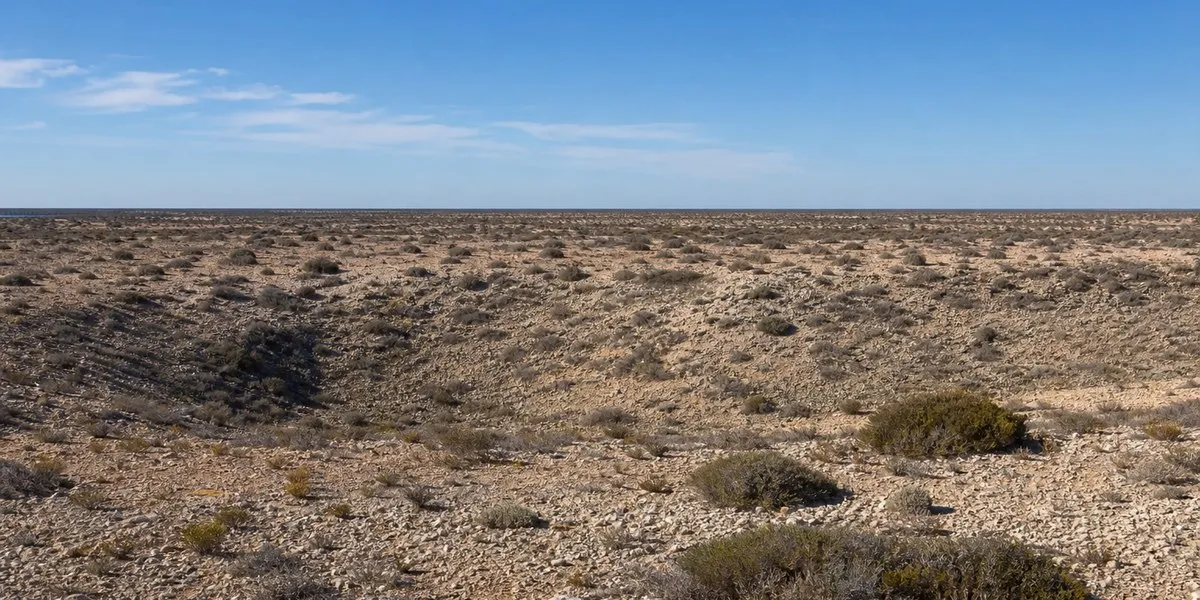
Researchers in Australia have established a link between shallow elongated depressions on the surface of the Nullarbor Plain and deep cave systems beneath it. The discovery could help identify similar underground cavities on Mars, which are considered potential locations for the search for life.
As ABC News Australia reports, beneath the Nullarbor Plain, which covers more than 200,000 square kilometres, lies a complex network of caves formed by limestone erosion over millions of years. Much of the system is inaccessible from the surface and has therefore been relatively little studied.
Surface traces of deep caves
Milo Barham, an associate professor of Earth and planetary sciences at Curtin University, explained that trenches on the surface are a kind of imprint of caves lying much deeper below, which may not yet reach the surface. According to him, such formations can extend for 20 kilometres, reach hundreds of metres in width, but be only a few metres deep, making them difficult to detect without detailed analysis.
More current news is available on the UA.News Telegram channel Telegram.
To study these structures, scientists used satellite modelling and aerial photographs. Caver and field researcher Steve Milner, who has spent more than 30 years studying western South Australia and the Nullarbor, linked the surface depressions to the gradual collapse of deep cavity systems.
Significance for Mars and water resources
The Nullarbor caves are an example of karst terrain, which forms as a result of the dissolution of soluble rocks. Such landscapes cover about 15% of Earth’s ice-free land, and similar landforms have potentially been identified on other planets, including Mars.
Barham noted that caves on other planets may have more stable conditions and provide protection from radiation. Knowledge gained in the Nullarbor could help search for subtle signs of underground systems on Mars and identify targets for life research and the possible placement of extraterrestrial bases. In addition, understanding the location of underground cavities is important for studying karst aquifers, which provide water to about a quarter of the world’s population.




