
South Korea, US and Japan launch Freedom Edge drills
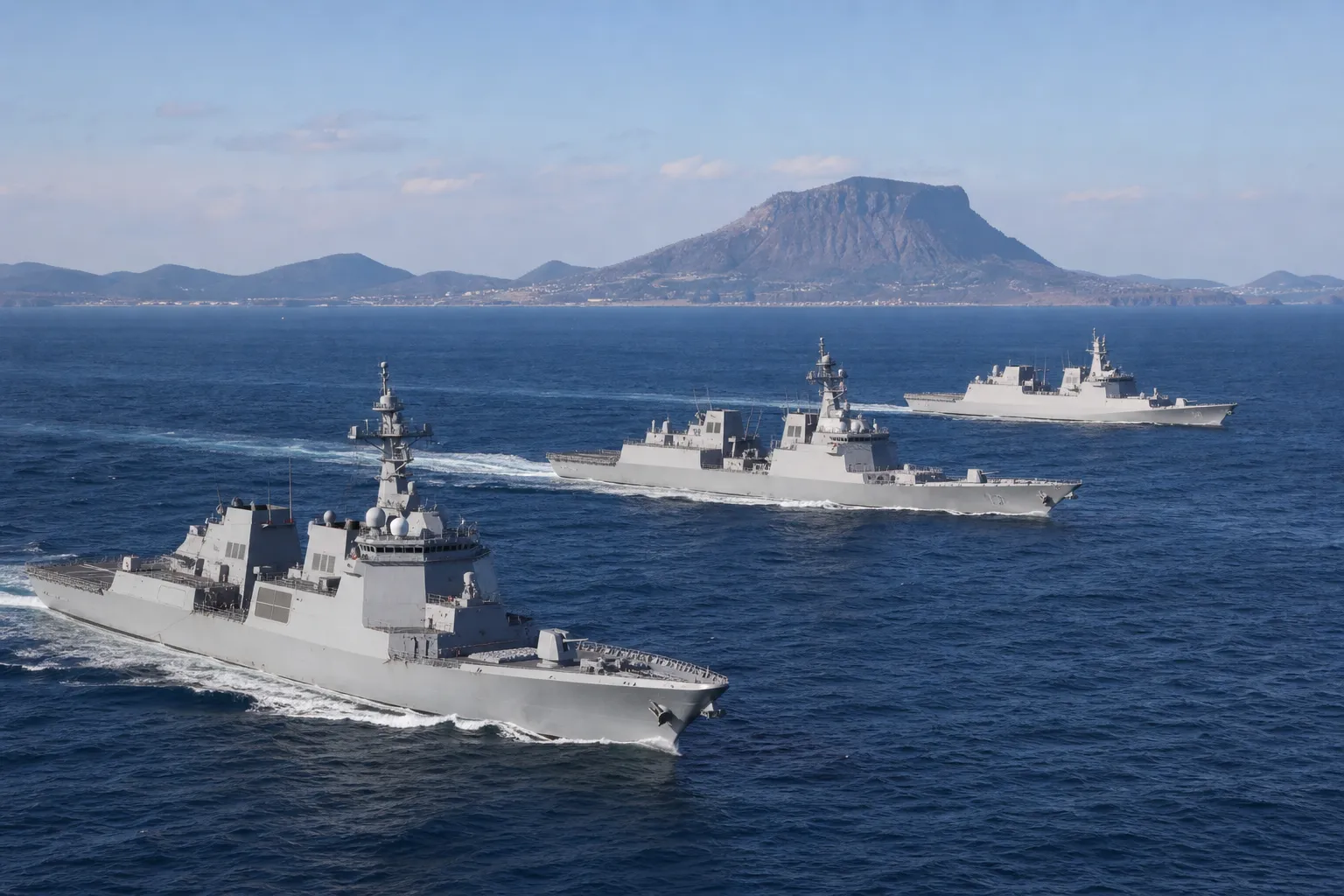
Annual multi-domain Freedom Edge military exercises involving South Korea, the United States and Japan have begun in international waters east and south of South Korea’s Jeju Island. The maneuvers will last five days, through Friday, Korea Herald reports, citing South Korea’s Joint Chiefs of Staff.
Maritime, air and cyber exercises
Significant naval and air forces from the three countries will take part in the exercises. They will cover maritime, air and cyberspace domains. In addition, the parties will jointly operate an exercise control group.
South Korea’s Joint Chiefs of Staff described Freedom Edge as annual defensive exercises. Their goal is to strengthen deterrence and the ability to respond to North Korean nuclear and missile threats, as well as to maintain peace and stability in the region.
Against the backdrop of Ulchi Freedom Shield cuts
Freedom Edge began less than three weeks after the early conclusion of the joint South Korean-US Ulchi Freedom Shield exercises. They were planned for August 17–27, but the exercises ended on August 21 following an order by US President Donald Trump.
More current news is available on the UA.News Telegram channel Telegram.
Field training related to Ulchi Freedom Shield was also reduced: some was canceled or shifted to simulation formats. Trump explained the decision by the cost of the maneuvers and his relationship with North Korean leader Kim Jong Un, saying the exercises sent Pyongyang an inappropriate and hostile signal.
Lee Han-kyu, research manager for East Asia and the Pacific at the US Armed Conflict Location & Event Data Project, wrote in a report dated August 21 that reducing joint exercises could weaken deterrence against North Korea and indicate a broader shift in the US approach. He also raised the question of whether US forces in South Korea are being reoriented toward a broader regional strategy.
Meanwhile, Yoo Ji-hoon, a research fellow at the Korea Institute for Defense Analyses, said that the timing, scale and format of exercises may be adjusted in line with diplomatic needs and the security situation. According to him, it is important to explain the reasons for such changes consistently and maintain coordination on combat readiness.
In a Foreign Ministry statement dated August 31 and circulated by state media, Pyongyang called the reduction of bilateral exercises insufficient and said that US policy toward North Korea remains unchanged. North Korea specifically referred to the continuation of military maneuvers involving South Korea and Japan.


