
A $5,000 donation helped green a desert in China — NBC News
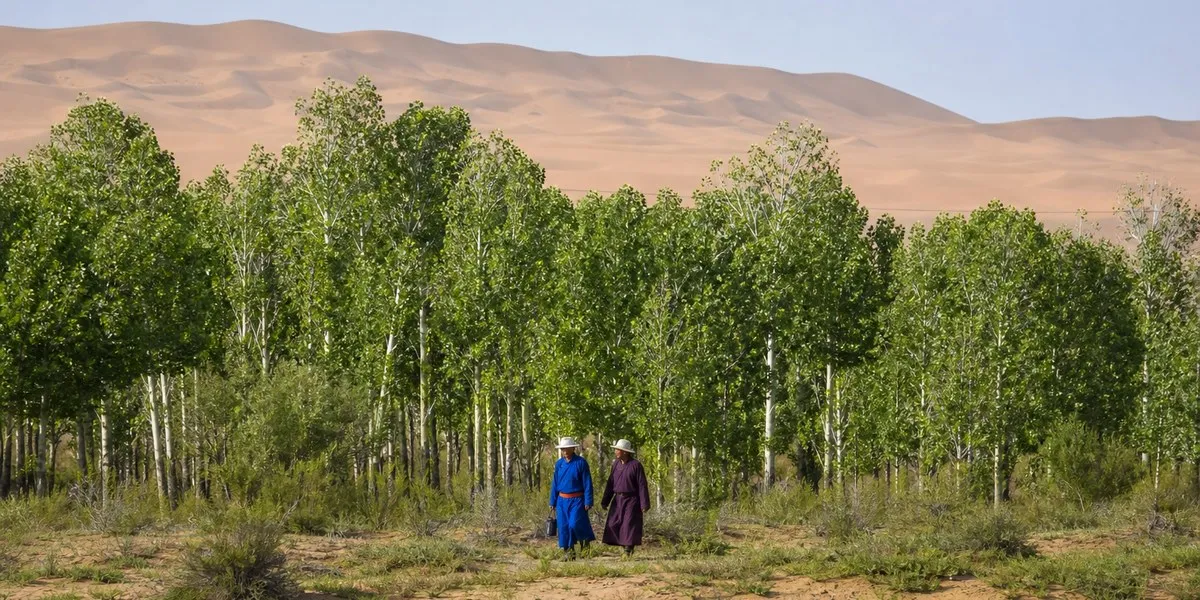
In Inner Mongolia in northern China, the Mu Us Desert has been transformed into a forest with 50,000 mature trees. Among other things, this was helped by a $5,000 donation that more than a quarter of a century ago American teacher Ronald Sakolski gave to local farmer and sand-control worker Yin Yuzhen.
As NBC News reports, the 69-year-old retiree from Pennsylvania visited China for the first time in 26 years and saw the forest, where trees now grow to more than nine meters tall.
Donation for saplings
Sakolski taught English through an exchange program in the central Chinese province of Henan in 1999. At the time, he saw a television report about Yin, who had begun planting trees more than 10 years earlier. After getting married, she settled in a new home in the Mu Us Desert and planted trees to feel less isolated.
The teacher raised $5,000 for her — an amount many times greater than her annual income. The funds were intended to help plant more trees. They met in person in 2000, when Yin promised that her family would care for the saplings.
More current news is available on the UA.News Telegram channel Telegram.
A meeting after 26 years
At the beginning of the year, Yin launched an online campaign to find Sakolski. Last month, he made a 10-day trip to China and met her in the forest. Authorities named the grove after him.
During the meeting, they planted a friendship tree together. Sakolski took a jar of sand back to Pennsylvania, while Yin gave him an embroidered work bearing the words “One Earth, One Dream.” She called the American her brother and said that the tree they planted would still be standing in another 26 years.
Forest-planting campaign
Tree planting in the region is part of a Chinese state program called the Great Green Wall. It was launched in 1978 as a 73-year campaign to reduce sandstorms and combat desertification.
At the same time, American University professor Judith Shapiro noted that the program has had mixed results. According to her, in its early stages, fast-growing trees, including poplars, were planted in deserts; they required a great deal of water and depleted groundwater. Now, she said, more suitable and diverse species are being planted.




