
Putin Wants to Make Kyiv Uninhabitable — NZZ
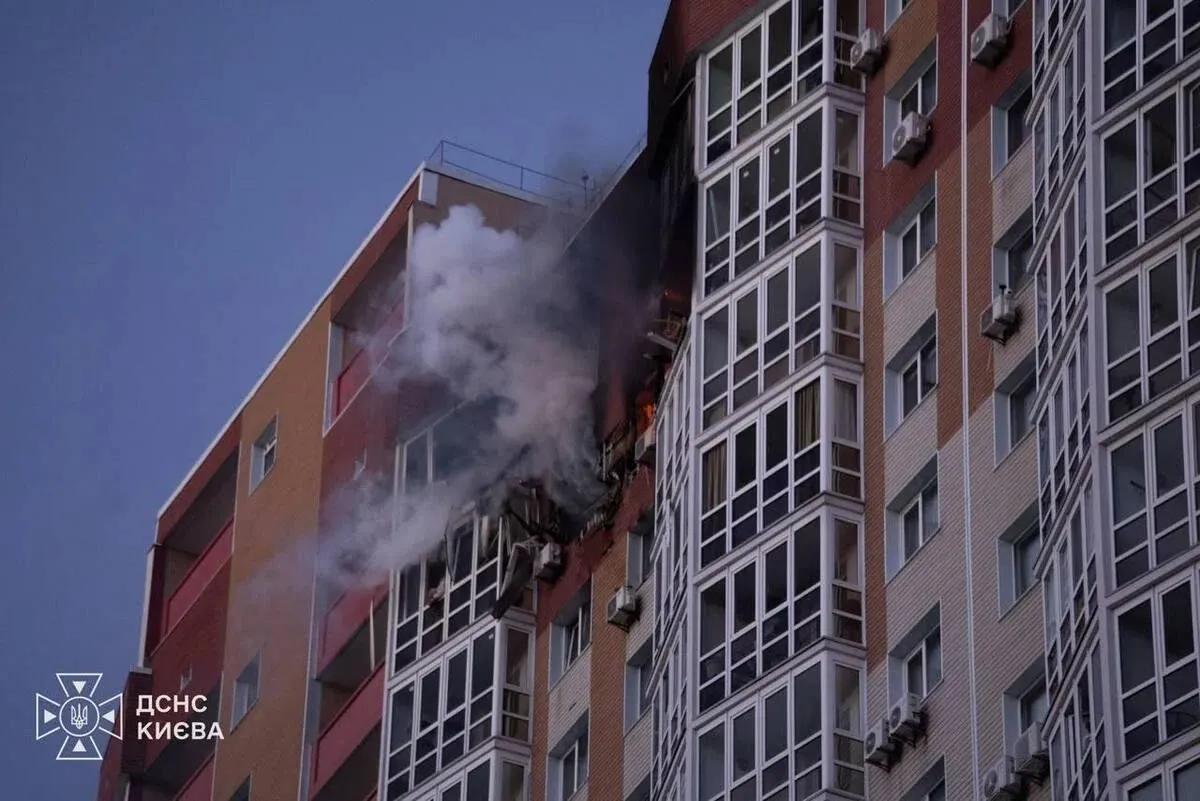
Russia is expanding its campaign of strikes against Kyiv, targeting not only the energy sector but also bridges, transportation, communications, and other urban infrastructure. The Swiss newspaper Neue Zürcher Zeitung believes that Moscow is attempting to make life in the capital as difficult as possible and render it less suitable for normal daily life. The NZZ draws particular attention to the strikes on the bridges across the Dnipro River, which hundreds of thousands of people cross every day.
Kyiv is divided by the Dnipro River, and large bridges connect the city center with the districts on the left bank. Hundreds of thousands of people use them every day. Therefore, any serious problems with the bridges immediately affect transportation and connectivity between parts of the capital. According to the NZZ, on Thursday and into Friday night, Russian drones attacked several bridges across the Dnipro River. On Friday morning, the South Bridge and the Paton Bridge were completely closed. The “Metro” Bridge, used by both cars and rail transport, was operating in only one direction.
This not only made it difficult to get around Kyiv. Problems also arose with connections between the capital and the surrounding areas across the Dnipro River. The NZZ emphasizes that all three bridges are of vital importance to the city’s transportation system. They are also connected to major roads leading toward Chernihiv, Poltava, and Kharkiv.
According to the publication, the strikes on the bridges mark a new phase in the Russian campaign. Its goal, as the NZZ writes, is to disrupt not only economic activity but also people’s daily lives as much as possible. At the same time, Russian attacks are increasingly taking place during the day.
Russia is targeting various sectors
The NZZ notes that the strikes on bridges are only part of a broader campaign. As early as this spring, Russia began deliberately targeting gas stations. In recent months, there has been an increase in strikes on passenger trains. Border crossings, data centers of internet service providers, and mobile network operators have also come under attack.
All of this affects people’s daily lives. Damage to transportation infrastructure makes travel more difficult. Attacks on communications networks can leave people without access to the internet or mobile service. With the onset of fall, Russia has once again stepped up its attacks on energy infrastructure.
The NZZ specifically mentions a large-scale attack on September 30. Following the attack, Kyiv once again experienced serious power outages. For residents of the capital, this served as a reminder of last winter, when Russian strikes left people without proper heating and electricity for weeks in some areas.
“There Are No Rules Anymore”
The publication also reports on strikes against civilian targets. On October 1, a Russian drone struck a school in Kyiv while classes were in session. Students and teachers managed to take cover, so, according to data cited by the NZZ, no one was injured. Prior to that, on Monday, the Academy of Sciences was struck. And a week earlier, a Russian drone damaged a maternity hospital.
Against this backdrop, Ukrainian President Volodymyr Zelenskyy stated on the social media platform X that Russia had abandoned all restraint. According to him, Russian President Vladimir Putin allegedly declared that “there are no more rules.” Zelenskyy cited information from Ukrainian intelligence agencies. At the same time, the NZZ notes that it is impossible to independently verify this information.
Back in August, Putin said that Ukrainian strikes on targets deep inside Russia had allegedly opened “Pandora’s box.” The NZZ views this statement as one of the signs of a shift in Russia’s approach to waging war. At the same time, the publication specifically notes that the Russian and Ukrainian drone campaigns cannot simply be equated with one another.
Ukraine is also attacking economic targets on Russian territory. These include, in particular, oil industry facilities and warehouses belonging to major online retailers. However, the NZZ points out a difference in the location of such targets: they are generally not situated in densely populated areas.
Kyiv Is Increasingly Becoming the Main Target
Russia continues to attack various regions of Ukraine. But in recent weeks, Kyiv has been under particularly frequent attack. According to data cited by the NZZ, air raid alerts were sounded more than 200 times in the capital in September. At the beginning of the month, there was a particularly prolonged series of attacks, which left the city living under constant threat for nearly a week.
For Kyiv residents, this means more than just the risk posed by the strikes themselves. The constant attacks are disrupting transportation, business operations, education, communications, and access to electricity.
It’s harder for Ukraine to shoot down drones
A separate issue is the performance of Ukraine’s air defense. The NZZ reports that Ukraine has long faced a shortage of missiles for its air defense systems. This is particularly true for the expensive munitions used in Patriot systems. Restocking remains difficult, in part due to the high cost of these missiles. But it is also becoming increasingly difficult to combat Russian drones.
Russia is increasingly using drones with jet engines. They can fly significantly faster and at higher altitudes than some earlier models. As a result, it is harder to detect and shoot them down in time. Ukrainian officials estimate that Russia is already producing about 3,000 such drones per month. At the same time, Moscow continues to ramp up production.
This places an additional strain on Ukraine’s air defense. The more drones Russia launches, the harder it is to simultaneously defend Kyiv and other major cities, as well as critical infrastructure across the country.
People Are Thinking About Leaving for the Winter
Amid the constant attacks, some Kyiv residents are already considering leaving the capital for the winter and moving to safer regions in western Ukraine. The NZZ notes that people are concerned not only about the immediate threat of strikes. They also fear potential problems with electricity, heating, transportation, and communications during the cold season.
That is why the publication asks whether the Russian campaign could force some residents to leave Kyiv. The NZZ concludes that Russia appears to be striving to make life in the capital as difficult as possible. In that case, strikes on bridges, the energy sector, communications, transportation, and civilian infrastructure become part of a broader campaign. The publication suggests that the ultimate goal of this strategy may be to render Kyiv uninhabitable.
At the same time, this is merely the NZZ’s assessment of the possible goals of the Russian campaign. It is impossible to independently confirm the Kremlin’s intent in precisely these terms. The NZZ reports on this.
President Volodymyr Zelenskyy responded to statements by Russian leader Vladimir Putin that Ukraine is allegedly losing its statehood and cannot exist independently. Zelenskyy stated that such remarks reveal how Putin views the goal of the war against Ukraine.




