
Russian businesses are spending millions on underground access to ChatGPT and Claude
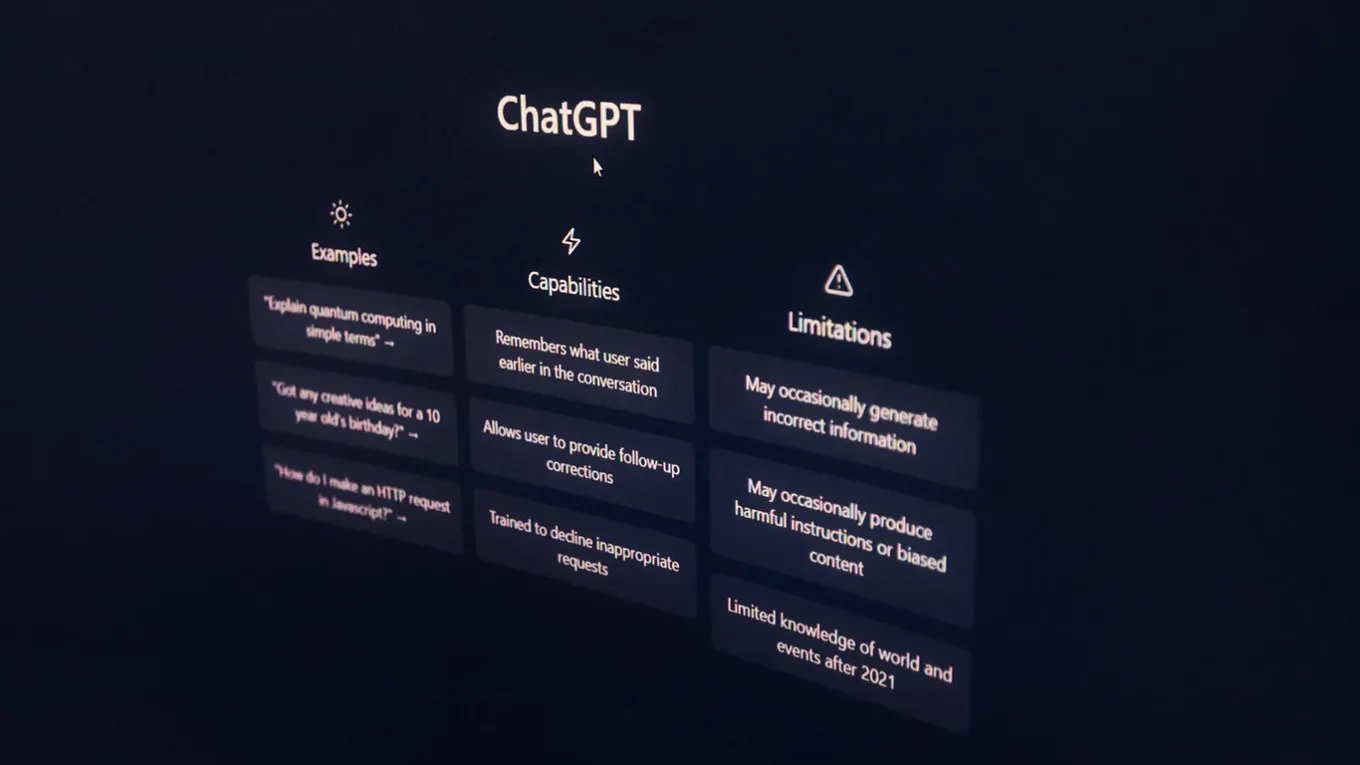
Russian companies are increasingly purchasing access to foreign neural networks through intermediaries, as developers are restricting the operation of their services in Russia. According to estimates by one Russian aggregator, the monthly turnover of this “gray” market already amounts to 100–150 million rubles. At the same time, cheap access to ChatGPT, Claude, and other models could result in data leaks for users and the tampering of the neural networks themselves.
In Russia, the market for unofficial access to foreign artificial intelligence services is growing rapidly. Companies and individual users are seeking intermediaries who help them use neural networks that are inaccessible or restricted to Russian accounts. At the end of 2025, there were almost no such providers. However, by August 2026, their number had grown to approximately 50.
According to estimates by GPTunneL, a Russian aggregator of AI services, the monthly turnover of this “gray” market already ranges from 100 to 150 million rubles. By comparison, legal providers of such services earn about 700 million rubles per month. GPTunneL predicts that by the end of the year, the turnover of unofficial sellers could double again.
Why Russians Are Seeking Workarounds
Demand for intermediaries surged particularly in the fall of 2026. One reason was the increased blocking of Russian accounts by the American company Anthropic, which develops the Claude neural network. In October, users complained en masse about restricted access to the service. To reactivate an account, the system required users to verify their identity with a passport. However, a Russian passport did not help lift the restrictions.
As a result, users began turning to intermediaries more frequently. These intermediaries offer access to popular foreign models, even when it is difficult to register directly or pay for a subscription from Russia.
How the Black Market Works
This market includes both legal aggregators and unofficial sellers. The former typically operate through their own companies abroad. They gain access to foreign models and then sell the services to Russian clients. Unofficial providers use different schemes. In particular, they create so-called account farms, purchase subscriptions to services from OpenAI, Google, and other developers, and resell access to multiple clients. They can also bypass established limits or connect to models via Chinese proxy services.
Thanks to such schemes, the cost of access is sometimes 70% lower than official API rates. An API is a way to connect a neural network to another program or service in order to use its capabilities without a standard user interface.
However, the low price may come with a hidden cost. One of Vedomosti’s sources at a cloud services provider said that Chinese intermediaries sometimes offer access for about 10% of the actual cost. “Amid a sharp rise in demand, Chinese intermediaries have begun providing access for as little as 10% of the actual price, profiting from customer data—by storing queries and responses to train their own models,” the source told the publication.
What Risks Do Users Face?
One of the main problems with unofficial access is data security. When a user sends a query to a neural network through an intermediary, they don’t always know who else might receive this information. Roman Kutsev, founder of LLM Arena, highlights the risks associated with the use of user conversations. According to him, user messages can be used for distillation—a method in which one neural network is trained on the responses of another. In other words, the queries and results from a paid model can become training data for another AI.
There is another danger—service substitution. Ivan Kopylov, CTO of MWS AI, notes that instead of the paid Claude neural network, intermediaries may provide access to cheaper Chinese models, such as MiniMax or Qwen. In such cases, the user may not even know which system they are actually using. GPTunneL also warns that queries sometimes pass through a chain of three or four intermediaries. Each additional participant in such a scheme increases the risk that personal messages, work documents, or other information will fall into the hands of unauthorized parties.
In September 2026, the American company Anthropic reported that such operators were selling users’ correspondence without their knowledge. This once again drew attention to the fact that unauthorized access to neural networks can pose risks not only to privacy but also to companies’ commercial information.
Why Do Russian Businesses Need Foreign Neural Networks?
Despite the restrictions, Russian companies continue to purchase access to advanced foreign models. The reason is the need for tools that can assist with research, programming, data analysis, and other work tasks. Nikolai Nikitin, a senior research fellow at ITMO University’s Institute of Artificial Intelligence, notes that for certain research tasks, Russian companies specifically need modern foreign models.
Purchases by large Russian enterprises also attest to this demand. According to data from the “Tenderplan” system, several major companies sought access to foreign neural networks in 2026. In particular, Russia’s National Payment Card System issued procurement requests for access to Claude Max and Codex Pro. The “Magnit” retail chain, owned by the company “Thunder,” procured licenses for Claude Code Team.
The company “Operator-CRPT,” which is responsible for the “Honest Mark” product labeling system, was looking for an aggregator to purchase Claude, Qwen, and DeepSeek tokens. Tokens are units of text that a neural network processes when handling queries and responses. The volume of model usage and the cost of services depend on the number of tokens. Salutdevices, a company part of the Russian Sberbank ecosystem, was also looking for a provider of subscriptions to Claude, ChatGPT, Perplexity, and Kimi.
Thus, despite restrictions imposed by foreign developers, Russian businesses are not giving up on using foreign artificial intelligence. Instead, an entire market of intermediaries is forming around this demand. But along with cheaper access, companies also face additional risks—ranging from leaks of working data to the use of entirely different neural networks instead of the ones they paid for. This is reported by Russian media.
A resident of Russia’s Far East used ChatGPT to generate an image of a bear on the street to prank a friend, but the photo spread through messaging apps and triggered a search for the predator. A court fined the woman 15,000 rubles, which is about 8,000 hryvnias.




