
Xi Jinping arrives in Bishkek for SCO anniversary summit
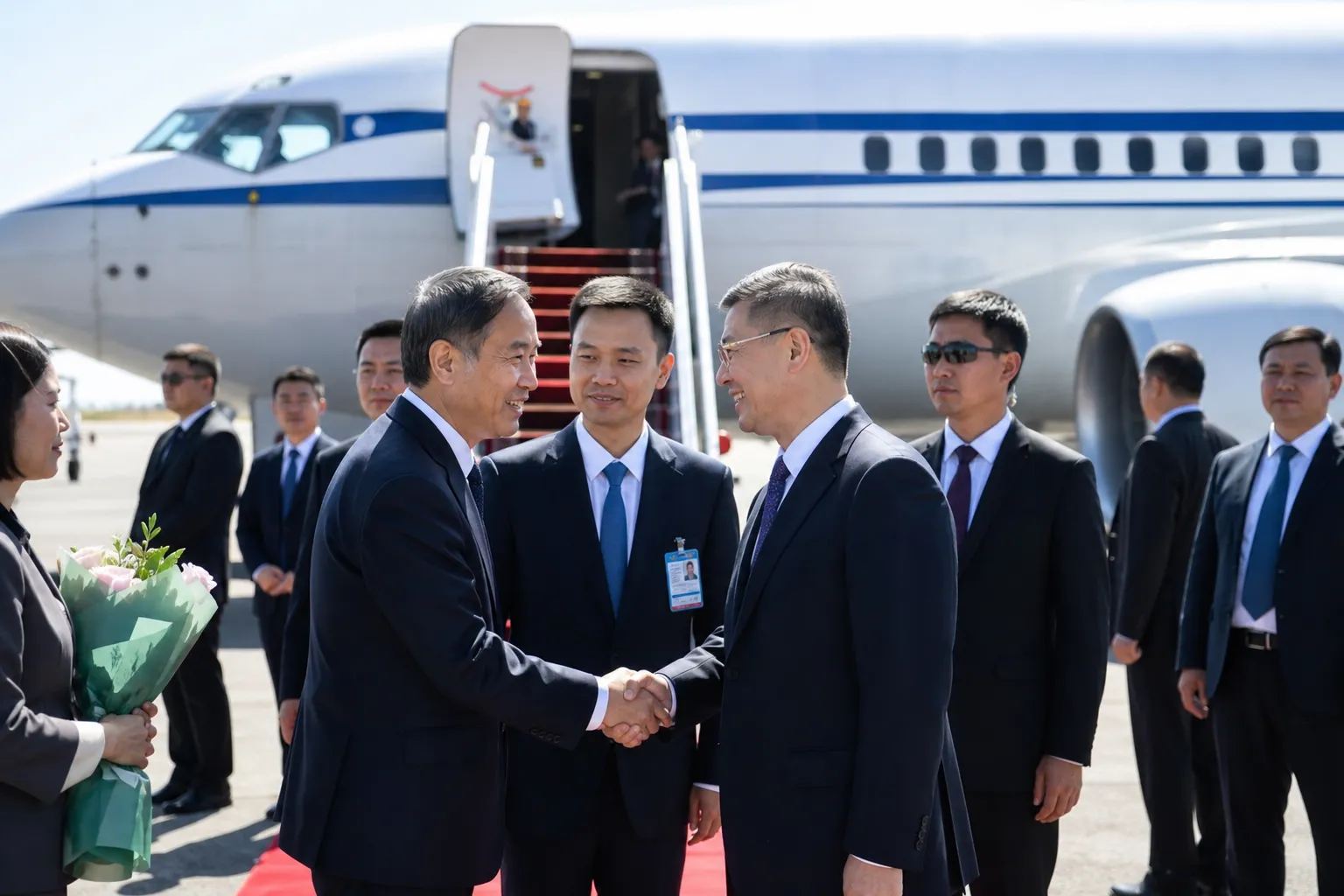
Chinese President Xi Jinping has arrived in Bishkek for the Shanghai Cooperation Organisation summit dedicated to the association’s 25th anniversary. The meetings on Monday and Tuesday are being held under the slogan “25 Years of the SCO: Together for Sustainable Peace, Development and Prosperity”.
Summit participants are expected to discuss regional security, transport connectivity, energy and digital cooperation, as well as the situation in Iran and Afghanistan and food security. As the South China Morning Post reports, analysts expect the summit to show whether the increasingly diverse organisation can move beyond diplomatic signalling.
Trade and security
According to the Chinese government, China’s trade turnover with the five Central Asian states reached a record $106 billion last year. This made Beijing the largest trading partner of these countries collectively for the first time.
Li Lifan, an expert at the Shanghai Academy of Social Sciences, said that China is attaching greater importance to the SCO and Central Asia because of intensifying global competition and the fragmentation of the international order. Zhu Yongbiao, director of the Centre for Afghan Studies at Lanzhou University, called security and a stable neighbourhood Beijing’s main interests in the region, including the protection of transport projects.
More current news is available on the UA.News Telegram channel Telegram.
China and Russia, an aggressor state, founded the SCO in 2001. The organisation has ten members: China, Russia, Kazakhstan, Kyrgyzstan, Tajikistan, Uzbekistan, Belarus, India, Pakistan and Iran. Turkmenistan is not an SCO member but often takes part in summits as an invited country.
Transport routes and balance of power
One of the key infrastructure projects is the China–Kyrgyzstan–Uzbekistan railway, which is currently under construction after two decades of negotiations and Russia’s recent approval. The route is intended to connect China with Central Asia and then with the Middle East and Europe, as well as integrate with the overland route to Afghanistan.
Li Lifan warned that the security of this railway would be a difficult issue because of mountainous terrain and long tunnels vulnerable to terrorist attacks. Alternative routes are also being developed, including the Middle Corridor via the Caspian Sea, the South Caucasus, Turkey and Europe. Potential routes through Iran remain at the planning stage due to sanctions and regional instability.
According to analysts, Central Asian economies are increasingly relying on China for trade, investment, infrastructure and technology, while Russia retains military bases, security mechanisms, and political and cultural ties. Artem Lukin, a professor at Far Eastern Federal University, called the SCO primarily a platform for negotiations, but acknowledged its importance for multilateral dialogue among Eurasian states and diplomatic signalling.




