
September 13, 2026 — Grape Festival in Romania: Traditions and Interesting Facts
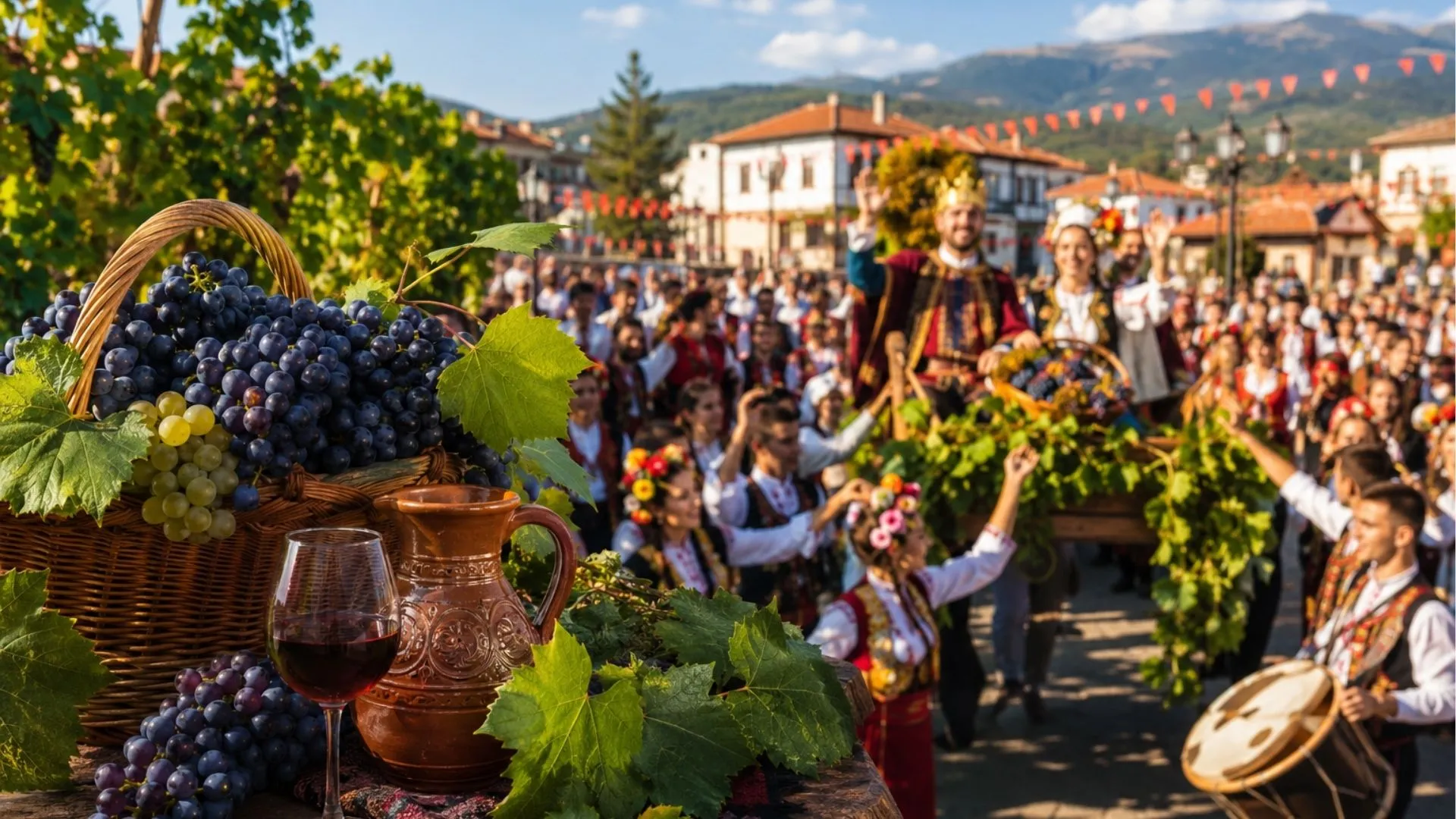
In Romania, September is traditionally associated with the grape harvest and the start of the new winemaking season. In 2026, September 13 falls on a Sunday, the eve of the Feast of the Cross on September 14, which the Romanian folk calendar associates with the start of the grape harvest. This is not an official public holiday with a fixed date, but rather an ancient rural tradition that is still observed today in the country’s wine-producing regions.
The grape harvest in Romania is more than just agricultural work. For centuries, the start of the harvest has been a major event for entire villages and wine-producing regions. After months of work in the vineyards, people could finally see the results of their labor—ripe bunches of grapes that would be turned into wine and grape juice, or must—fresh grape must.
In modern calendars, you can sometimes find the name “Grape Harvest Festival in Romania” listed specifically for September 13. At the same time, Romanian ethnographic sources date the traditional start of the harvest to September 14—the Feast of the Exaltation of the Holy Cross, popularly known as Cârstovul viilor. That is why September 13, 2026, can be considered the day before the traditional start of the grape harvest season.
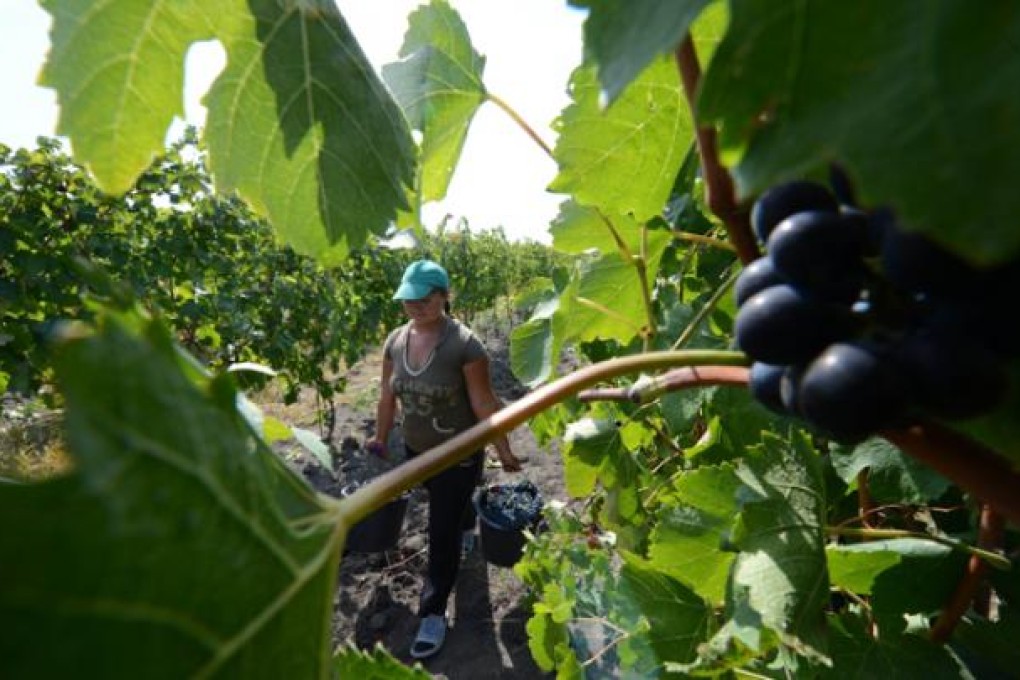
For Romanian winemakers, this period has a special atmosphere. The vineyards fill with people, baskets, and crates, and the ripe bunches are quickly harvested so they don’t lose their quality. In families that own their own vineyards, several generations often join in the work. This turns an ordinary task into a shared fall celebration.
Where Did the Tradition Come From?
Viticulture in what is now Romania has a very long history. Researchers link the development of viticulture to the ancient civilizations that inhabited this region, and the grapevine has long been an integral part of the local economy and culture. For example, in the Drăgeșani area in present-day Vâlcea County, grape cultivation is traced back to the Dacian era. Today, this region remains one of Romania’s most renowned wine-producing areas. Over time, many folk customs developed around the vineyards. People determined the time of the harvest not only by the ripeness of the grapes but also by calendar and religious dates. One of the most important of these dates was September 14—the Feast of the Cross. According to folk tradition, it was only after this day that the active grape harvest was permitted to begin.

The tradition was so important that the start of the harvest could be accompanied by prayers and the blessing of the vineyards. In some areas, elders would invite a priest to pray for the harvest and the future wine. This shows just how closely labor, faith, and the natural cycle were intertwined in rural culture. In other words, the modern grape harvest festival did not emerge as a single specific event in a particular year. It developed gradually from ancient agricultural customs associated with the end of the grape-ripening season. That is why different regions of Romania have their own variations of rituals and celebrations.
Why September?
September is one of the most important months of the year for winemakers. It is during this time that many grape varieties reach the desired level of ripeness, and the berries develop sufficient sugar content and aroma. Before the harvest begins, winemakers can test the grapes’ characteristics, including sugar content and acidity. This determines the best time to harvest the bunches and the quality of the resulting wine. The harvest date varies from vineyard to vineyard. Different varieties ripen at different times, and the harvest is influenced by the weather, temperature, amount of sunlight, and the condition of the vine itself. Therefore, modern winemakers rely not only on the folk calendar but also on the actual condition of the grapes.

At the same time, the traditional calendar remains an important part of the culture. September 14—Cross Day—is considered the start of the grape harvest in Romanian folk tradition. It is this day that museums and ethnographic institutions in Romania associate with Cârstovul viilor—the festival of the vineyards. Therefore, mid-September has become a sort of symbolic transition from summer to fall. The grapes have ripened, work in the vineyard is entering its final stage, and the production of young wine lies ahead.
How the Grape Harvest Used to Take Place
In the past, the grape harvest was a major communal effort. People would gather in the vineyard with their entire families, and sometimes they would take turns helping one another. Some would cut the bunches, while others would place them in baskets, buckets, or wooden containers, and then carry the harvest to the place where it was to be processed. Ethnographic sources describe how, in different regions, people used wicker baskets, wooden buckets, barrels, and large vats for this purpose. After harvesting, the grapes had to be processed quickly, as fresh berries did not keep for long.

One traditional method of extracting juice was to crush the grapes with one’s feet. Special wooden containers, made from a hollowed-out tree trunk, were used for this purpose. The juice flowed out through a special opening, and the resulting must was collected for further fermentation. The work did not necessarily take place in silence. People sang, joked, told stories, and held communal feasts. Grape harvesting was physically demanding work, but at the same time, it provided an opportunity for relatives and neighbors to spend time together.
A Prayer Before Work Begins
In traditional culture, the grape harvest was seen as more than just another task in the fields. A good harvest meant prosperity for the family, so before the season began, people would ask for blessings and give thanks for the harvest. In some villages, farmers would invite a priest to the vineyard or to their home. There, they would say a short prayer for a bountiful harvest and the family’s well-being. This custom was particularly cherished by older generations.
Interestingly, the grapevine held special significance in Romanian folk culture. Cultivating it was considered a task requiring patience, hard work, and responsibility. In some regions, there were even specific rules of conduct for working in the vineyard. While these beliefs are no longer taken literally today, they remain part of folklore. They help us understand just how important the land, the harvest, and wine were to people.
What Happens After the Grapes Are Harvested
Harvesting the grapes is only half the battle. Afterward, the grapes must be processed to produce must, and then wine. In traditional farming, the grapes were crushed, the juice was separated from the solids, and the juice was transferred to large containers. In Romania, fresh grape juice is called “must.” It is sweet, aromatic, and begins to ferment naturally. It is from this must that young wine is eventually produced.
In modern wineries, the process is much more complex. Before the harvest, experts analyze the grapes; the grapes are then picked, pressed, the juice is fermented, stabilized, filtered, and finally, the finished wine is bottled. But even modern winemakers often preserve elements of old traditions. That is why, during fall wine festivals, you can see not only modern equipment but also antique presses, crushers, wooden barrels, and other items used by previous generations.
What traditions are associated with the festival
One of the main traditions is working together in the vineyard. Relatives, friends, and neighbors gather to help bring in the harvest more quickly. There’s more to this than just practicality, as working together has always been a way to strengthen bonds between people. After work, the hosts would often prepare a feast. The table was set with traditional dishes, fresh grapes, and homemade food, while adults were served wine or young must. In some regions, the end of the harvest turned into a full-fledged feast.
Another tradition was to leave some bunches on the vine. In folk beliefs, these last bunches were sometimes called “God’s grapes.” People were in no hurry to cut them down, leaving them as a symbol of gratitude for the harvest. After the work was done, grapes might also be distributed as alms or memorial offerings. Such customs show that the harvest was viewed not only as the owner’s property but also as something worth sharing with others.
The festival isn’t complete without music and feasting
The Romanian grape harvest has a very lively atmosphere. Where the tradition is celebrated as a cultural event, it is accompanied by folk music, dancing, fairs, and tastings. People can not only watch the grapes being harvested but also sample local foods and wines. Open-air museums also host similar events. For example, the “Dimitrie Gusti” National Village Museum in Bucharest held special events dedicated to Cârstovul viilor. The program included demonstrations of traditional grape harvesting, stories about old tools, presentations of Romanian wine varieties, music, folk crafts, and seasonal cuisine.
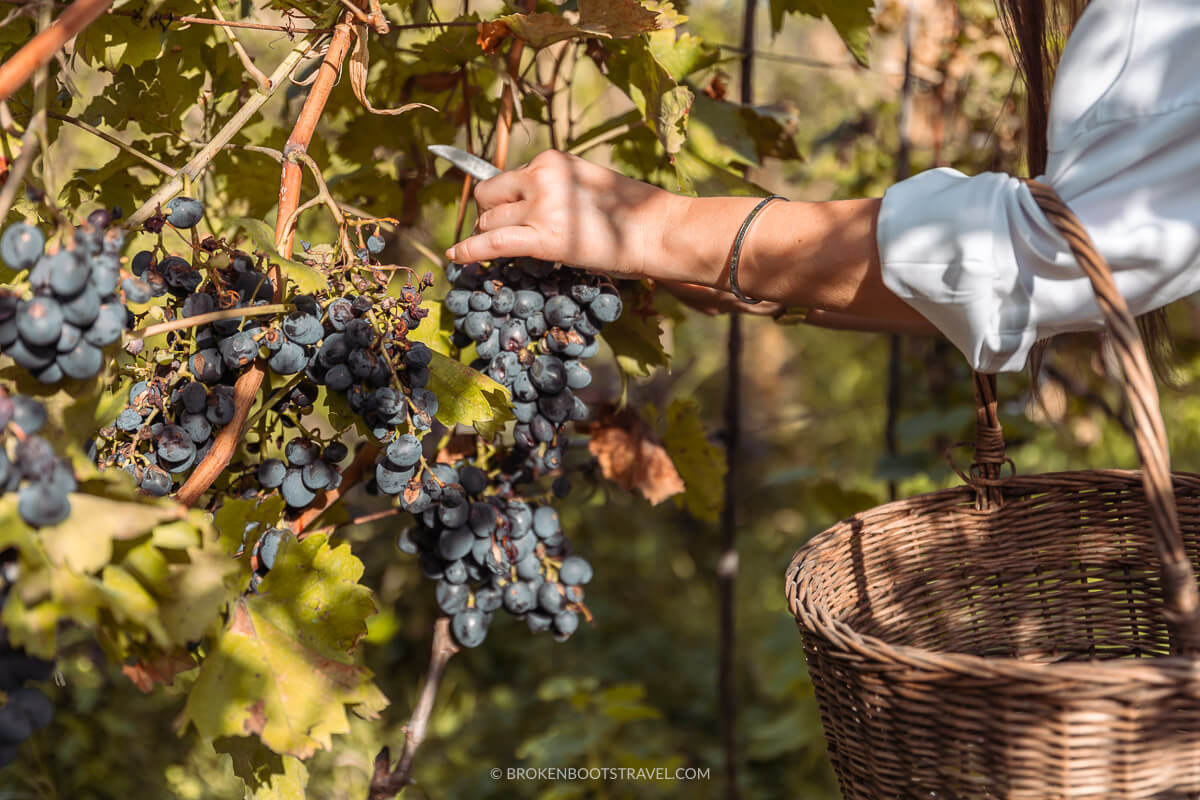
In wine-producing regions, modern festivals often combine old customs with a tourist program. Visitors can walk through a vineyard, pick a bunch of grapes themselves, see how a winery operates, and taste local products. Such events help preserve traditions beyond the pages of books or the walls of museums. Visitors can literally trace the entire journey from the grapevine to the wine glass.
Where in Romania Are Winemaking Traditions Particularly Strong?
Romania has many regions where viticulture remains an important part of local culture. One of the well-known wine-producing centers is Drăgeșani in Vâlcea County. The local winemaking tradition has very deep roots, and among the region’s famous grape varieties are Crâmpoșia and Negru de Drăgășani. There are also wine-producing regions in Moldova, Dobruja, Muntenia, Oltenia, and other parts of the country. Each region has developed its own customs related to the harvest and winemaking. That is why there is no single, universal way to celebrate.
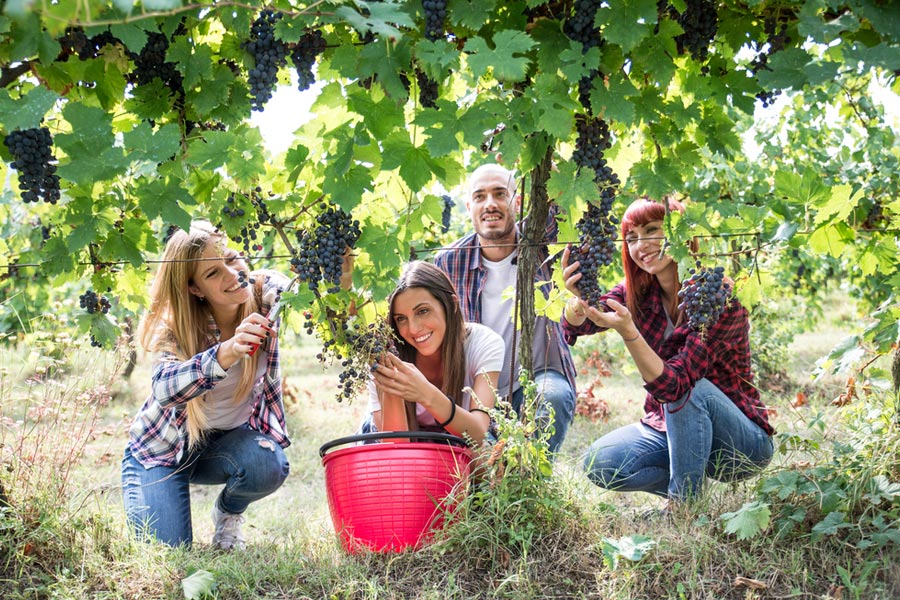
In some places, the grape harvest remains primarily a family affair. In others, it’s turned into a major tourist event. Wineries invite guests and host tours, tastings, and workshops. For example, modern wineries now offer visitors the chance to participate in the harvest themselves, visit the vineyard, and witness the entire winemaking process. In this way, traditional fall work is transformed into a cultural and tourist experience.
Interesting Facts About Grapes and Wine in Romania
The grape harvest has its own folk festival. In Romanian tradition, September 14—the Feast of the Cross—is associated with Cârstovul viilor, marking the start of the grape harvest.
September 13, 2026, is the day before this traditional date. This year, September 13 falls on a Sunday, and September 14 is the Feast of the Exaltation of the Holy Cross. Therefore, these dates are particularly close to the traditional start of the grape harvest season.
In Romania, old methods of grape processing have been preserved. In museums, you can see wooden presses, crushers, and barrels that were used to make wine.
The whole family would come together to harvest the grapes. Even children could join in the work, especially on small farms.
Once the grapes are harvested, a new stage begins immediately. The grapes must be processed to extract the must and create the conditions for its subsequent fermentation.
Different regions had their own customs. In some places, more attention was paid to prayer and blessings; in others, to working together; and in still others, the end of the harvest was marked by a grand feast.
How the Festival Is Celebrated Today
Today, the Romanian grape harvest no longer looks the same as it did a hundred or two hundred years ago. On large vineyards, much of the work is done using modern machinery. At the same time, hand-picking remains important, especially for certain grape varieties and small farms. Wineries organize special fall events for tourists. People are invited to the vineyards, where they are shown the harvesting process, learn about grape varieties, and have the opportunity to taste local wines. Traditional cuisine, music, and other entertainment are often included in the program.
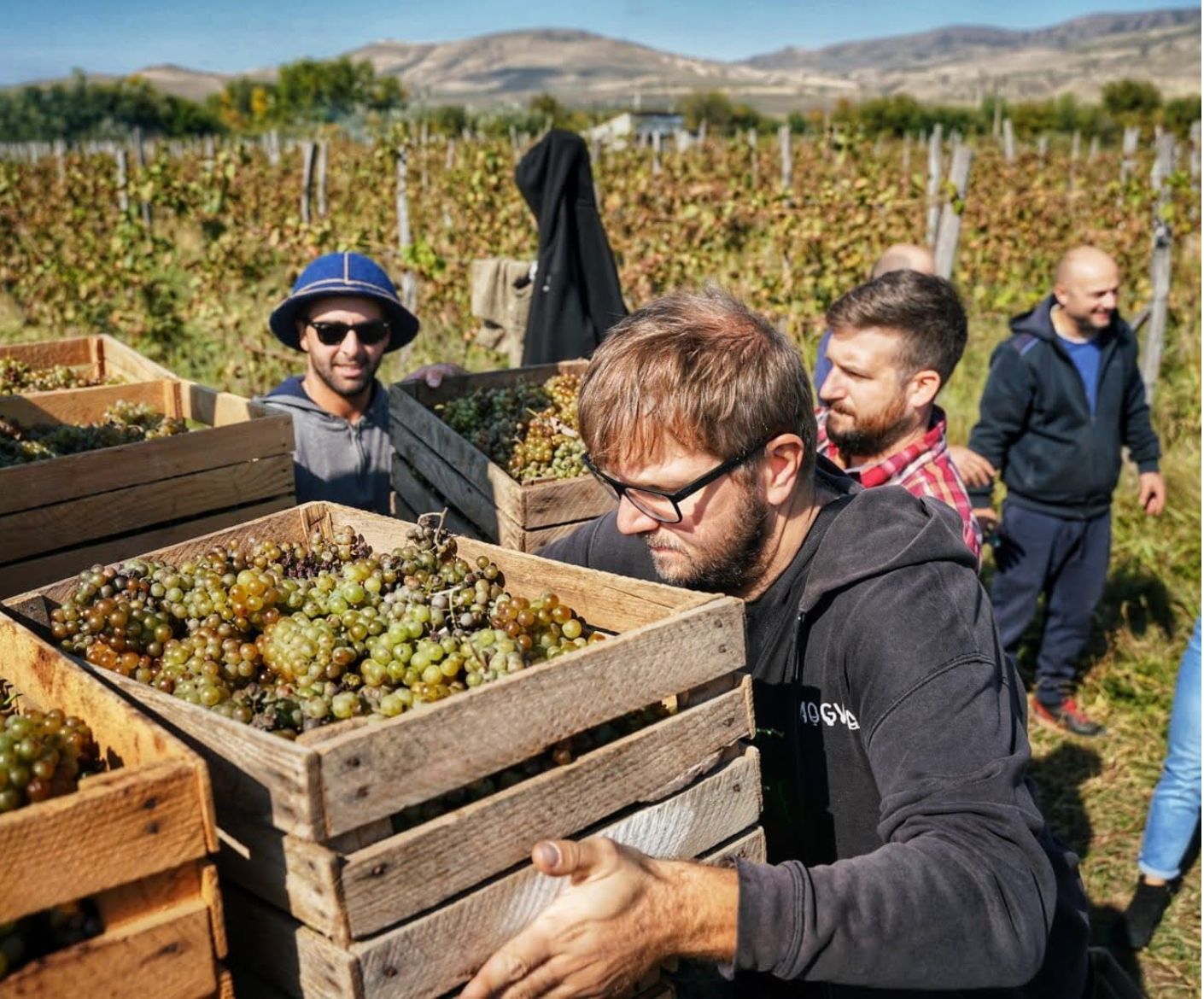
In 2026, such events are also taking place at various wineries. For example, on September 5, one winery hosted a special “Harvest Experience” featuring a hand-harvest, a winery tour, tastings, food, and an entertainment program. This is a good example of how an ancient rural tradition is being transformed today into a modern cultural and tourist event. At the same time, in villages, the tradition can remain much simpler. A family gathers in the vineyard, picks the grapes, takes them home or to a winery, and then sits down together at the table after a day’s work. No big festival, no stage, no tourists—just as previous generations did.
Why This Tradition Is Important
Grape harvesting in Romania is a good example of how ordinary farm work can become part of cultural heritage. For the winegrower, it’s the harvest; for the family, it’s working together; and for the entire region, it’s part of local history. Such traditions preserve more than just wine recipes. Along with them are passed down songs, dishes, work methods, old tools, folk beliefs, and the stories of specific families. That is why ethnographers view the grape harvest as an important part of Romania’s traditional culture.
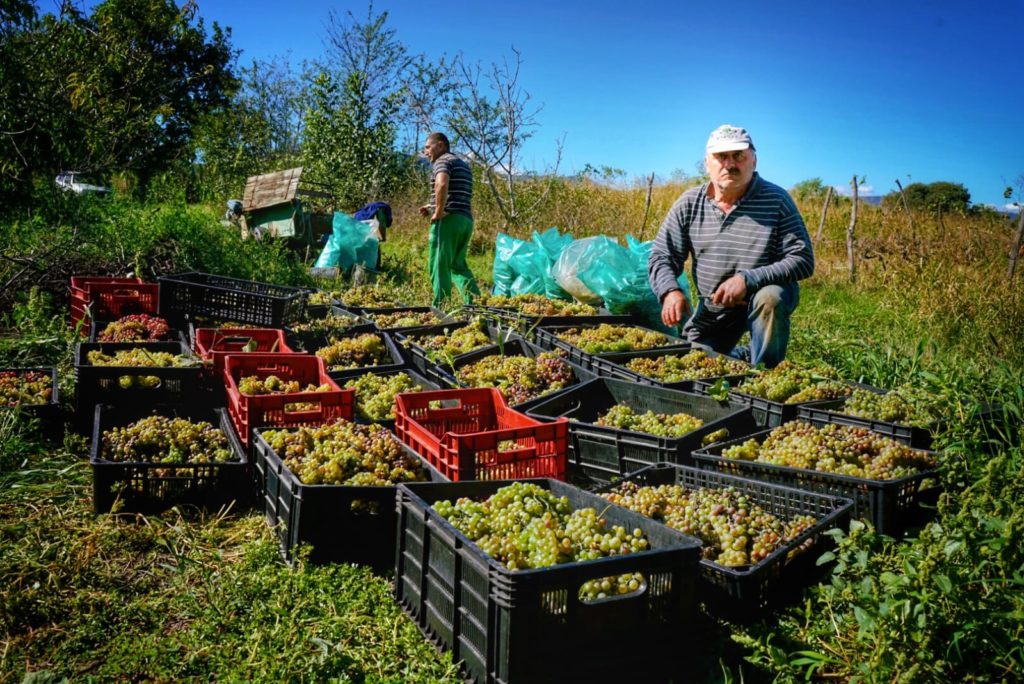
Today, this is complemented by tourist interest. People are curious to see where wine comes from, what a vineyard looks like in the fall, and what happens to the grapes after they’re harvested. But the main idea remains very simple: it’s time to reap what has been worked on all year long. That is why the grape harvest season in Romania is celebrated not merely as another stage of agricultural work, but as a time for gatherings, giving thanks for the harvest, and celebrating together. September 13, 2026, can be called the day when the approach of the traditional grape harvest season is already felt in Romania. And on September 14, the Feast of the Cross, the folk calendar officially marks the beginning of Cârstovul viilor—one of the most fascinating autumn customs associated with grapes and wine.


