
October 2, 2026 — World Smile Day: From an Emoji to a Dedicated Holiday
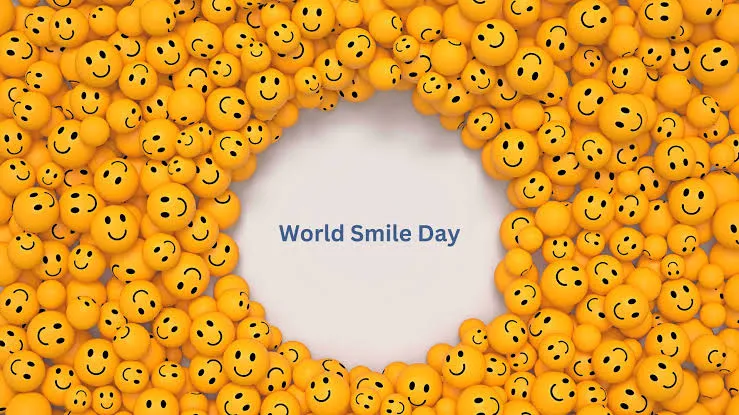
October 2, 2026, marks World Smile Day—an unofficial holiday that falls on the first Friday of October each year. It was founded by American artist Harvey Ball, who created the iconic yellow smiley face in 1963. The idea behind the holiday is simple: to do a good deed, give someone a smile, and—for at least one day—remind people of the power of ordinary human kindness.
World Smile Day does not have a fixed date. It is celebrated on the first Friday in October, so the date changes every year. In 2026, the holiday falls on October 2, and in subsequent years, the date will be different. Friday was chosen for this day for a reason. It’s naturally associated with a good mood, since the weekend is just around the corner. And for many people, the beginning of October already signals shorter days, colder weather, and the end of the warm season. So the idea behind the holiday is to add a little positivity during this time of year.
Smile Day is not a national or official international holiday. It does not grant an extra day off and does not have a mandatory program. It is rather a symbolic day that encourages people to do something kind for others. In 2026, it falls on Friday, October 2. That’s why on this day, you’ll see more themed posts on social media, greetings, photos with emojis, and various charitable initiatives.
How World Smile Day Came to Be
The history of the holiday is directly linked to Harvey Ball—an American artist and advertising designer from Worcester, Massachusetts. He is credited with creating the version of the smiley face that virtually the entire world recognizes today. Ball created a yellow, round face with two eyes and a simple black smile in 1963. He was approached by the insurance company State Mutual Life Assurance Company. After merging with another company, employees began experiencing issues with their mood and morale. Management wanted to come up with a simple symbol that would help create a friendlier atmosphere. Ball was asked to create a small drawing for the company’s internal campaign.
The artist drew a yellow face with a smile and eyes. According to the Harvey Ball Foundation, it took him about ten minutes to create this symbol. He was paid $45 for his work. The company began printing the smiley face on badges, which were distributed to employees and customers.

At first, no one could have predicted just how popular this simple drawing would become. People quickly took a liking to the badges, and demand for them grew. Eventually, the smiley face spread far beyond the insurance company and began appearing on clothing, mugs, postcards, posters, and other products. And so, a simple drawing created to lift employees’ spirits became one of the world’s most recognizable symbols of positive emotions.
Why Harvey Ball Created Smile Day
More than three decades had passed since the smiley’s debut, and Harvey Ball decided to create another tradition associated with it. In 1999, he launched World Smile Day. His idea was to restore the smiley’s original meaning—friendliness, good cheer, and simple acts of kindness. Ball proposed celebrating the holiday annually on the first Friday in October. For him, it was not meant to be a day of advertising or shopping featuring smiley face imagery. On the contrary, the main focus was to be on people and their actions.

The holiday’s slogan became: “Do an act of kindness. Help one person smile,” which in Ukrainian can be translated as “Do a good deed. Help one person smile.” It is this phrase that remains the central idea of World Smile Day to this day. The first celebration took place in 1999 in Worcester, Harvey Ball’s hometown. That same year, the U.S. issued a commemorative postage stamp featuring a smiley face, and a representative from the U.S. Postal Service participated in the events in Worcester.

Harvey Ball passed away in 2001. After his death, the Harvey Ball World Smile Foundation was established, which continues to support his vision and organize events related to World Smile Day. The foundation emphasizes small charitable initiatives and acts of kindness that can make other people’s lives a little better.
How the Famous Smile Icon Was Born
The story of the smiley face itself didn’t begin with holidays or the internet. In 1963, a company needed a simple symbol for an internal campaign. Employees were anxious about changes following a corporate merger, so management wanted to improve the team’s morale a bit. Harvey Ball decided not to come up with anything complicated. He drew a bright yellow circle, added two eyes and a smile. Simplicity became the drawing’s greatest strength. It was easily recognizable even from a distance, and no words were needed to understand the symbol.

According to the foundation’s history, the company initially ordered only a small number of badges. But they quickly became popular, so they began producing many more. Eventually, the smiley face appeared on numerous products and became part of pop culture. Interestingly, Ball himself didn’t make much money from the subsequent popularity of his drawing. He received only $45 for creating the symbol. Nor did he attempt to turn the original design into his own massive commercial empire.
That is precisely why the history of the smiley face often captures people’s attention. A man created the drawing in a few minutes, received a small one-time payment for it, and years later, this symbol became famous all over the world.
The smiley became part of popular culture
After the original drawing appeared, the smiley face began to spread very quickly. It was printed on badges, mugs, T-shirts, stickers, postcards, and other items. The symbol’s popularity grew particularly rapidly in the early 1970s. In 1972, French journalist Franklin Lafrani used the smiley in the newspaper France-Soir. He launched a campaign called “Take Time to Smile,” and the smiling yellow symbol became the emblem of this initiative. The smiley face was used in the newspaper to highlight positive news stories.
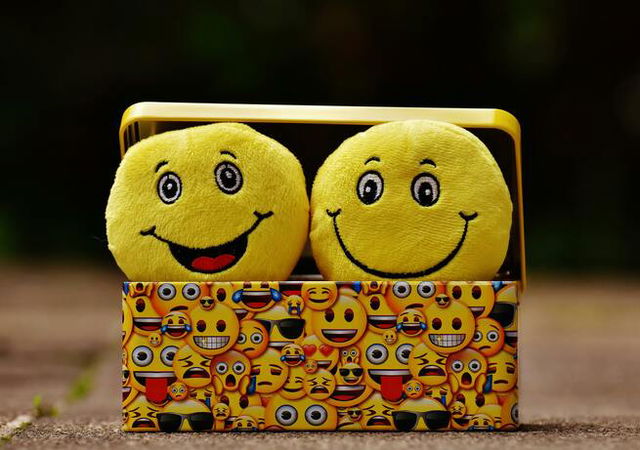
Gradually, the image became known far beyond the United States. It was used in advertising, on products, and in various charitable campaigns. The smiley face began to be associated with joy, friendliness, and good news. Later, this image made its way into digital communication. Text-based smiley faces, such as :-) became a way to convey emotion when people couldn’t see the person they were talking to. And with the rise of smartphones and social media, modern emojis appeared. Today, the yellow smiling face is easily recognizable even without an explanation. It has become a kind of universal language of positive emotion.
Why Do People Smile?
A smile isn’t just a movement of the facial muscles. It also serves an important social function. Research shows that different types of smiles can convey different signals: joy, friendliness, a desire to make contact, or even entirely different emotions. In other words, the meaning of a smile depends on the situation and on exactly how a person smiles. A smile can help people feel closer to one another. Positive facial expressions are often perceived as an invitation to communicate. That is why a smile can be important when meeting someone new, having a conversation, working with clients, or simply during a friendly get-together.

Scientists are also studying the connection between smiling and the body’s response to stress. In one experiment, participants who maintained a positive facial expression during a stressful situation had a faster return to normal heart rate after the stress than participants with a neutral expression. This does not mean that smiling alone cures stress or illness, but studies show that positive facial expressions can influence the body’s response.
A separate review of scientific studies also describes a possible link between smiling and positive emotions, social relationships, and recovery from stress. At the same time, the authors emphasize that research on this topic is still ongoing and that smiling should not be treated as a universal “remedy.” In other words, the idea that “smiling is good for you” has some scientific basis, but it should not be overstated. Smiling does not guarantee longevity and cannot replace medical treatment or psychological help. Its benefits are more closely linked to mood, communication, and reactions to specific stressful situations.
Not every smile means joy
An interesting fact is that people don’t just smile when they’re happy. A smile can be a way to show friendliness, establish a connection, or respond to another person’s behavior. In some situations, a person may smile because they’re nervous or even feel uncomfortable. Scientists identify various social functions of smiling. For example, one might express joy and approval, another might help maintain a connection, and a third might be perceived as a sign of dominance. Therefore, the simple advice to “just smile” isn’t always appropriate. It’s important to consider the context and the person’s own feelings.
A study involving male students showed that different types of smiles from a conversation partner can affect the body’s response to social stress in different ways. Friendly smiles could mitigate the stress response, whereas a smile perceived as condescending had the opposite effect. Therefore, Smile Day should not be interpreted as a call to constantly walk around with a forced smile. The idea behind it is quite different. It’s about kindness, support, and the desire to make someone feel good.
How World Smile Day Is Celebrated
Since this is an unofficial holiday, there are no set rules for celebrating it. People choose for themselves how to participate. The simplest option is just to do something nice for someone. You can treat a coworker to coffee, reach out to a friend you haven’t spoken to in a while, help an elderly person with their groceries, or offer support to someone going through a tough time. It’s precisely these small acts that best embody Harvey Ball’s vision.

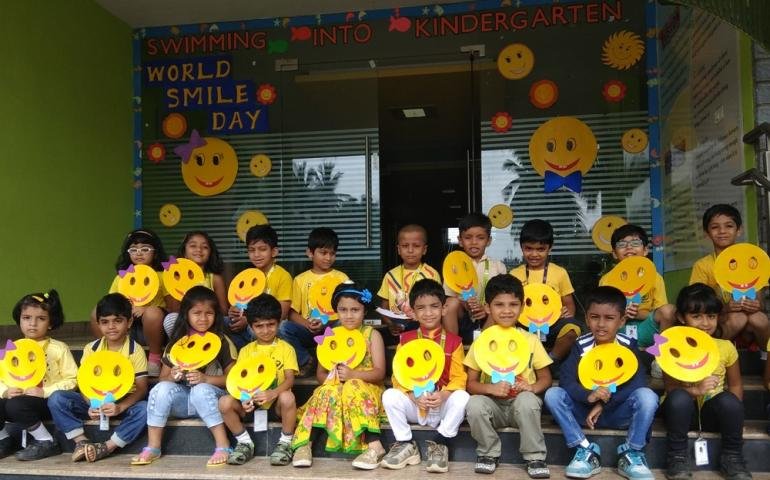
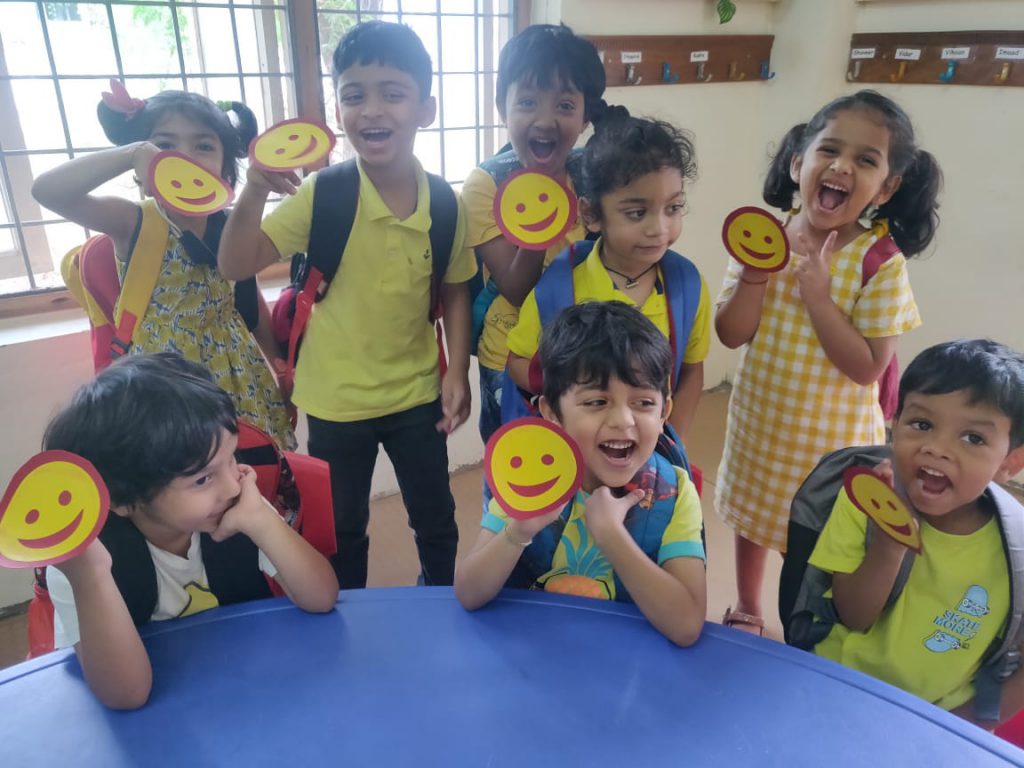
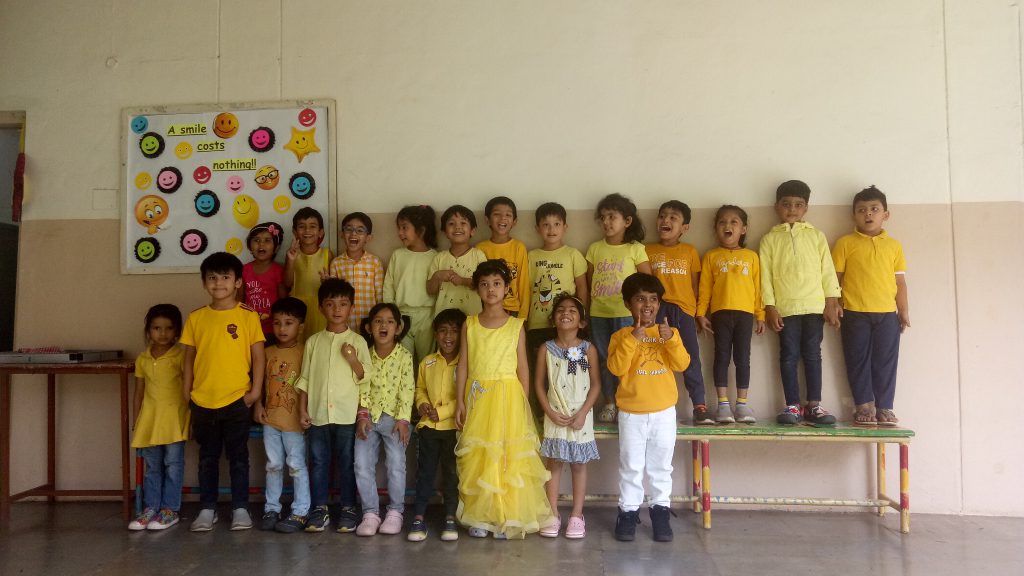
Schools and children’s centers may hold themed events on this day. Children draw emojis, make cards, take photos with yellow symbols, and come up with acts of kindness. Some organizations hold charity events or raise funds to help children. On social media, people post photos of themselves smiling and use themed hashtags. You can also simply share a positive story or write a few kind words to someone who needs them.
The main thing is not to turn the holiday into nothing more than photos with emojis. According to its creator’s vision, a smile should be the result of a good deed, not just a picture on a calendar. That’s why the main motto remains: “Do a good deed. Help one person smile.”
Interesting Facts About Smile Day
The first World Smile Day took place on October 1, 1999, in Worcester, where Harvey Ball created his famous symbol. That’s where the history of this new holiday began. Later, the date was set for the first Friday in October.
The smiley face itself appeared 36 years before Smile Day. Ball created it in 1963, but didn’t establish the holiday until 1999. In other words, more than three decades passed between these two important events in the symbol’s history.
Another interesting fact: Ball received only $45 for creating the famous smiley face. He didn’t make millions from the subsequent popularity of his drawing. That’s why his story is often cited as an example of how a simple idea can become much bigger than the original concept.
The original smiley was very simple. A yellow circle, two eyes, and a smile—that’s the entire design. But it was precisely this simplicity that helped it resonate with people in different countries.
Another interesting detail is that Harvey Ball himself wanted Smile Day to be associated not with commerce, but with good deeds. That’s why his slogan isn’t about gifts or shopping, but about a specific act that can make another person smile.
What You Can Do on October 2
You don’t have to throw a big party on World Smile Day. You can start with the simplest thing—smile at someone you meet in the morning, thank someone for their help, or offer support to a friend. You can send a message to someone you haven’t seen in a long time. Sometimes a few kind words from someone you least expect can really lift your spirits.
Another option is to do a good deed anonymously. Help someone with their groceries, leave a tip, support a charitable initiative, or simply give up your seat on public transportation. These things don’t take much time or money. For children, you can organize a little “good deeds challenge.” For example, everyone should do one kind thing for another person. In the evening, you can share what you managed to do. Or you don’t have to come up with anything at all. Just spend the day with the people you care about, talk, laugh, and remind them that they matter. That’s the main idea behind the holiday.
Why Smile Day Remains Relevant
Harvey Ball’s idea emerged over 25 years ago, but it hasn’t lost its meaning. People still interact, get anxious, get tired, and go through difficult times. Sometimes a simple act of kindness can truly make communication easier. A smile doesn’t solve every problem. It doesn’t replace help, medical treatment, or a serious conversation. But it can be a small signal: “I see you,” “I care about you,” “I’m here for you.”
That’s why World Smile Day isn’t just a day for yellow emojis. It’s a reminder that treating others with kindness doesn’t require a lot of resources. Sometimes, all it takes is a few warm words, a little help, or a sincere smile. On October 2, 2026, you can simply do one kind deed for another person. It is precisely this simple gesture that best embodies the vision of Harvey Ball, who created the holiday more than 25 years ago.




