
Holiday on September 23, 2026 — Shūbun-no-hi, or the Autumnal Equinox Day in Japan

On September 23, 2026, Japan celebrates Shūbun-no-hi, or the Autumnal Equinox Day. This national holiday marks the arrival of autumn, honors nature, and commemorates deceased relatives. On this day, the Japanese visit their ancestors’ graves, tend to them, leave offerings, and spend time with their families.
Shubun-no-hi falls on the day of the autumn equinox, so its date may vary slightly from year to year. In 2026, the holiday will be observed on September 23, and it will be an official day off in Japan. The date is determined not simply by the calendar but by astronomical calculations. These are conducted annually by the National Astronomical Observatory of Japan, and the final date is published in advance.
That is why Shūbun-no-hi does not have a fixed date like New Year’s Day or the Emperor’s Birthday. Most often, it falls on September 22 or 23. In 2026, the date falls on September 23. The name of the holiday comes from the Japanese word Shūbun, which means “autumnal equinox.” During this period, the sun rises roughly in the east and sets roughly in the west. Day and night become nearly equal in length, although there is never a complete mathematical equality between daylight and darkness. For the Japanese, this is not just an astronomical date. It has become an important part of the traditional calendar and is associated with the transition from the hot summer to the cooler fall.
What Is the Autumnal Equinox?
The autumnal equinox is the moment when the Sun crosses the celestial equator, moving from the Northern Hemisphere to the Southern Hemisphere. Around this time, the length of day and night becomes roughly equal. After the equinox in the Northern Hemisphere, daylight hours gradually shorten, and nights grow longer. In Japan, this natural transition has been part of the seasonal rhythm of life for centuries. For an agricultural society, the change of seasons had practical significance, as it was linked to the harvest and preparations for the colder months.
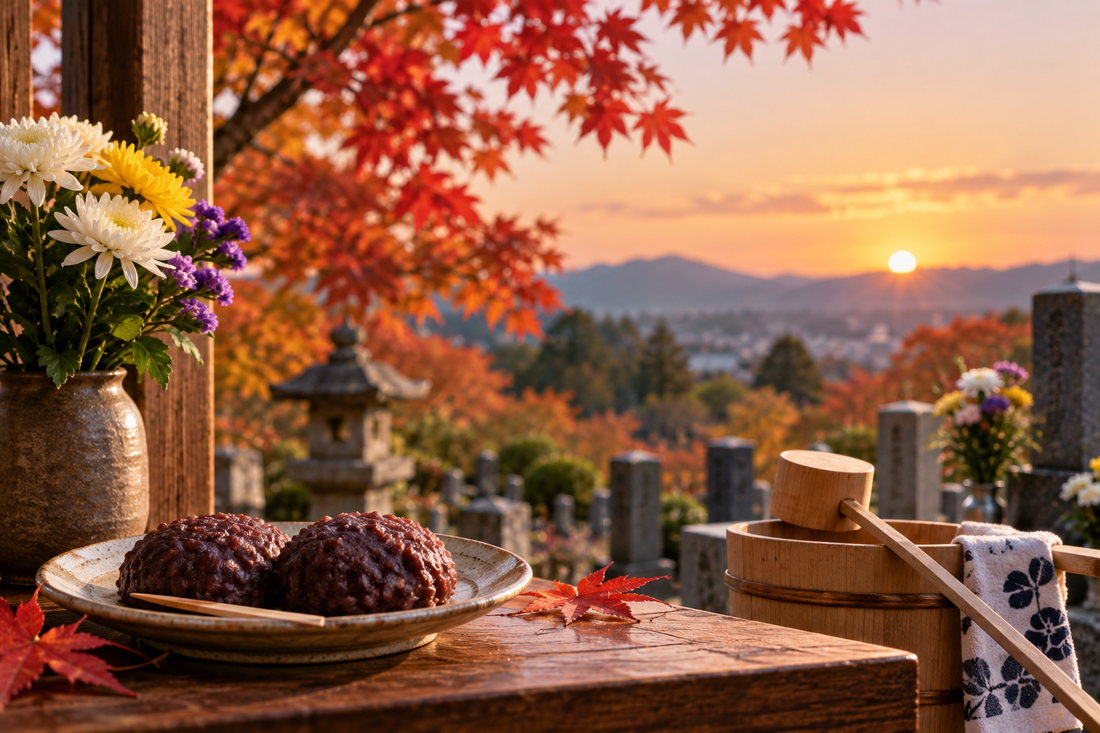
Today, the Japanese are no longer as directly dependent on the changing seasons as they were in the past. However, the traditions associated with the autumn equinox have remained. They have combined the natural cycle with family remembrance and Buddhist customs. The official description of the holiday’s significance in Japanese law is linked to honoring ancestors and commemorating the deceased. This is precisely how Shubun-no-hi is defined in the list of Japan’s national holidays. Therefore, for the Japanese, it is a special day when nature and family memory come together.
How the Holiday Came to Be
The modern status of Shubun-no-hi took shape after World War II. In 1948, Japan passed a law on national holidays, which established the country’s system of public holidays. It was then that the Autumnal Equinox Day was granted the status of a national holiday. The law defined its purpose as a day to honor ancestors and remember the deceased. In other words, the state assigned not only natural but also social and cultural significance to this astronomical date.

However, the traditions associated with the equinox are much older than modern Japan. Of particular importance is the Buddhist period known as Higan, which occurs around the spring and autumn equinoxes. Its traditions took shape in Japan many centuries ago. Thus, the modern Shubun-no-hi combines ancient religious customs with the modern civil calendar. The day remains a holiday, but for many people, its significance extends far beyond simply being an extra day off.
What Is Higan
One of the main traditions of Shubun-no-hi is connected to Higan. This is a seven-day period surrounding the equinox: three days before it, the equinox itself, and three days after. This period occurs in both spring and fall. The word “Higan” can literally be translated as “the other shore.” In the Buddhist tradition, it is associated with achieving enlightenment and the transition from the world of earthly suffering to a spiritual state.

In Japan, Higan has also gradually become a time to remember the deceased. People visit the graves of their relatives, clean them, and leave flowers and food. For many families, this is one of the most important traditions of the fall season. There is also a Buddhist explanation for the special significance of the equinox. It is believed that the sun setting exactly in the west during this period symbolically brings the earthly world closer to the western Pure Land of the Buddha. For this reason, the equinox has become an auspicious time for prayer and spiritual practices. Therefore, Shubun-no-hi is not simply “Autumn Day.” For many Japanese, it is a moment when they pause amid the hustle and bustle of daily life to remember those who are no longer with them.
How the Japanese Honor Their Ancestors
One of the main traditions is a visit to the cemetery. People come to the graves of their relatives, tidy up the area around the gravesite, wash the headstone, and clear away old leaves and debris. After cleaning, they bring flowers, water, and food to the grave. Some light incense and pray. For Buddhist families, this is a way to express respect for their ancestors and maintain a connection between generations.
Importantly, this isn’t necessarily a grand religious ceremony. For many people, it’s quite simple: the family gathers, goes to the cemetery, cleans the grave, and spends some time there. Afterward, relatives may return home or have lunch together. It is this family aspect that makes Higan an important part of Japanese culture. Visiting graves during this period is so widespread that, on the eve of the equinox, there are noticeably more people at cemeteries and near temples. The tradition is passed down from older to younger generations and remains relevant even in modern cities.
What People Eat on Shubun-no-hi
The traditional sweet dish ohagi is associated with the autumn equinox in Japan. These are small rice balls coated with a sweet paste made from red azuki beans. They are often made at home or purchased in stores and pastry shops. Ohagi is considered the traditional food of the autumn Higan. In the spring, a very similar dish is called botamoti. The difference in names is linked to seasonal flowers: in the fall—hagi, or bush clover—and in the spring—botan, or peony.
The use of azuki bean paste is no coincidence. In Japanese culture, red beans have traditionally been associated with protection against evil and misfortune. Therefore, these sweets have not only culinary but also symbolic significance. Ohagi can be brought to graves as an offering to ancestors. They are also placed on the home Buddhist altar. After praying, the family can eat these sweets together. In this way, even a simple rice ball becomes part of the fall tradition. Through food, the Japanese combine the memory of their ancestors, the changing seasons, and family togetherness.
The Red Flower That Has Become a Symbol of Autumn
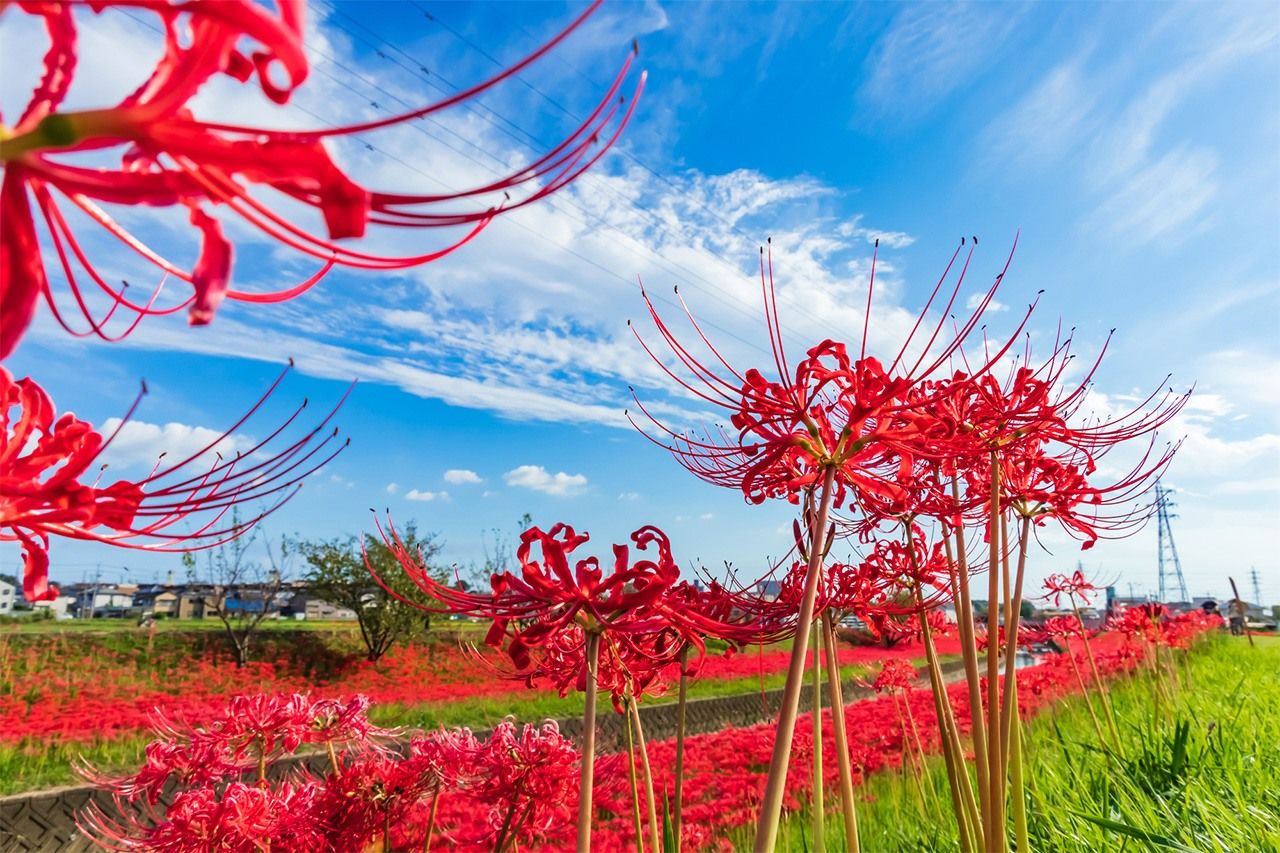
During Shubun-no-hi in Japan, you can see the bright red flowers of the higanbana, or red spider lily. It typically blooms during the autumn Higan period. For this reason, its name is literally tied to this period. Higanbana flowers often grow along rice fields, rivers, roads, and near cemeteries. Their bright red color stands out clearly against the backdrop of autumn foliage.

In Japanese culture, this flower has a mixed reputation. Because it is often seen near graves, it is associated with death and the memory of the deceased. At the same time, in the Buddhist tradition, the higanbana is considered a sacred flower. There is also a practical reason why these plants were often planted near fields. Higanbana bulbs contain toxic substances, so the plant may have helped deter certain animals and pests. Interestingly, higanbana first produces leaves after it blooms. That is why its bright flowers can appear in just a few days, giving the impression that they suddenly appeared in the autumn fields.
Is Shubun-no-hi Just a Day Off?
Shubun-no-hi is indeed an official national holiday in Japan. On this day, government offices do not operate on their usual schedule, and schools and many companies are also closed. But it would be wrong to view it merely as an extra day off. The meaning of the holiday is tied to remembering ancestors and the deceased, as well as to the transition from one season to another.
For some Japanese, it is first and foremost a family day. For others, it is an opportunity to visit a temple or cemetery. Some use the day off to take a trip out of town and enjoy the autumn scenery. The holiday does not have a single, mandatory way to celebrate. People can celebrate it in different ways, depending on family traditions and religious beliefs. That is why Shubun-no-hi is a fairly low-key holiday. There are no mandatory loud parades or large-scale street festivities. The main focus is on family, remembrance, and nature.
Shubun-no-hi and Nature
Although the Autumnal Equinox Day is most often associated with ancestors today, official Japanese law also considers national holidays to be days when people can reflect on their significance. Shubun-no-hi itself is dedicated to honoring ancestors and remembering the deceased. The autumn equinox is also an important natural milestone. The heat gradually subsides, evenings grow cooler, and daylight hours shorten.
In traditional Japanese culture, the changing of the seasons has always held special significance. The Japanese closely observed the blooming of plants, the ripening of crops, changes in the weather, and the behavior of animals. Therefore, the fall season is often seen as a time of tranquility and reflection. People spend more time in nature, admire the fall colors, and prepare for the colder season. Shubun-no-hi clearly illustrates this aspect of Japanese culture. Here, the natural cycle is inseparable from human life, and the changing of the seasons provides an opportunity to reflect on the past and spend time with loved ones.
Interesting Facts About Shubun-no-hi
The date of the holiday varies. Unlike many Japanese national holidays, Shubun-no-hi does not have a fixed calendar date. It is determined based on astronomical calculations. In 2026, it falls on September 23.
In 2026, Japan will have “Silver Week.” September 21 is Respect for the Aged Day, and September 23 is Shubun-no-hi. September 22 falls between the two national holidays, so under Japanese law, it also becomes a holiday. As a result, a longer period of rest is formed, known as “Silver Week.”
Shubun-no-hi has been a national holiday since 1948. That was when Japan passed a law on national holidays. In it, the Autumnal Equinox Day was designated as a day to honor ancestors and remember the deceased.
Higan lasts seven days. The day of the equinox itself is only the middle of this period. Three days before and three days after are added to it.
Ohagi has a seasonal name. The same dish is called botamoti in the spring and ohagi in the fall. The names are associated with flowers that bloom during the corresponding seasons.
Higanbana gave its name to the entire period. The red spider lily traditionally blooms around the time of the autumn Higan, which is why the Japanese call it the “Higan flower.”
How the Autumnal Equinox is Celebrated Today
Modern Shubun-no-hi combines very ancient traditions with the daily lives of the Japanese. For many families, it is first and foremost an opportunity to remember deceased relatives and visit their graves. People tend to the graves, bring flowers, light incense, and leave seasonal offerings. At home, they may prepare ohagi and make offerings on the Buddhist altar.
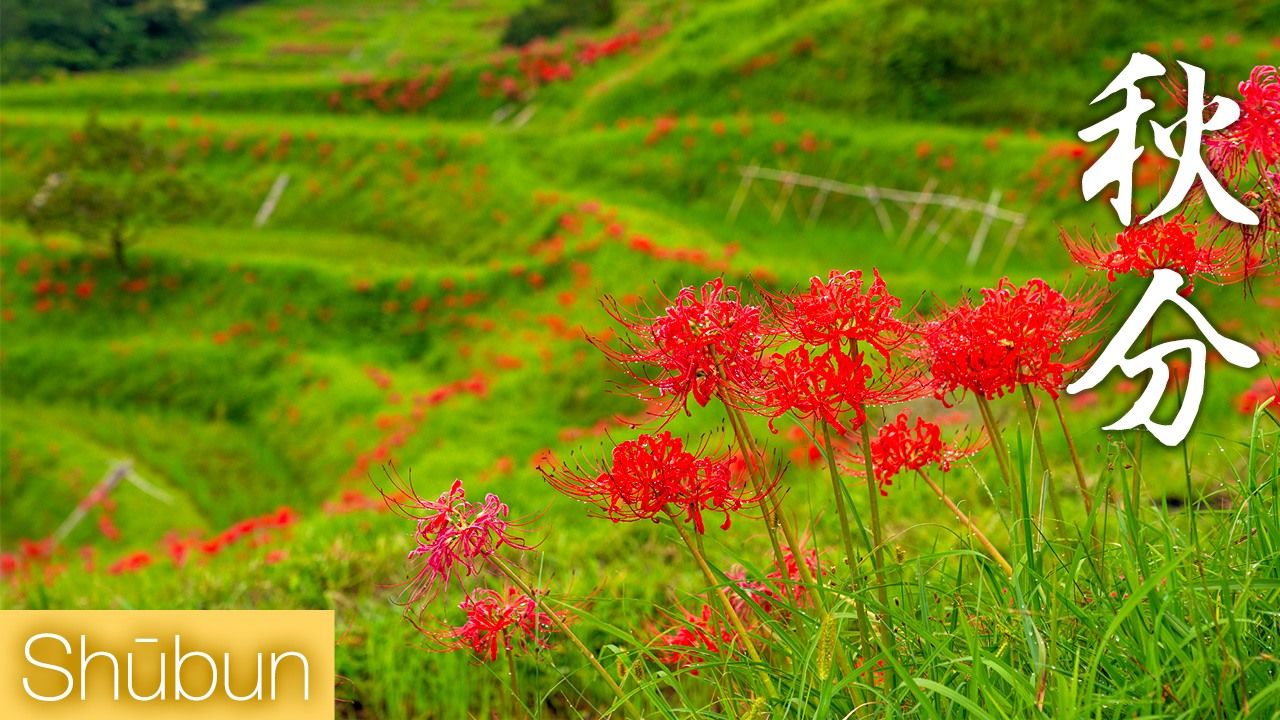
Other Japanese people spend this day with their families or use the day off to travel. Since the date falls at the beginning of fall, it’s also a good time to take a trip out of town and observe the seasonal changes in nature. Buddhist memorial services are held at temples during this period. People may attend them with relatives or visit the temple on their own. So Shubun-no-hi is not like a boisterous festival. Its atmosphere is rather calm and family-oriented. It is a day when the Japanese remember past generations, take notice of the changing seasons, and spend time with loved ones.
Why Shubun-no-hi Is Important to the Japanese
Shubun-no-hi demonstrates just how closely nature, family, and memory are intertwined in Japanese culture. The equinox itself has become a natural point in the year around which special traditions have formed. It is also an example of how ancient religious customs continue to exist in modern society. Even people who do not observe all Buddhist rituals may visit the graves of relatives or spend time with family during this period.
The holiday serves as a reminder that remembering loved ones can be part of everyday life. This doesn’t necessarily require grand ceremonies. Sometimes it’s enough to tidy up a grave, bring flowers, prepare a traditional dish, or simply remember the person. Shubun-no-hi also helps people sense the changing of the seasons. After the equinox, summer finally gives way to fall, and with it, the rhythm of daily life changes. That is why September 23 in Japan is not just another day on the calendar. It is a combination of an astronomical event, a national holiday, an ancient Buddhist tradition, and a quiet family commemoration of ancestors.




