
Holiday on September 24, 2026 — Harvest Day in South Korea: The History and Traditions of Chuseok

On September 24, South Korea begins its Chuseok holiday celebrations—one of the country’s most important traditional holidays. Harvest Day itself falls on September 25 in 2026, and the holiday period will last from September 24 to 26. During this time, Koreans gather with their families, give thanks for the harvest, honor their ancestors, and prepare traditional dishes.
Chuseok is one of South Korea’s main traditional holidays. It is often referred to as the Korean Thanksgiving or Harvest Festival, as the holiday is associated with the end of the agricultural season and gratitude for the harvest. According to the traditional calendar, it is celebrated on the 15th day of the eighth lunar month. That is why the date of Chuseok on the Gregorian calendar changes every year. In 2026, the main day of the holiday falls on Friday, September 25, and the official holiday period runs from September 24 to 26.

For Koreans, Chuseok is not just a holiday associated with food and the harvest. It has a strong family-oriented significance. People return to their hometowns, reunite with their parents and other relatives, honor their ancestors, and spend time together. It is precisely because of the massive travel across the country that Chuseok is one of the busiest times of the year for transportation.
Where Does the Holiday Come From?
The history of Chuseok dates back to ancient times. The National Folk Life Museum of Korea traces its origins to the Habe tradition, which existed as far back as the Silla period. According to an ancient account, women from different parts of the country competed in weaving for an entire month. After the competition ended, the losing team prepared a feast for the winners, and the celebration was accompanied by songs, dances, and other entertainment.
Over time, this tradition evolved, and the holiday came to be associated primarily with the end of the agricultural season. People gave thanks for the harvest, prepared food from the new grain, and honored their ancestors. That is why Chuseok gradually became one of the main holidays on the Korean calendar. The name Chuseok is literally associated with the concept of an autumn evening, and another common name for the holiday is Hangawa. It falls on the full moon of the eighth lunar month, which is why the moon has also become an important symbol of this period.
Why Chuseok Is Called Harvest Day
In ancient Korea, people’s lives depended largely on agriculture. Therefore, the end of the harvest season was an important event for the entire family and community. After hard work, people received the first fruits of the new harvest and could prepare festive dishes from them. Chuseok became a time when people expressed gratitude for what they had managed to grow throughout the year. Part of the new harvest was used in traditional rituals. Rice, fruits, and other seasonal produce held a special place.

Today, South Korea has long since ceased to be a predominantly agrarian country, but the holiday’s significance has not faded. Chuseok remains one of the country’s two most important traditional holidays, along with Seollal—the Korean New Year.
How Koreans Celebrate Chuseok
One of the main traditions is for the whole family to gather together. During the holiday, millions of people travel to their hometowns to spend time with their parents, grandparents, and other relatives. People also exchange gifts, prepare meals together, and visit family graves. An important part of Chuseok is charye—a traditional memorial ceremony in honor of ancestors. During the ceremony, food and drinks are placed on a special table. In this way, the family expresses gratitude to those who came before them and reflects on its origins.
Another tradition is visiting the graves of ancestors. This ritual is called sonmyo. Relatives clean the area around the graves and honor the memory of the deceased. In some families, a shared meal follows this ritual.
What People Eat on Chuseok
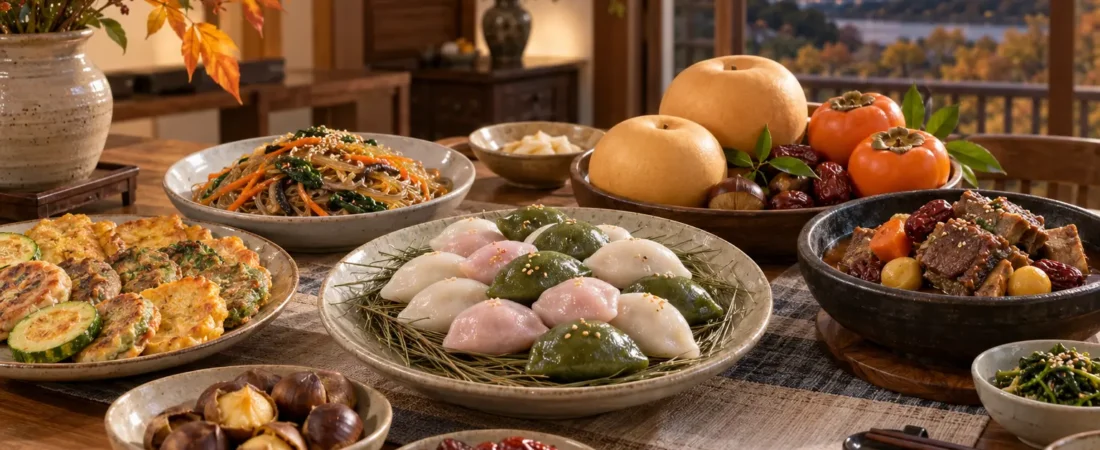
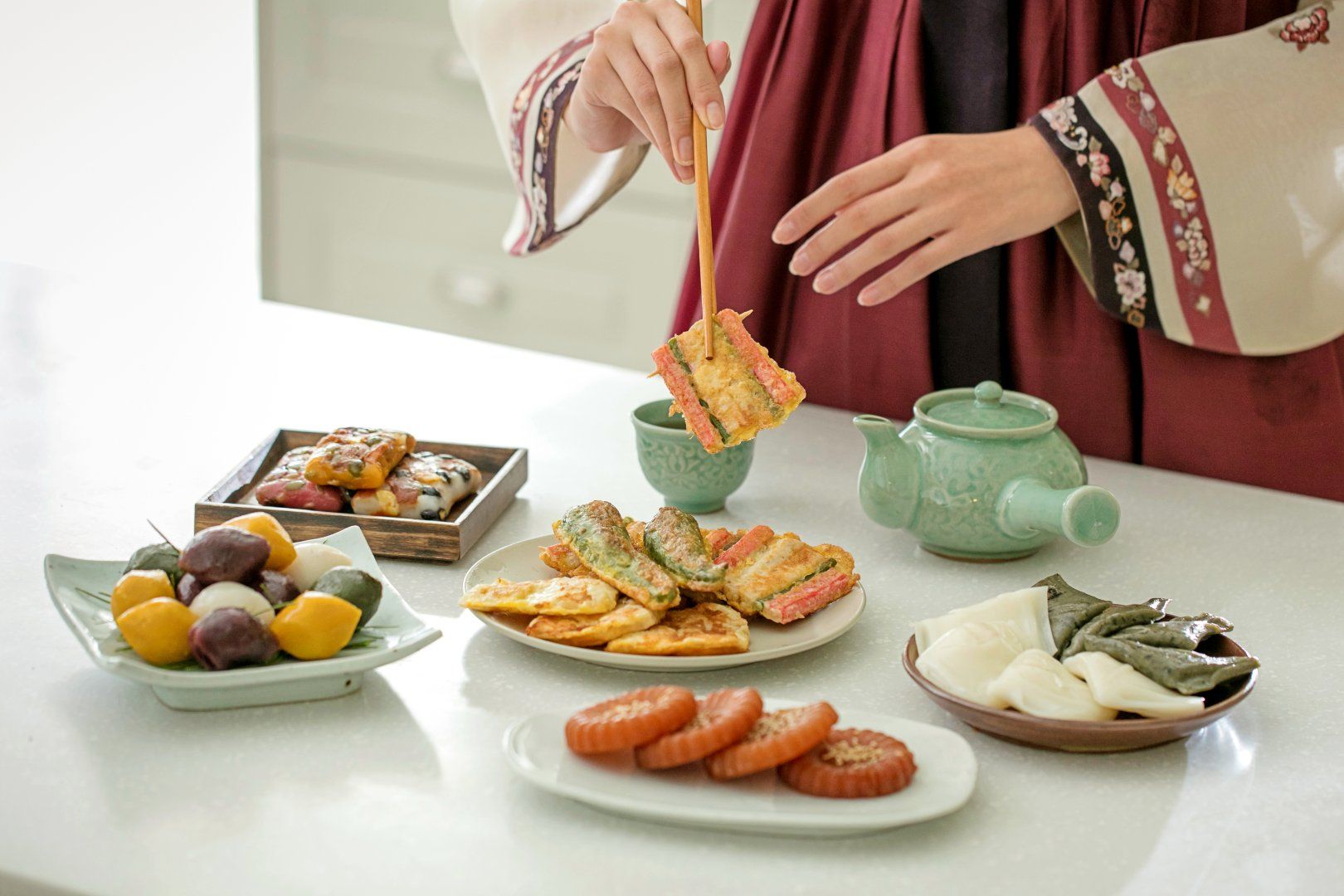
The most famous dish of this holiday is songpyeon. These are small, crescent-shaped rice cakes with various fillings. They are made from newly harvested rice and then steamed. The festive table may also feature fresh fruit, meat, fish, soups, Korean pancakes, and other dishes. Food is prepared not only for the festive dinner but also for traditional rituals. The selection of dishes may vary from family to family.
Preparing food for Chuseok often becomes a family tradition in its own right. Relatives gather in the kitchen, cook together, and pass down recipes from older generations to younger ones. In some families, preparations for the holiday can begin several days in advance.
Traditional Entertainment
Chuseok is not just about family ceremonies and feasts. Historically, folk games and communal entertainment have been held in various regions of Korea. These included tug-of-war, traditional Korean wrestling, and other competitions. One of the well-known traditions is kangansulle—a group dance in which women join hands and move in a circle. This dance is particularly associated with full moon festivals and traditional rituals.

Today, cities also host special cultural events. Museums, palaces, and cultural centers organize performances, workshops, traditional games, and introductions to Korean cuisine. In 2026, such programs will take place in various regions of the country throughout the holiday period.
Why All of Korea Travels During Chuseok
Chuseok is one of those times when South Korea’s roads and train stations become particularly crowded. The reason is simple: people travel to their hometowns, even if they live and work far from their families. Demand for train tickets and intercity buses spikes during this period. Korea’s tourism agencies even advise travelers to plan their trips in advance, as tickets can sell out quickly.

For many Koreans, this trip is an important part of the holiday itself. Chuseok provides an opportunity to return home, at least for a few days, to see family and spend time together.
How Chuseok Will Be Celebrated in 2026
In 2026, the holiday period in South Korea will run from September 24 to 26, with the main day of Chuseok falling on September 25. These are official holidays. Cultural events are planned in various cities across the country. Museums and cultural centers will host programs featuring traditional games, workshops, performances, and other activities. In Seoul, in particular, events will take place at the Namsangol Traditional Village and other cultural venues.
Some Korean palaces and museums also offer special programs during the holiday. Some cultural venues may operate on a modified schedule, so organizers advise checking opening hours in advance.
Interesting Facts About Chuseok
Chuseok has several names. In addition to its main name, it is called Hangawa, Gawi, and other traditional names. All of them are associated with autumn, the full moon, or the holiday’s ancient traditions.
Another interesting fact is that Chuseok falls on a different date each year according to the Gregorian calendar. This is because the holiday is determined by the lunar calendar. In 2026, the main day of the holiday will be September 25, whereas in 2025, it was October 6.
Chuseok is often compared to Thanksgiving in other countries, but the Korean holiday has its own traditions. Here, remembering one’s ancestors, family, and the bond between generations remain particularly important. Even in modern, urban Korea, these traditions continue to be part of the holiday culture.
So, on September 24, 2026, the Chuseok holiday period will begin in South Korea. For the country, this is not just an extra weekend, but a time when families return home, remember their ancestors, give thanks for the harvest, and spend time together. And the main day of the holiday—Harvest Day—will fall on September 25.




