
Taiwan Will Purchase 280 V-BAT Drones to Counter China
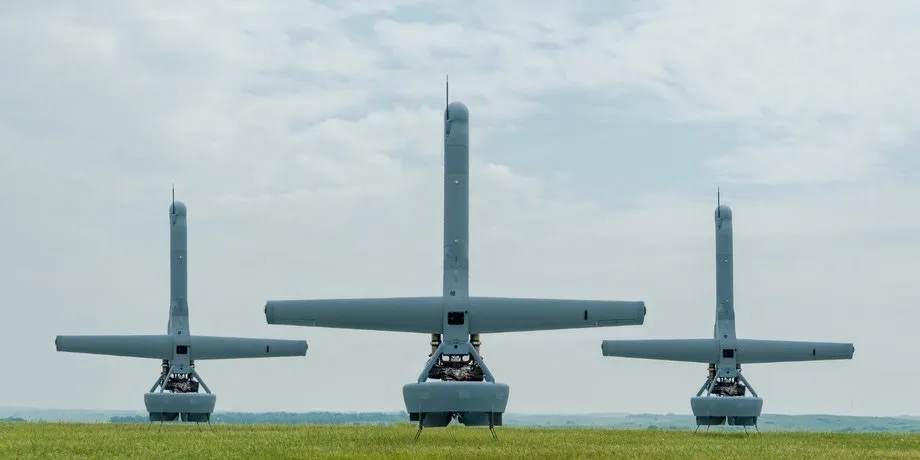
By 2029, the Taiwanese Navy will receive 280 American V-BAT drones capable of vertical takeoff and landing. The drones are manufactured by the American company Shield AI and have already been deployed in Ukraine.
Deliveries will be spread out over four years. In 2026, Taiwan is set to receive 40 drones; in 2027, 110; in 2028, 64; and in 2029, another 66. Thus, by the end of 2027, the country will have 150 V-BATs in service—53.6% of the total order.
Along with the drones, Taiwan will receive 140 control systems and 82 transport vehicles. Separately, the country is funding the purchase of 32 Albatross II reconnaissance UAVs manufactured by NCSIST for 16.78 billion New Taiwan dollars.
Why Does Taiwan Need the V-BAT?
The Taiwanese Navy plans to assign the V-BAT to surface combat groups and coastal defense units. This will allow them to have their own reconnaissance and target-acquisition capabilities without being fully dependent on coastal radars, airfields, or large manned aircraft.
What is important is not only the scale of the drone procurement itself but also the quantity of supporting equipment. This allows the drones to be distributed among ships and coastal units rather than being operated from a single centralized base.
The V-BAT, also known as the MQ-35A, is a 75-kg “tailsitter” drone. It has a wingspan of 3.8 m, a height of 2.9 m, a maximum speed of 90 km/h, and a service ceiling of 5,486 m.
What’s New in the Latest Version
The Block 5.3 configuration, unveiled in April 2025, features a 33-silny heavy-fuel engine compatible with JP-5—the aviation fuel typically used on military ships. This simplifies the drone’s operation within the fleet.
The maximum payload has been increased from 11.3 to 18.1 kg—an increase of approximately 60%. Larger fuel tanks have extended the flight duration with op-elec equipment to over 12 hours.
As a result, the V-BAT can utilize not only optical turrets but also various combinations of radars, communications systems, navigation systems, target acquisition systems, and electronic intelligence systems.
When using satellite communications and a 9.1 kg payload, the claimed one-way flight range reaches 648 nautical miles, or about 1,200 km. However, this is not the combat radius, as during an actual mission, the flight to the patrol zone, the return flight, and a fuel reserve must be taken into account.
How the Drone Is Controlled
For close-range control, the V-BAT uses line-of-sight radio relay communication at distances of up to 139 km. Phased-array antennas extend this range to 180 km, and satellite communication allows the UAV to be controlled beyond line of sight.
At least two operators can prepare the drone for flight in less than 30 minutes. Vertical takeoff and landing require a pad measuring approximately 4.6 × 4.6–4.7 m. This allows the V-BAT to be deployed from a ship’s deck, a coastal road, or another small, prepared area without a runway.
The list of equipment includes EO/IR turrets, synthetic aperture radars, an Automatic Identification System (AIS), a ViDAR system, satellite communications, GNSS anti-jamming protection, M-code GNSS, laser rangefinders, laser designators, and electronic intelligence equipment. The drone can deliver up to 600 W of power to its payload.
Experience with the V-BAT in Ukraine
Ukraine tested the V-BAT under conditions of active Russian use of electronic warfare systems. Combat testing of the drone began in June 2024.
In August of that year, the V-BAT was used to locate Russian surface-to-air missile systems and transmit targeting data, which was subsequently used for HIMARS strikes.
During one of the missions, the drone operated approximately 100 km behind the front line of the electronic warfare zone, where it searched for a mobile “Buk-M1” air defense system. Thus, the V-BAT was used not only for close-range reconnaissance but also for detecting moving targets beyond the main electronic warfare suppression zone.
A key feature of the vehicle is its navigation architecture, which uses visual odometry to estimate its position without constant access to a GPS signal.
In addition, the Hivemind autonomy system provides situational awareness, mapping, target tracking, mission planning, and route planning. This reduces the need for constant manual control and dependence on a radio channel, which can be jammed by electronic warfare (EW) systems.
Source: Army Recognition
Taiwan is fortifying the island that could be the first to come under attack from China — Reuters
As a reminder, Russia is likely assisting China in training its military and is also providing Beijing with intelligence and advanced military technologies, which could give China an advantage in the event of a potential conflict over Taiwan.
Taiwan is ramping up missile production due to problems with U.S. weapons.




