
Tallinn criticizes plan to add fewer ambulance crews — ERR News
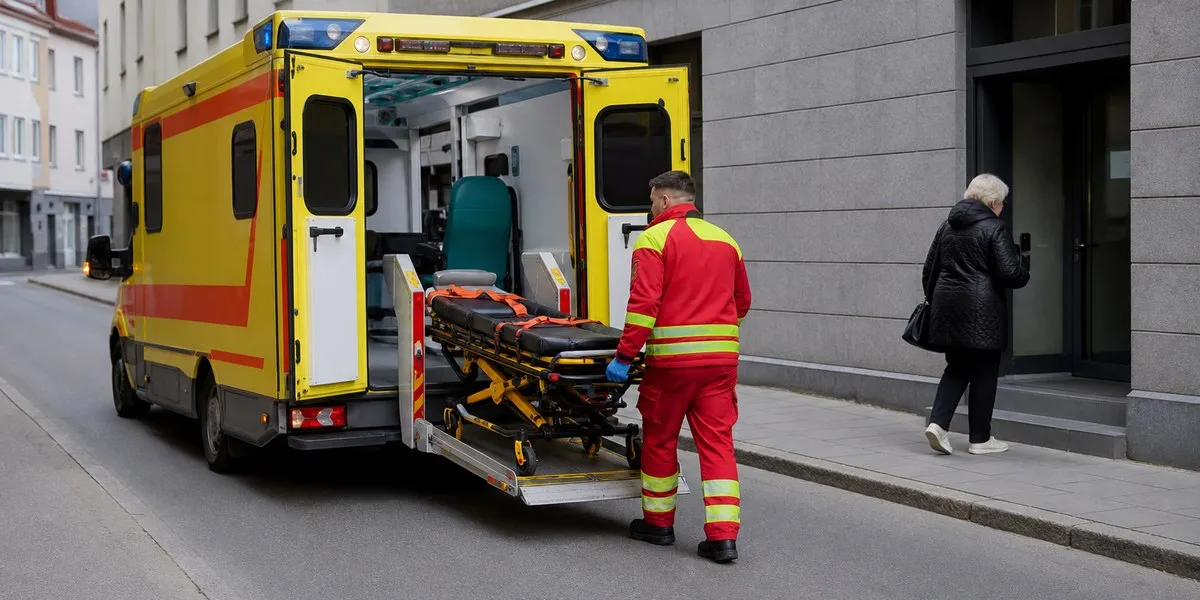
Authorities in Tallinn, Estonia, have criticized the updated state plan to reform the emergency medical services network, under which fewer crews will be added to Tallinn and Harju County than previously proposed. The city administration believes this could worsen access to emergency medical care during peak hours, crises, or major accidents, ERR News reports.
Fewer new crews for the capital
Estonia's Ministry of Social Affairs is reforming the ambulance network together with the Estonian Health Insurance Fund and the Health Board. The reform provides for a review of the entire network, including the deployment of crews in different parts of the country.
In the summer, it was proposed to add seven daytime and three nighttime crews in Tallinn and Harju County, as the region's population has grown significantly over the past decade. At the same time, the number of crews was planned to be reduced in southern Estonia, where the population declined during this period.
Following objections from representatives of the southern regions and the leadership of the Estonian Ambulance Association, the initial proposal was revised. Under the new plan, the number of crews in the south of the country will remain unchanged, while Tallinn and Harju County will receive four additional daytime crews instead of seven and one nighttime crew instead of three.
More current news is available on the UA.News Telegram channel Telegram.
The positions of the city and the ministry
Tallinn Deputy Mayor Riina Solman said that under the updated plan, the number of ambulance crews per capita in Harju County would be twice as low as in the rest of Estonia. She also pointed to the large number of tourists in the capital, the airport, and ports, which, in her view, require greater emergency medical service capacity.
Nikita Panyushkin, head of the medical services department at the Ministry of Social Affairs, noted that state resources, including funding, personnel, and equipment, are limited. According to him, increasing the number of crews also requires training more ambulance nurses with specialized education.
Panyushkin added that there will indeed be more residents per crew in the capital, but response times there are significantly shorter. For example, in Võru County, a crew may spend several hours transporting a critically ill patient to Tartu and returning to its service area. In Tallinn, however, an ambulance crew using emergency signals can reach the North Estonia Medical Centre in 10–15 minutes.


