
Trump Does Not See a Threat of an Attack by Putin on NATO
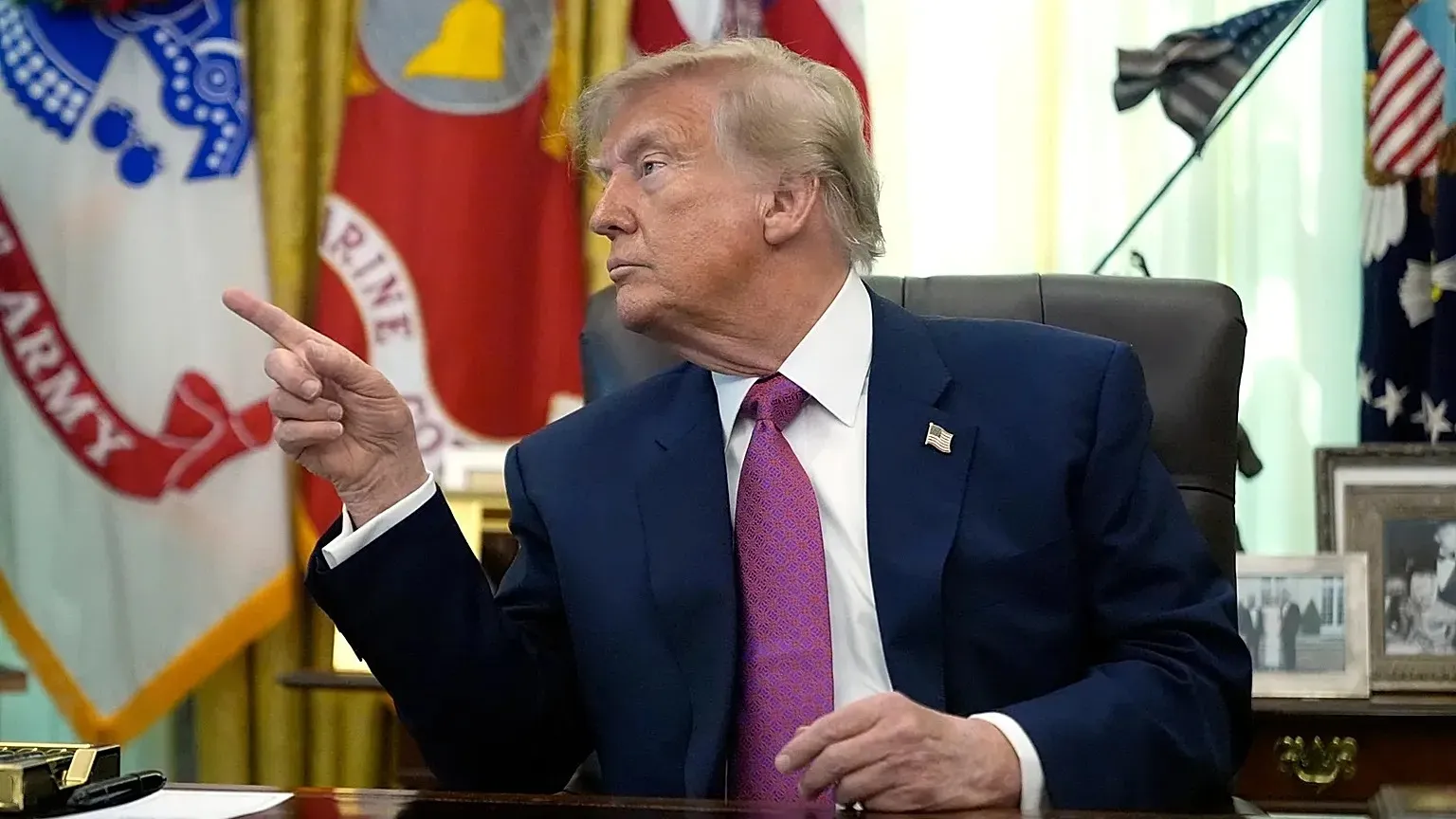
U.S. President Donald Trump stated that he does not believe Russia would attack NATO countries. According to him, he reached this conclusion after speaking with Russian dictator Vladimir Putin. At the same time, Moscow’s statements prior to its full-scale invasion of Ukraine show that such assurances have not always matched Russia’s subsequent actions.
U.S. President Donald Trump stated that Vladimir Putin does not plan to attack NATO countries. Trump explained his confidence by citing conversations with the Russian leader. “I spoke with Putin. He is not going to attack NATO,” the U.S. president said. In other words, Trump is relying primarily on his own negotiations with Putin and how the Russian dictator described his intentions.
At the same time, Trump’s statement itself is not independent confirmation that Russia is not preparing possible attacks against NATO countries. It is specifically the U.S. president’s assessment based on his communication with Putin. The issue of a possible Russian attack on NATO countries remains particularly sensitive against the backdrop of a full-scale war against Ukraine. Russian troops have been engaged in combat operations against Ukraine for over four years, and Moscow regularly clashes with Western countries over their support for Kyiv.
At the same time, NATO countries have repeatedly warned of the need to prepare for potential threats from Russia. However, assessments of specific risks and possible scenarios vary. It is particularly noteworthy that, prior to the start of the full-scale war, Russia also denied that it was preparing an attack on Ukraine.
In January 2022, Russian Deputy Foreign Minister Sergey Ryabkov stated that Moscow had “no plans or intentions” to attack Ukraine. “We have no plans or intentions to attack Ukraine,” Ryabkov said at the time. A few weeks later, on February 24, 2022, the Russian army launched a full-scale invasion of Ukraine.
That is why the Russian leadership’s current statements about having no plans for new attacks are being evaluated in light of past experience. At the same time, it is important not to equate the situation in 2022 with the current one. Trump’s statement concerns his assessment of Putin’s intentions toward NATO countries, not the official position of all Alliance member states or intelligence regarding Russian military plans.
NATO countries share a commitment to collective defense. An attack on one of the Alliance’s member states could trigger consultations and a collective response in accordance with Article 5 of the North Atlantic Treaty. For Russia, a direct attack on a NATO country would mean an entirely different level of confrontation with the West. That is why the possibility of the war spreading beyond Ukraine remains one of the top security concerns for European nations.
For his part, Trump continues to rely on direct dialogue with Putin. The U.S. president has repeatedly stated that negotiations are the key to reducing tensions and ending the war against Ukraine. However, it will only be possible to definitively assess the true intentions of the Russian leadership based on its actions. At present, Trump’s words represent his own assessment following his conversation with Putin, while the Kremlin’s actual plans remain unknown. The U.S. president made these remarks during a conversation with journalists. His statement was broadcast by the White House.
U.S. President Donald Trump’s envoys, Steve Witkoff and Jared Kushner, are scheduled to arrive in Moscow on September 5 to try to resume negotiations on ending Russia’s war against Ukraine. At the same time, expectations for their visit are very low—according to Bloomberg, sources close to the Kremlin see no preconditions for a quick agreement. Moscow also believes that Vladimir Putin is ready to end the war only on terms favorable to Russia.




