
A proposal was made in the State Duma to ban ideologies that contradict traditional values
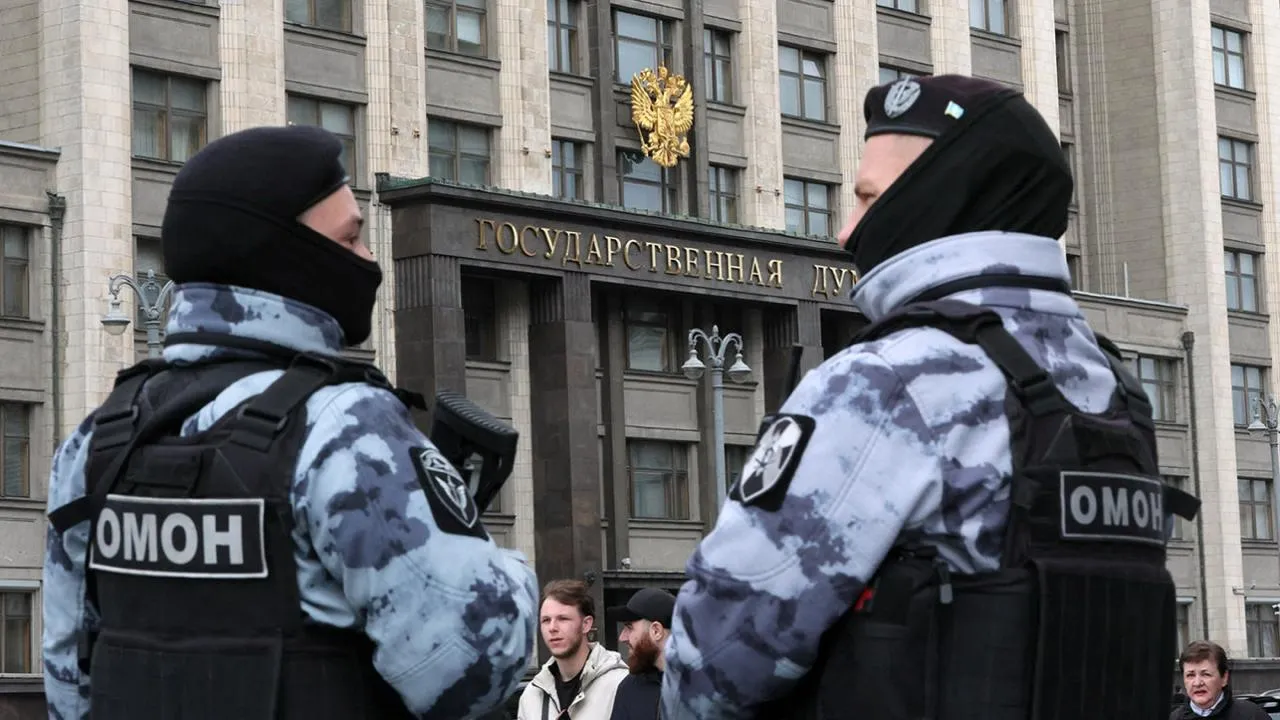
A bill has been proposed in the Russian State Duma that would ban ideologies, doctrines, cults, and movements that, according to the authors, are directed against Russia’s “traditional spiritual and moral values” and “traditional religions.” The bill was introduced by Deputy Nikolai Burlyaev. If passed, the restrictions could apply not only to the movements themselves but also to associated symbols, texts, images, and other materials.
A bill has been registered in the Russian State Duma that proposes to classify as extremist any ideologies, teachings, cults, and movements directed against Russia’s so-called traditional spiritual and moral values and traditional religions. The author of the document is Deputy Nikolai Burlyaev. The explanatory note to the bill states that current legislation allegedly does not contain a clear ban on any “destructive” ideologies. The authors believe that this poses a threat to Russia, which they describe as “existential.”
The bill calls for a ban on such ideologies regardless of the name under which they exist. In other words, the authors propose extending the restrictions to movements that may emerge under new names.
What Exactly They Want to Ban
The document proposes banning not only the activities of certain organizations or movements. Their symbols and materials associated with such ideologies may also fall under the restrictions. This includes texts, images, and other materials on any medium. Separately, the authors propose taking into account symbols that may resemble prohibited ones to such an extent that they could be confused with them.
In other words, a potential ban would apply not only to a specific group. The authors of the bill aim to establish a broader mechanism under which ideological and religious teachings themselves could be classified as extremist if they are deemed to contradict values defined by Russia. At the same time, the document itself does not contain an exhaustive list of all the doctrines and movements that would automatically fall under this definition. The very question of which ideologies can be considered “destructive” must be determined in accordance with the proposed criteria.
What “values” do the authors refer to?
The concept of “traditional Russian spiritual and moral values” is already used in Russian state policy. A 2022 decree by Vladimir Putin included, among others, life, human dignity, human rights and freedoms, patriotism, civic-mindedness, service to the state, a strong family, humanism, compassion, justice, mutual aid, and historical memory.
At the same time, in the same document, the Russian authorities assert the need to protect these values from so-called destructive ideas and information influence from abroad. Ideas that, in the opinion of the Russian authorities, contradict family and religious norms are specifically cited among the threats.
What exactly is considered “traditional religions” is also partially defined by Russian legislation. The law on freedom of conscience mentions Christianity, Islam, Buddhism, and Judaism as religions that are part of the historical heritage of the peoples of Russia. At the same time, this law formally declares Russia a secular state and guarantees freedom of conscience and religion.
What Is “Destructive Ideology”?
The authors of the bill propose evaluating such teachings based on their impact and consequences. Vyacheslav Leontyev, secretary of the State Duma’s “Society and Culture” working group, stated that one of the criteria could be so-called “propaganda of evil.” At the same time, he spoke of the possibility of drawing on “historical experience” when determining the destructive nature of certain teachings.
Thus, the bill proposes evaluating not only the specific actions of an organization but also the content of the ideas it disseminates. This is precisely why the wording of the document could have implications for a wide range of movements and ideologies. For now, the bill is merely a proposal. For the new rules to take effect, the document must go through the parliamentary process and be approved in accordance with Russian law.
Why the “International Satanist Movement” Was Mentioned
Burlyaev links his initiative to a July 2025 ruling by the Russian Supreme Court. At that time, the court granted the petition filed by the Prosecutor General’s Office and the Ministry of Justice of the Russian Federation, recognized the “International Satanist Movement” as extremist, and banned its activities in Russia. The hearing was held behind closed doors.
The Russian Prosecutor General’s Office stated at the time that the movement was allegedly based on extremist ideology and hatred toward traditional religious denominations. These assertions represented the position of the Russian prosecutor’s office and the court within the context of that particular case. Burlyaev cites this decision as an example of how, after certain movements are banned, other organizations may emerge under new names. Therefore, he proposes creating a broader mechanism that would allow the ban to extend beyond just the specific name of an organization.
What Might Change After Adoption
If the bill is adopted as proposed, Russian legislation will gain an additional basis for restricting activities and the distribution of materials that the authorities classify as “destructive” ideologies. Organizations, movements, and associations—as well as their symbols and informational materials—could fall under potential restrictions. The specific list of what will be deemed extremist will depend on law enforcement practices and the decisions of the relevant government agencies and courts.
At the same time, the mere fact that the bill has been introduced does not mean that the proposed rules have already taken effect. At present, this is a legislative initiative that has yet to be considered. Burlyaev’s initiative continues the trend toward expanding Russian legislation on “traditional values” and combating so-called “destructive” ideologies. Previously, Russian authorities have already used legislation on extremism to ban various organizations and movements, notably following the decision regarding the “International Satanist Movement” in 2025.




