
200,000 children in Gaza remain without access to education — Anadolu Agency
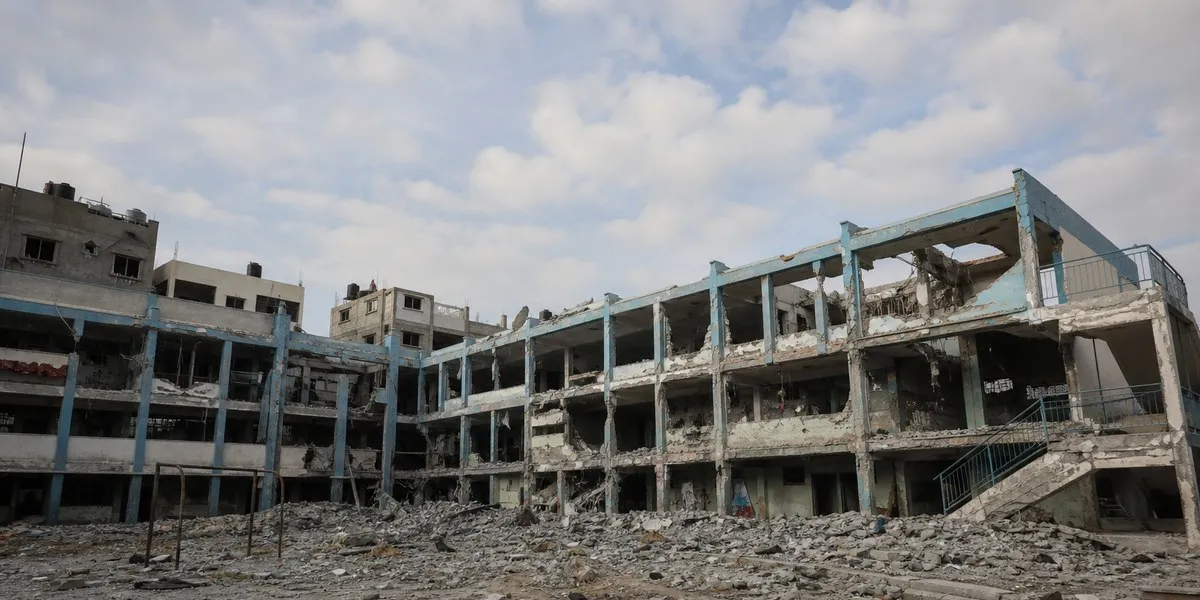
In the Gaza Strip in Palestine, around 200,000 children remained without access to structured learning, despite the partial resumption of the educational process in the school year that began on September 19. This was reported by Anadolu Agency, citing the UN Office for the Coordination of Humanitarian Affairs.
According to UNICEF, nearly 98% of school buildings in Gaza have sustained damage. More than 93% of them require major repairs or complete reconstruction, while approximately 81% of buildings were directly hit. As of April, the Gaza Government Media Office reported the complete destruction of 165 educational institutions and damage to another 392.
Children out of school
UNICEF reported that around 700,000 children aged 4 to 17 had no formal in-person education for nearly three consecutive school years. By September, approximately 495,000 preschool- and school-age children were involved in educational spaces supported by the UN and its partners. Another roughly 70,000, according to available data, studied in community or private spaces.
An assessment by Save the Children conducted in August found that 86% of the surveyed kindergartens had been destroyed, damaged, or were inaccessible because they were located beyond the “yellow line” controlled by the Israeli military.
More current news is available on the UA.News Telegram channel Telegram.
Losses and destroyed infrastructure
According to the Gaza Government Media Office, more than 20,000 pupils have been killed since October 2023. The Palestinian Ministry of Education also recorded the deaths of 1,379 university students and injuries to 3,017. According to its data, 830 teachers, as well as 194 university lecturers and researchers, were killed.
An UNESCO-supported assessment released in November 2025 covered 21 higher education institutions across 38 campuses. Twenty-two campuses were completely destroyed, while another 14 were damaged. Of the 206 assessed buildings, 195 were destroyed or severely damaged and were not operational. Damage to higher education infrastructure was estimated at $373.25 million.
School buildings are also used as shelters for displaced families, limiting opportunities for learning. UNICEF notes that the prolonged interruption to education weakens reading and mathematics skills and increases the risks of permanently discontinuing education, child labor, and early marriage.




