
China updates English textbooks with a focus on national culture
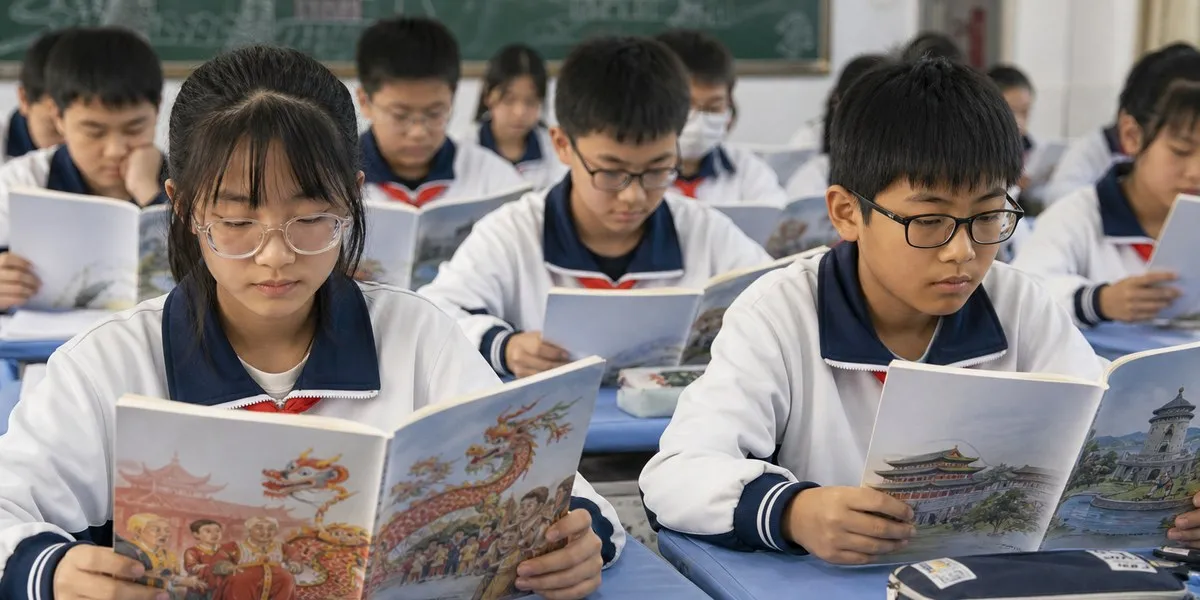
China has completed the phased introduction of updated English-language textbooks for primary and secondary schools. A significant portion of materials about the cultures of other countries has been replaced with texts about Chinese history, traditions and state achievements. The changes are linked to the Chinese authorities’ policy of strengthening patriotic education, cultural confidence and the promotion of China’s image abroad, the South China Morning Post reports.
In the new textbooks, students more often read about the late Qing dynasty thinker Liang Qichao, the Dragon Boat Festival, archaeological discoveries, China’s overseas aid projects, and the country’s modern economic, social and technological development. Lessons also include topics on the new socialist countryside and building a community with a shared future for mankind.
Introduction of the textbooks
China’s Ministry of Education began revising the textbooks in March 2022 after a new national curriculum plan for compulsory education was released. The new editions began to be introduced in the autumn of 2024, initially for the first grade of primary school and the seventh grade of secondary school. In 2025, the reform was expanded to the second and third grades of primary school and the eighth grade of secondary school, and at the beginning of the autumn semester of 2026 it covered all grades.
In 2020, China’s Ministry of Education announced a ban on textbooks published abroad in primary and lower secondary schools. In 2023, the Patriotic Education Law established the requirement to integrate such education into various subjects and teaching materials.
More current news is available on the UA.News Telegram channel Telegram.
Reaction of educators
Some teachers and parents supported the changes, believing they would help pupils represent their own culture more confidently. One experienced English teacher wrote on social media that students had previously mainly learned to listen to others, but are now learning to speak for themselves.
At the same time, other educators fear that an excess of local and ideological content will reduce children’s exposure to the cultures of English-speaking countries and weaken their motivation to learn the language. They also criticized some wording in the textbooks as Chinglish, believing that students are being taught to adapt a Chinese way of thinking to English sentences instead of developing natural English speech.
Chinese Vice Premier Ding Xuexiang said at a national conference that textbooks must ensure the correct political direction and value orientation. The reform is part of a broader policy by the Chinese authorities to strengthen cultural confidence, promoted by Chinese President Xi Jinping.


