
Mexico discovers country's oldest solar observatory — Mexico News Daily
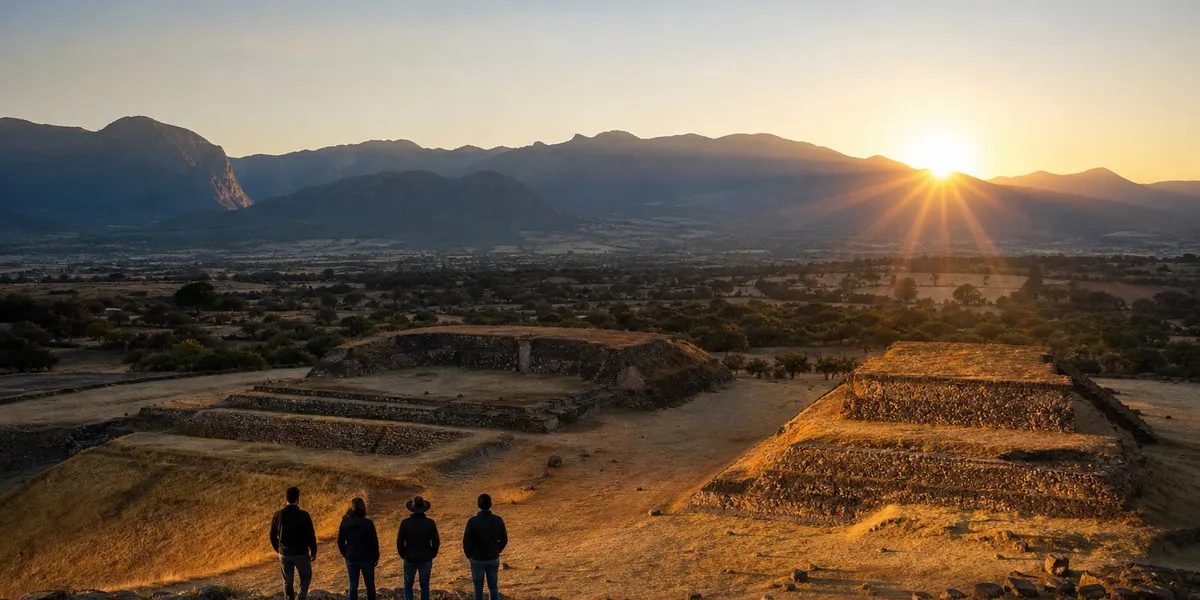
In the municipality of Teteles de Ávila Castillo in the Sierra Norte region of Puebla, Mexico, archaeologists have discovered a pre-Hispanic complex that was used as a solar astronomical observatory. Research by Mexico's National Institute of Anthropology and History (INAH) dates the complex to more than 2,500 years ago and calls it the oldest observatory of this type in the country, Mexico News Daily reports.
Grupo E complex
The monumental “Grupo E” complex, also known as Tetelihtic, consists of a quadrangular courtyard and platforms at its eastern and western ends. The eastern platform is approximately 90 meters long from south to north and 40 meters wide from east to west. The western structure, which served as an observation point, is smaller: 46 by 27 meters.
Researchers confirmed that the original layout of the settlement and the orientation of its pyramidal structures were based on knowledge of celestial bodies. Archaeologist Alberto Díez Barroso called Tetelihtic an example of pre-Hispanic urban planning shaped by observations of the surrounding landscape, mountain peaks and the astronomical horizon.
More current news is available on the UA.News Telegram channel Telegram.
Solar calendar and observations
The elongated eastern platform did not mark the days of the equinoxes at its center. According to Díez, it may have been used to determine the beginning of the pre-Hispanic Mesoamerican calendar in February and the harvest period in October. At the same time, from the front part of the platform it was possible to track the movement of the sun at sunrise on the days of the equinoxes and solstices.
INAH noted that this is the first discovery of this type outside the Maya region. The complex is compared with the observatory at Uaxactun in Petén, Guatemala, which is considered a model of ancient Maya astronomical complexes. Both structures are dated to the Middle Preclassic period of 1200–400 BCE, although the complex at Uaxactun is about twice as large.
Archaeologists believe that the find may help study cultural ties between the Huastecs and the Maya during the early stages of settlement in the Sierra Norte. The observatory also provides grounds to suggest that the Maya presence in the Teteles area may date back about 3,000 years.




