
The fuel shortage in Russia is worsening, despite statements by the authorities
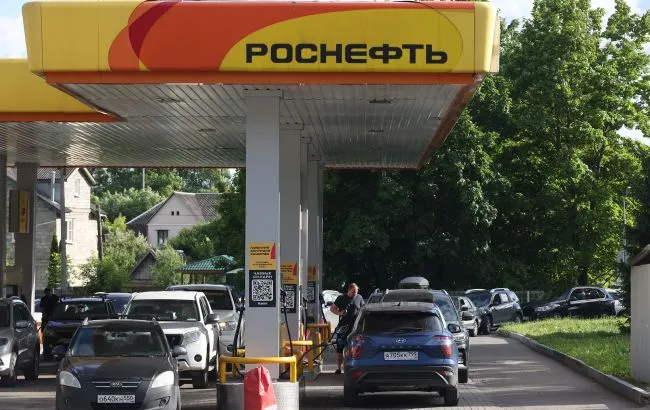
Despite statements by Russian authorities that the fuel market has stabilized, the situation in the country continues to deteriorate. Ukraine’s Foreign Intelligence Service reports that the fuel shortage is growing, prices are rising, and gasoline production is falling.
According to intelligence reports, the Kremlin’s statements about improvements are intended to create only the illusion of stability, while the real problems in the fuel market have not gone away.
The Ukrainian Foreign Intelligence Service reported that Russian authorities are trying to convince the public that the fuel crisis is already over. Media outlets controlled by the Kremlin are reporting an increase in petroleum product supplies, the partial lifting of restrictions at gas stations, and an improvement in the situation in certain regions, particularly in Moscow and St. Petersburg.
At the same time, the SSU emphasizes that the reality is quite different. According to intelligence reports, the improvements in certain regions were not due to increased production but rather to the administrative redistribution of existing fuel reserves among different regions and consumer categories. According to the SZRU, the most difficult situation is currently observed in the Tambov, Astrakhan, Kirov, Penza, Voronezh, Rostov, Volgograd, Orenburg, and Yaroslavl regions. This list also includes the Perm Krai, the Chuvash Republic, Mordovia, Udmurtia, and the temporarily occupied Crimea.
No signs of improvement are currently forecast for these regions. Rising fuel prices also point to a deepening crisis. According to the SZRU, from July 1 to 10, the average price of AI-92 gasoline in Russia rose to 64.5 rubles per liter. This is approximately 20% higher than during the same period last year.
AI-95 gasoline rose to 77.5 rubles per liter, which is 24% higher than last year. The price of AI-98 rose the most—to 119.5 rubles per liter. Over the past year, it has risen by 32%. The report explains that the main cause of the shortage was a reduction in production following damage to a number of Russian oil refineries. According to the SZRU’s estimates, Russian refineries are producing about 71,500 metric tons of gasoline per day in July. At the same time, average summer demand stands at approximately 110,000 metric tons per day.
Thus, Russian refineries are meeting only about 65% of the country’s domestic needs. The daily gasoline shortage is estimated at nearly 38,500 metric tons, which accounts for approximately 35% of total consumption. The Foreign Intelligence Service believes that the Kremlin is currently focused not on solving the problem, but on concealing its scale. “Everything indicates that the Kremlin is preparing not to overcome the crisis, but for its prolonged existence. The regime’s main goal is not to restore full-scale supply to the market, but to prevent shutdowns in strategically important sectors,” the Foreign Intelligence Service emphasized.
The intelligence agency adds that reports of an alleged stabilization of the fuel market are primarily for informational purposes. Their main goal is to create the impression that the situation is under control, even though the actual gap between official statements and the reality on the ground continues to widen. This was reported by the Foreign Intelligence Service of Ukraine.
For the first time in history, Russia plans to begin importing diesel fuel due to a sharp decline in its own production and a shortage in the domestic market.
The Russian Red Cross has begun building up additional stockpiles of humanitarian aid for the temporarily occupied Crimea and Sevastopol following the declaration of a state of emergency on the peninsula.
On the temporarily occupied Crimean Peninsula, local residents report prolonged power outages, fuel shortages, rising prices, and problems with social infrastructure. According to them, the situation is particularly dire in the northern regions of the peninsula.
As a reminder, Ukraine has claimed to have struck 19 Russian tankers carrying fuel for Crimea.


