
Safety operators in Singapore discuss working in autonomous cars
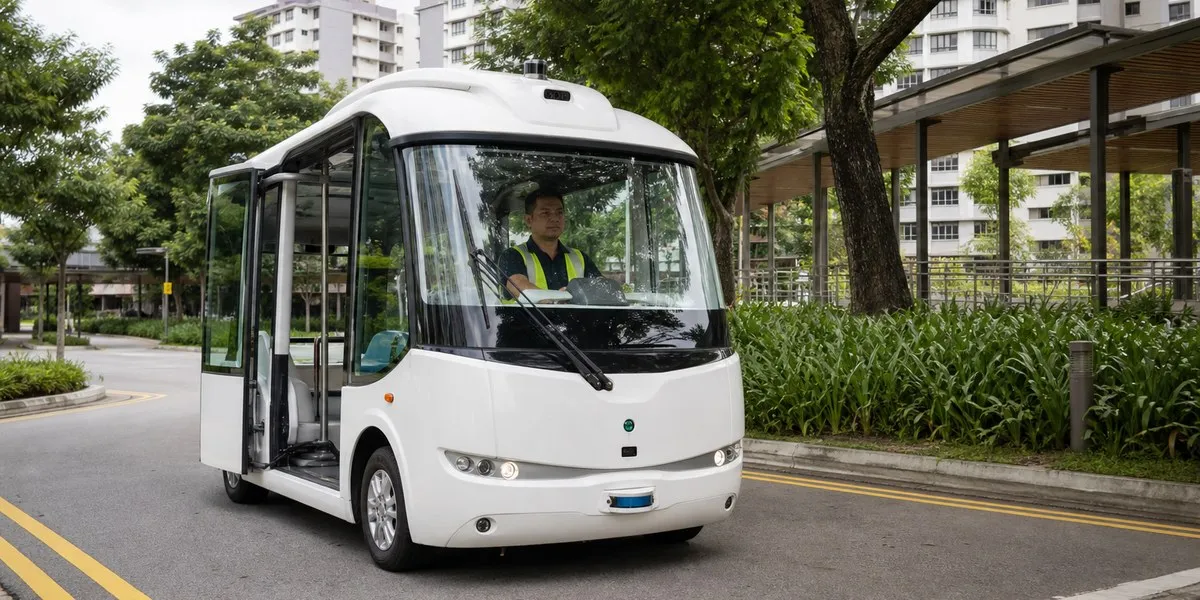
In Singapore’s Punggol district, safety operators of autonomous vehicles spoke about their duties during testing and passenger trips. They monitor the movement of autonomous cars, take control when necessary, and provide the team with feedback on how the systems work, Channel NewsAsia reports.
Sarah Ahmad, 45, who works on Grab’s autonomous vehicle testing project, said that this job requires constant concentration. According to her, an operator must monitor the car’s actions and be ready to intervene if the vehicle begins moving unpredictably. For the job, she also learned to drive a left-hand-drive car, as the vehicles for testing are supplied from China.
Monitoring and manual intervention
The operators’ working day begins with an inspection of the vehicle: they check whether the sensors and cameras are obstructed and whether they are functioning properly. The car is driven out of its parking spot manually, after which autonomous driving is activated.
Operators also make trips so that the systems can adapt to routes in Punggol. Ahmad said she gave the team feedback about the car braking too sharply before a red traffic light. According to her, the car subsequently began reducing speed earlier before traffic lights so that braking would be less abrupt.
More current news is available on the UA.News Telegram channel Telegram.
Human intervention is also necessary in situations that the car cannot interpret correctly. In particular, Ahmad manually continued driving when a traffic controller gestured for the vehicle to pass through a roadworks section, but the autonomous system did not understand the signal. Another operator, Sherman Seng, said that cars may stop in front of squirrels, monitor lizards or chickens, not daring to continue moving.
Development of services in Punggol
Grab is partnering with Chinese company WeRide, while ComfortDelGro is partnering with Pony.ai to launch autonomous shuttles in Punggol. Following testing and trials involving the local community, Grab and WeRide opened rides to passengers in April, while ComfortDelGro and Pony.ai did so in June.
Grab said it intended to increase its fleet of autonomous vehicles in Punggol from 10 to 50 units within six months and expand the service area. Singapore’s parliament also proposed extending the regulatory framework for autonomous transport on roads until December 31, 2028.
Singapore’s Ministry of Transport introduced a transition package for taxi and private-hire drivers in July. It provides for a professional reorientation programme for autonomous transport specialists, including safety operators, remote operators and fleet management workers.


