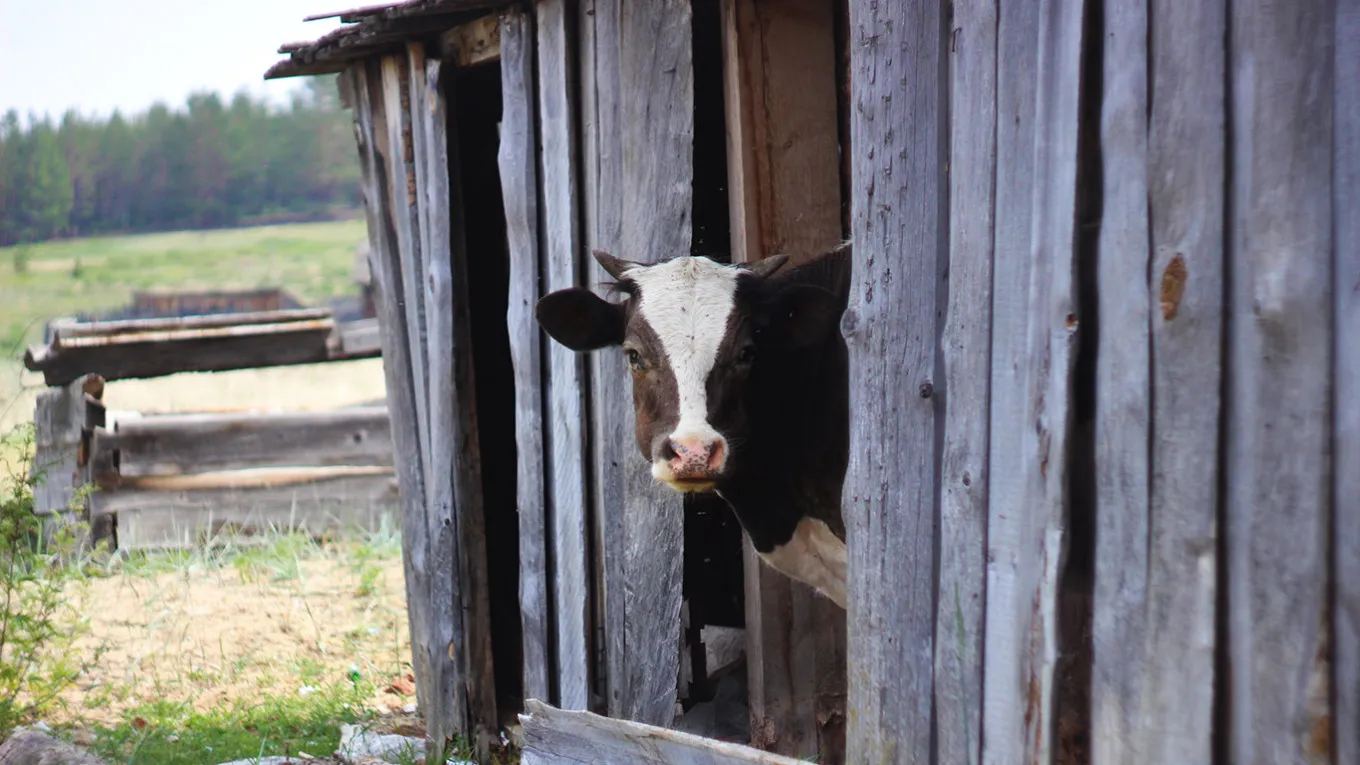
A state of heightened alert has been declared in Russia’s Transbaikal Region due to outbreaks of foot-and-mouth disease in neighboring China and Mongolia. The region’s governor, Alexander Osipov, stated that these measures are intended to prevent the spread of the infection. Authorities have ordered the allocation of funds to purchase vaccines, vaccinate livestock in 12 districts, and restrict grazing within a 10-kilometer radius of the border. Farmers were also advised to consult specialists if their animals show signs of the disease and to sell meat and milk only with valid veterinary documentation.
At the same time, the pro-government channel Babr Mash reported that foot-and-mouth disease had allegedly been detected in settlements within Transbaikalia itself. The channel cited a response from the State Veterinary Service. However, the agency called the report false and stated that journalists had not contacted it for comment. According to representatives of the service, the heightened alert status was introduced due to outbreaks of the infection in neighboring countries, as well as the upcoming migration of wild sheep to Transbaikalia. Because of this, measures must be taken to prevent the spread of foot-and-mouth disease. In September, quarantine had already been declared in the Chita and Tungokochensky districts of the region due to emphysematous carbuncle in livestock, known as “emkar.”
That same month, a state of emergency was declared in a number of settlements in the Irkutsk Oblast due to livestock disease. The official cause cited was an outbreak of contagious nodular dermatitis. Authorities in the region began seizing and destroying local residents’ livestock. Veterinarian and epizootiologist Svetlana Shepetkina noted that the symptoms observed in the animals could be consistent with foot-and-mouth disease. Following this, a state of heightened alert was also declared in Buryatia. At the same time, nodular dermatitis is not a fatal disease and is treatable in most cases.
In several districts of the Tyumen Region, mass culling of pigs took place in August and September. The authorities explained this as an outbreak of an “especially dangerous disease.” Representatives of the local Communist Party of the Russian Federation (CPRF) branch, some residents, and rural experts claimed that the disease in question was African swine fever. In early September, this information was confirmed by the regional headquarters of the Russian Ministry of Emergency Situations. A state of emergency was declared in several districts.
The largest-scale culling of livestock due to disease took place in February–March in the Novosibirsk Region. The authorities cited pasteurellosis as the cause. Local residents, however, complained that officials had not provided any evidence to support this claim. A state of emergency and strict quarantine measures, including border closures and travel restrictions, were imposed in the region.
On May 7, it was reported that at the start of the livestock culling campaign in the Novosibirsk region, foot-and-mouth disease was detected in one of the cows belonging to a local farmer. The U.S. Department of Agriculture and a representative of a major regional agricultural holding company had previously warned of a possible outbreak of this dangerous disease in Russia.
This is being reported by Russian propaganda media.