
In Zimbabwe, livestock are painted with eyes to protect them from predators — Mongabay
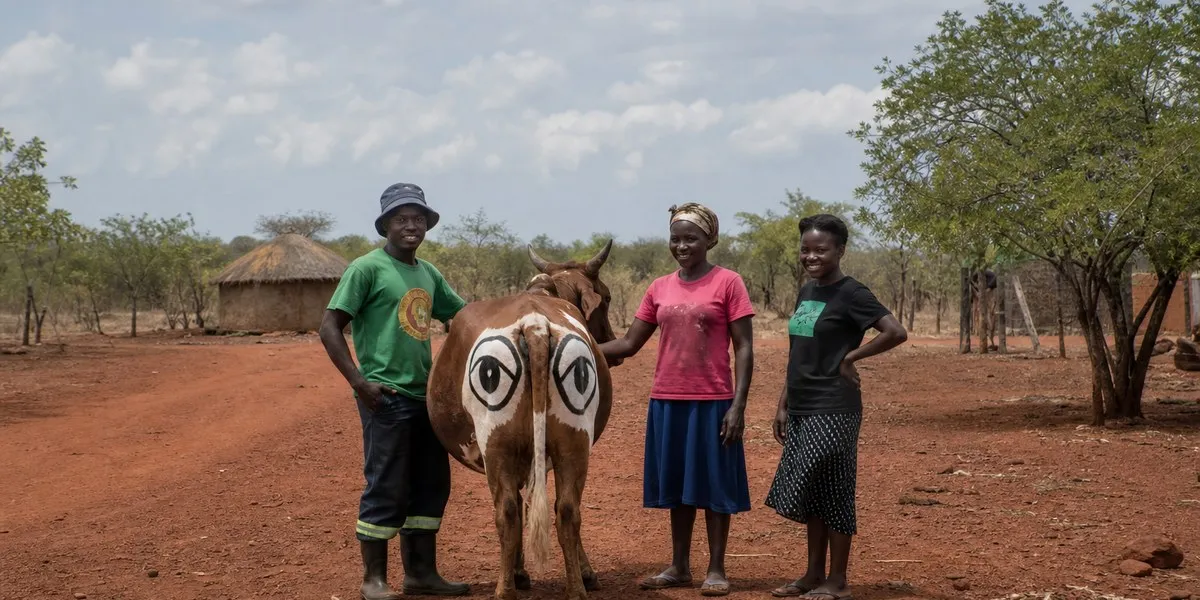
In the village of Nyangombe in southeastern Zimbabwe, livestock owners paint large black-and-white “eyes” on the rear parts of animals’ bodies in an effort to deter lions, leopards and other predators. Local farmer Edson Mabika said that he had previously lost four to five animals each year to predator attacks, but after using the method, over a year and a half he lost only a goat and a lamb. In both cases, the painted markings had already worn off.
According to Mongabay, in the first half of 2026, the local Chiredzi District Council recorded 317 cases of conflict between people and wild animals. Nyangombe is located near the Save Valley and Nyangombe Community Conservancy conservation areas. Residents say buffalo damage crops and spread diseases, while wild dogs, jackals, leopards and lions attack livestock.
Advice from a former ranger
According to Mabika, in fewer than 10 days he lost four sheep and a calf, despite keeping the livestock in a protected enclosure and having an experienced herder with three dogs. After that, the farmer sought advice from an acquaintance who had previously worked as a ranger in a reserve. In January 2025, Mabika painted artificial eyes on about one-third of his livestock.
More current news is available on the UA.News Telegram channel Telegram.
Ranger Langton Bandama believes such markings can prevent an attack or delay a predator’s decision to attack. In his view, adding an image of horns near the artificial eyes may strengthen the effect against large ambush predators, including lions.
Study results in Botswana
The effectiveness of this approach was tested in Botswana. In a 2020 study involving about 2,000 head of cattle, lions and leopards did not kill any of the 683 cows with painted eyes. At the same time, 15 of 835 cows without markings were killed by these predators, as were four animals painted with simple crosses.
Spotted hyenas killed one cow in each of the three groups during the study period, which may indicate that artificial eyes have no effect on the success of their hunting. Local residents suggest that the practice of painting artificial eyes may have spread from areas bordering Botswana, where it occurs more often.




