
Antarctica has recorded its third-lowest sea ice extent
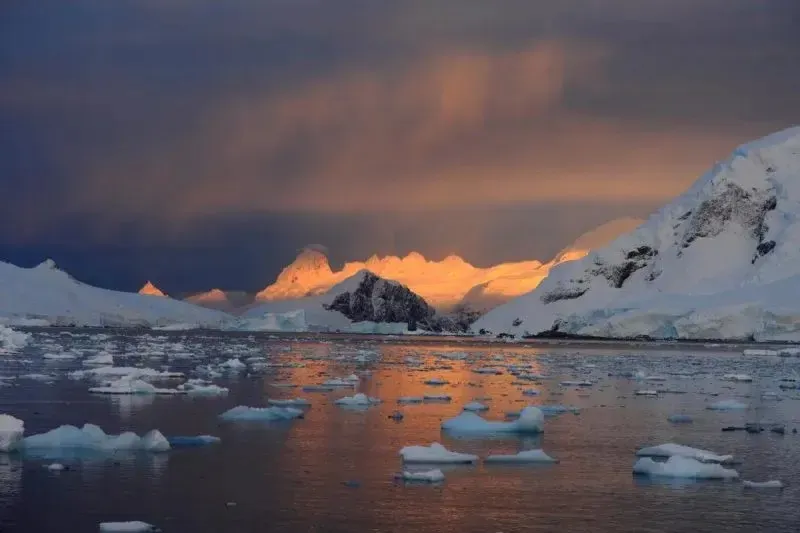
The winter sea ice extent around Antarctica reached the third-lowest level on record since satellite observations began. On September 14, the ice covered about 17.59 million square kilometers—roughly one million square kilometers less than the average maximum. Scientists note that all four of the lowest winter readings in recorded history have occurred in the last four years.
Another very low sea ice extent has been recorded in Antarctica. Scientists have confirmed that this year’s winter maximum was the third lowest on record since satellite observations began. According to the U.S. National Snow and Ice Data Center, sea ice around Antarctica reached its maximum extent on September 14, 2026. At that time, it covered approximately 17.59 million square kilometers. This is about 1 million square kilometers less than the long-term average maximum.
For comparison, one million square kilometers is roughly twice the area of Spain. Sea ice in Antarctica fluctuates throughout the year. In the summer, its area shrinks dramatically and can fall below 2 million square kilometers. In winter, on the other hand, the ice expands rapidly, and by September it usually exceeds 17 million square kilometers.
Therefore, a low figure in a single year would not, in and of itself, indicate a long-term change. But now the situation is different. All four of the lowest winter sea ice maximums in Antarctica have occurred in the last four years. It is this pattern that alarms scientists the most.
Dr. Walt Meier of the National Snow and Ice Data Center noted that scientists were reluctant to officially declare the maximum because significant daily fluctuations in ice extent are still possible during this period. However, after September 14, the extent continued to shrink, so researchers concluded that this year’s maximum has most likely already been reached.
Why This Matters
Sea ice is not just frozen water surrounding the continent. It plays a vital role in the climate system and is part of the Southern Ocean ecosystem. The light-colored surface of the ice reflects solar energy back into space. As the ice recedes, the dark surface of the ocean is exposed and absorbs more heat. Thus, the retreat of the ice can further contribute to ocean warming.
At the same time, it is important not to confuse sea ice with the Antarctic ice sheet. Sea ice is already floating in the ocean, so its melting does not directly raise global sea levels. However, it protects ice shelves from the strong influence of the ocean. Ice shelves, in turn, hold back the flow of continental ice toward the sea. If they weaken and break up more quickly, this could accelerate ice loss from the continent itself. This, in turn, could already affect future sea levels.
Another problem is the animals that depend on sea ice. It serves as a habitat for algae and krill, and krill forms the basis of the Southern Ocean’s food chain. Sea ice is also necessary for some species to reproduce. In particular, emperor penguins depend on it, using the ice floes to raise their chicks.
What’s Behind the Ice Decline
Scientists do not attribute the current situation to a single cause. The extent of Antarctic sea ice is influenced by ocean currents, wind, water temperature, and atmospheric changes. This year, El Niño may have played a significant role in some regions. It alters the movement of atmospheric systems around Antarctica, which can contribute to ice loss. Particularly strong changes were observed in the Amundsen Sea region.
At the same time, researchers emphasize that El Niño alone does not explain the entire picture. Scientists consider ocean warming to be one of the main factors that will determine the future dynamics of sea ice. Dr. Arian Purich of Monash University described the situation as no longer a one-time anomaly. “This is no longer an isolated event. Sea ice no longer covers the same area of the ocean as it used to. We’re seeing one small winter ice extent after another, and this indicates that the system has changed,” she said.
According to Purich, this is not just a prediction for the distant future. “This isn’t a problem of the future. It’s a problem of the present,” the scientist emphasized.
This year’s low figures are a continuation of the trend seen in recent years. Back in June, near the Antarctic Peninsula, scientists had already observed a large section of the ocean without its usual winter ice. At that time, the area of “missing” ice in the Bellingshausen Sea region was approximately 650,000 square kilometers smaller than the 1991–2020 average.
Experts also warn that after reaching its September peak, this year’s ice began to shrink faster than usual. If this trend continues into the summer, it could pose additional risks to ice shelves and the Antarctic ecosystem. Thus, the current figure alone does not mean that Antarctica has lost a critical portion of its ice cover. However, the fact that the four lowest consecutive winter maximums have been recorded in the last four years is considered by scientists to be a serious sign of change in the Antarctic system. This is reported by The Guardian.




