
There are about 3,000 rare numbats in Australia
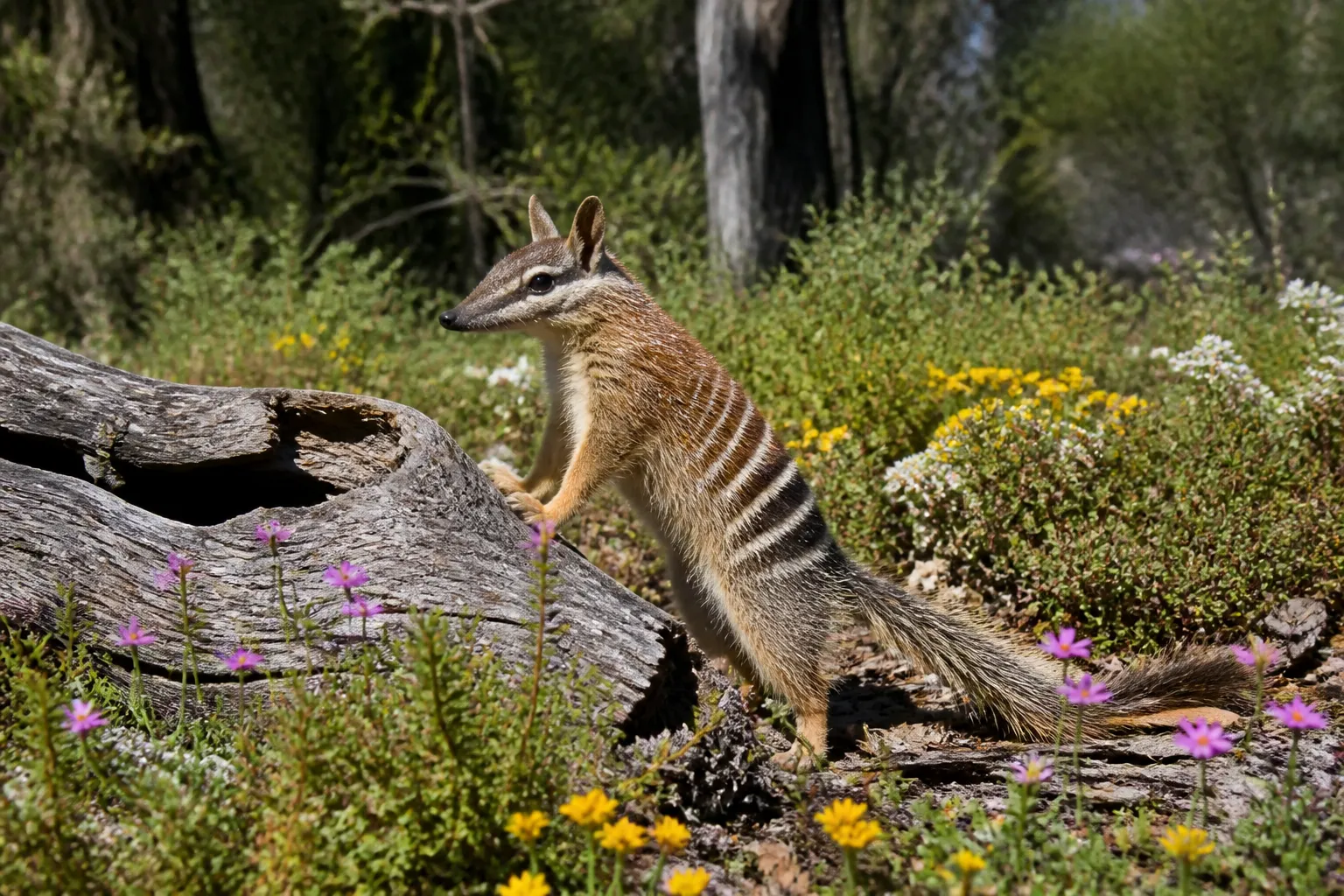
There are currently about 3,000 numbats—rare marsupials—in Australia. In the Driandra forest in the country’s southwest, their population has increased tenfold. The numbat was recently removed from the international Red List of endangered species and reclassified as “near threatened,” according to BBC News.
Numbats were once widespread across the southern half of Australia, but today the Driandra Forest is one of the few places where they can be seen in the wild. Every spring, for two weeks, volunteers and researchers survey forest roads daily, recording sightings of the animals, their GPS coordinates, and their distance from the road. This data is used to assess population density and overall health.
Researcher Tony Friend, who has been working on numbat conservation for nearly five decades, said that in the 1980s, fewer than 50 of these animals remained in Dryandra. During the latest survey, the team spotted eight nambats, including two pairs of young animals. According to Friend, this year’s count was one of the best on record, but conservation efforts must not be halted.
For more breaking news, follow the UA.News Telegram channel.
BBC News cites habitat loss due to development, agriculture, mining, and the logging industry, as well as invasive species, disease, and climate change, as threats to Australia’s wildlife. In Dryandra, devices have been installed that detect feral cats and foxes and spray poison, as these predators pose a threat to local wildlife.
Australia’s official list of extinct species includes 67 entries, but researchers believe the country has lost at least 100 plant and animal species. The rate of extinction is estimated at approximately four species per decade, while the number of species threatened with extinction continues to rise.
Conservationists also warn that the improved status of the numbat could make it more difficult to secure funding for future programs. They cite the brush-tailed betong as an example: after a partial recovery, it was removed from the list of threatened species, but ten years later it was reclassified as threatened in an even worse condition.




