
US Supreme Court allows migration database update ahead of elections — The Hill
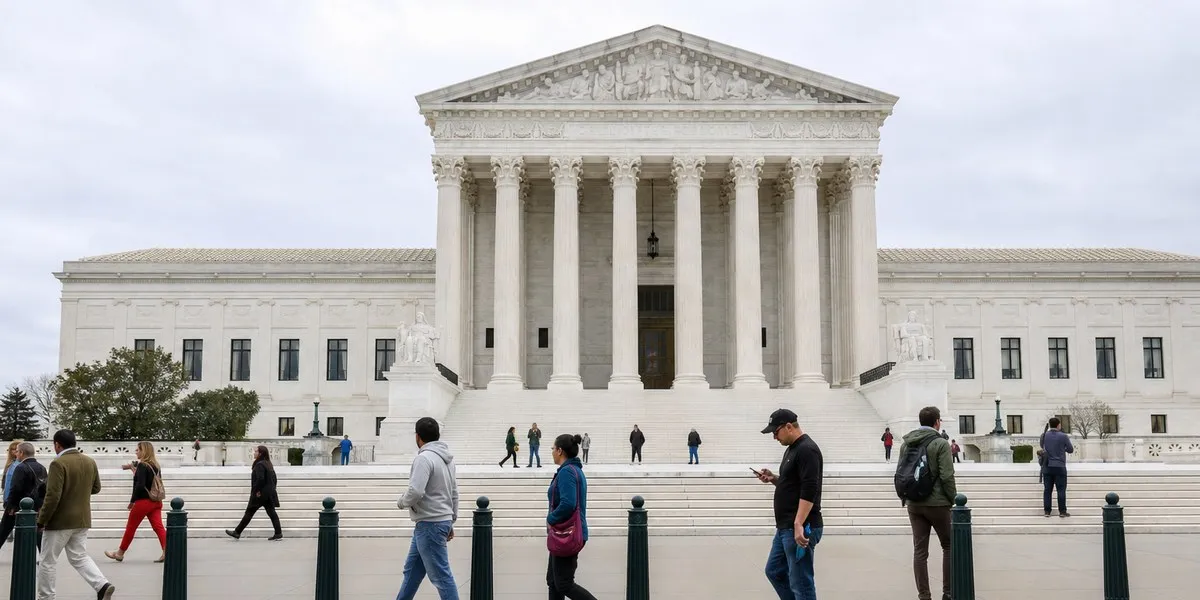
The US Supreme Court allowed President Donald Trump’s administration to introduce an updated SAVE immigration data verification system ahead of the November elections. In an emergency ruling, the court suspended a judicial injunction that had blocked the changes, The Hill reports.
The court concluded that the plaintiffs’ claims were unlikely to succeed. The decision is not a final consideration of the case on its merits: proceedings will continue in lower courts. At the same time, it enables the US Department of Homeland Security to use the updated system for the midterm elections.
Changes to SAVE
The Systematic Alien Verification for Entitlements (SAVE) system is used to determine individuals’ eligibility for certain federal programs. Following Trump’s directive, the Department of Homeland Security modified it so that election officials could verify the citizenship of registered voters.
In particular, the system was connected to Social Security data and bulk queries were permitted. The Trump administration argued that the previous version of SAVE did not contain complete data on US citizens, allowed information to be searched for only one person at a time, and often required an alien registration number or another Department of Homeland Security number that states might not have.
More current news is available on the UA.News Telegram channel Telegram.
Objections from justices and election groups
Three justices whom the publication describes as liberal publicly disagreed with the majority’s decision. Their position was set out by Justice Ketanji Brown Jackson, joined by Sonia Sotomayor and Elena Kagan. According to her, the risk of making voting more difficult or disenfranchising even a few lawful voters outweighs the harm to the government from being unable to take action that it likely lacks the authority to take.
In June, US District Judge Sparkle Sooknanan blocked the update. She concluded that the changes violated the Social Security Act and a federal law governing the disclosure of personal data. The US Court of Appeals for the District of Columbia Circuit declined to overturn her ruling by a two-to-one vote, after which the administration appealed to the Supreme Court.
Election organizations called the update unprecedented. In a court filing, the League of Women Voters said that Congress had not authorized the federal government to create a single database of US citizens and that the government does not have a dataset capable of ensuring accurate real-time citizenship verification.




