
US Navy orders 494 Blackbeard missiles for fighter jets — South China Morning Post
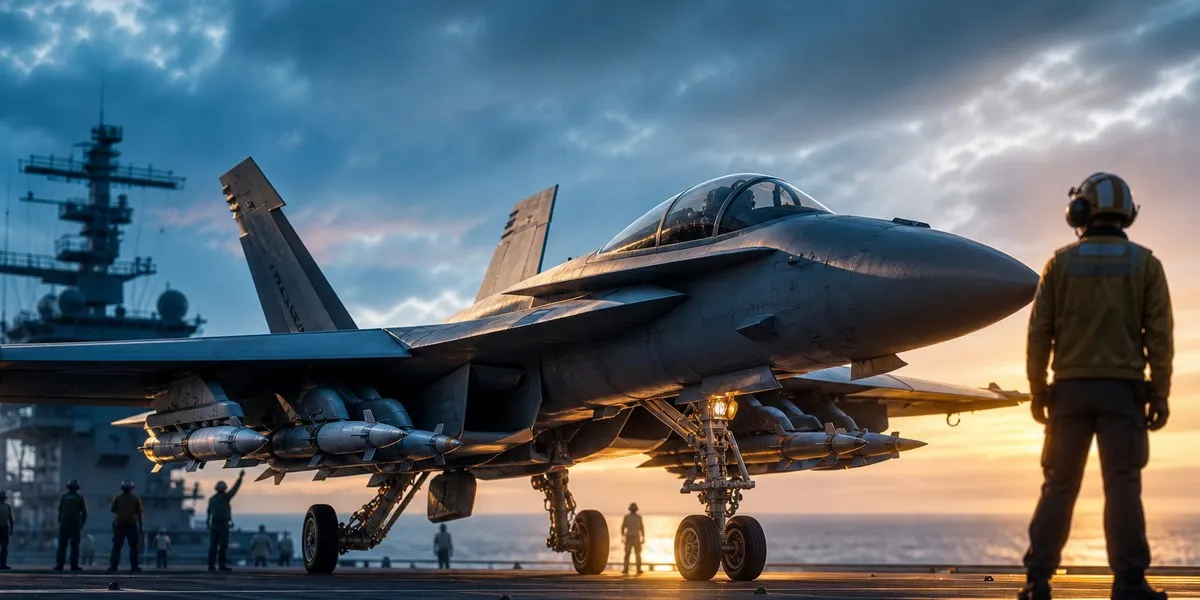
According to the US Naval Institute (USNI), the US Navy ordered 50 pre-production Blackbeard hypersonic missiles in June and another 444 in September. The missile, developed by California-based defense company Castelion, is planned for use from carrier-based F/A-18E/F Super Hornet fighter jets. This was reported by the South China Morning Post.
Blackbeard is intended to strike ships and ground targets and is expected to reach speeds of more than five times the speed of sound. It is being developed with an emphasis on relatively low cost and mass production. According to US Navy forecasts, the average gross price of one missile in fiscal years 2028–2031 will be about $385,000.
Plans for mass procurement
In May, the Pentagon asked Congress for authorization and funding to purchase more than 12,000 Blackbeards over five years for different branches of the armed forces. By comparison, the cost of Lockheed Martin's larger LRASM anti-ship missile was estimated in US Air Force budget documents for fiscal year 2024 at about $3.25 million per unit.
Experts believe that Blackbeard's lower price could allow the United States to build larger stockpiles of such munitions. Mass launches could potentially force Chinese ships to expend interceptor missiles while creating conditions for strikes with heavier anti-ship missiles.
More current news is available on the UA.News Telegram channel Telegram.
Capabilities and limitations
According to USNI News, in September an F/A-18E/F Super Hornet demonstrated the ability to carry two Blackbeards, and the US Navy intends to increase this load to four missiles per aircraft. The US Naval Institute reported that the fleet seeks to achieve initial operational capability as early as this year, although budget projections and a Castelion statement in April pointed to 2027.
Experts interviewed by the publication assess the missile's potential differently. Timothy Heath, founder of the research company Perceptum, believes that Blackbeard could strike radars supporting air defense systems. Lyle Goldstein, director of the Asia Program at the Defence Priorities think tank, suggested that a high-speed strike could independently put a ship out of action. At the same time, the missile's effective range and its ability to strike moving ships have not yet been publicly demonstrated.
Among the main limitations cited are the vulnerability of US aircraft carriers and carrier-based aviation near Taiwan. In Heath's view, Beijing's attacks could force US aircraft carriers to withdraw to a distance at which targets may be beyond Blackbeard's range.




