
Tesla filing describes active rear wing for possible Roadster — Motor1
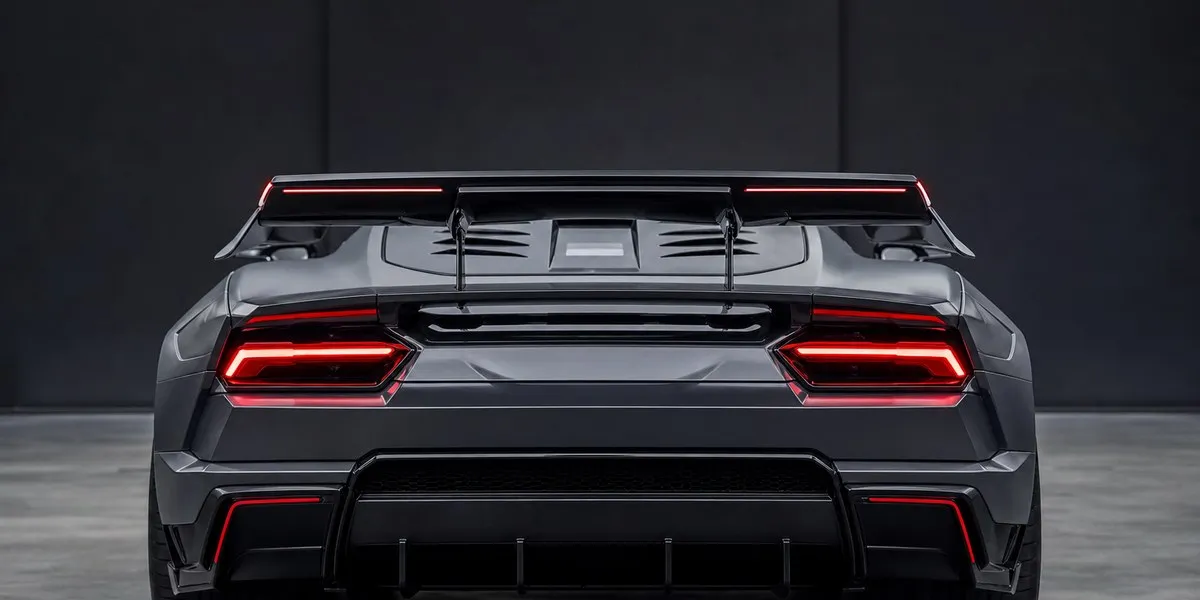
In the United States, Tesla has filed a patent application for an active two-section rear wing that could potentially be used in the next Roadster. According to the description in the application, the design retracts flush with the body when not needed, and in high-downforce mode it can generate up to 700 kg of downforce at speeds above 100 mph.
As Motor1 reports, the U.S. Patent and Trademark Office published the application titled Deployable and Active Rear Wing Assembly with Safety Features on September 24, 2026. The document names David Lemire and James Michael Arthur Crook as inventors. Tesla filed the application in August 2025.
Two elements and rapid adjustment
The wing consists of a main element and a smaller front flap. In the deployed position, a gap of 3 to 15 mm is formed between them, allowing airflow to pass through. According to Tesla’s description, the transition from the stowed state to fully deployed should take less than three seconds, while changing the angle after deployment should take less than a quarter of a second.
More current news is available on the UA.News Telegram channel Telegram.
The system can use data on speed, steering angle, braking, GPS coordinates and autonomous-driving sensor signals to determine the wing’s position. The application also provides for automatic activation of track mode depending on the vehicle’s location.
Low drag and crash protection
One of the modes described in the application is compared with DRS in Formula 1: it is intended to provide zero downforce to reduce aerodynamic drag on straight sections. In the opposite mode, the wing can generate up to 700 kg of downforce, according to the document. After exiting DRS, drag increases by 350 drag counts, according to the application, while returning to the low-drag position reduces it by 250 drag counts compared with the deployed position.
The design also includes a safety mechanism: in the event of a central or angular impact, the wing is to retract until its trailing edge is flush with the rear of the vehicle. At the same time, the patent application does not confirm that this system will be used in a production Roadster.




