
In Kenya, youth turn water hyacinth into biogas — Nation Kenya
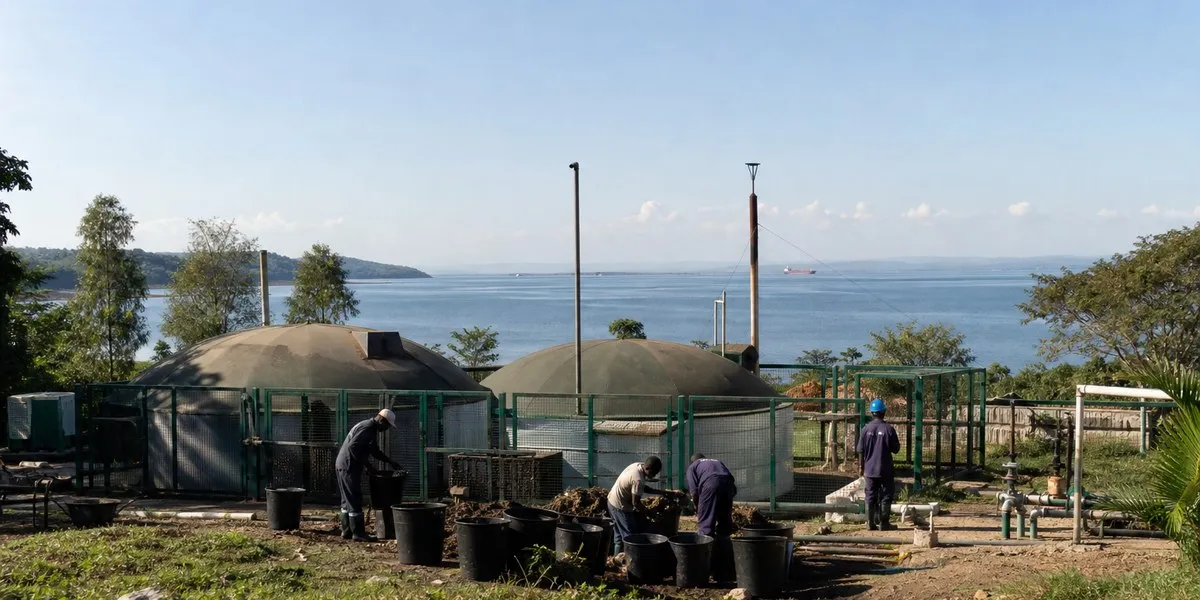
Youth at Dunga Beach in Kisumu County, Kenya, produce biogas from water hyacinth, fish waste and food scraps from local restaurants. The gas is used for cooking and drying fish, vegetables and omena. This was reported by Nation Kenya.
Raw materials for biogas
According to project participant Geoffrey Omondi, the initiators distribute plastic buckets to fish sellers and restaurants in the Dunga area to collect waste. Previously, food scraps were dumped into the lake, and this system, he said, helps keep the beach clean.
Water hyacinth has caused problems for Lake Victoria for years, hindering fishing, water transport and tourism. The youth chose this plant as an accessible raw material because cow manure, which is often used for biogas production, is difficult to find in the fishing community.
Fish entrails, vegetable waste and hyacinth are ground into a thick mass and loaded into about six large biogas reactors. The mixture is stirred at least three times a day to prevent the solid and liquid parts from separating. According to Omondi, gas production begins after about three days.
More current news is available on the UA.News Telegram channel Telegram.
Fuel for fish sellers
A system of pipes supplies biogas to burners used by fish sellers. They pay 100 shillings per day for access to the fuel. The biogas production project was launched in 2017 to offer an alternative to charcoal and find a cleaner energy source.
Separately, the initiative's participants set up a fish dryer with a biogas burner. After cleaning, gutting and cutting, fish is placed on oiled racks, and the temperature is regulated with a valve. According to Omondi, drying tilapia, omena and lake shrimp takes from three to four hours.
Fish seller Margaret Ong'oe said she has used biogas for many years and considers it cleaner and faster for cooking than firewood. The initiators store the liquid residue left after gas production in a tank and sell it to farmers as natural fertilizer: 20 liters cost 200 shillings.




