
In South Korea, 120 college students and about 770 schoolchildren study under Great Books — NPR
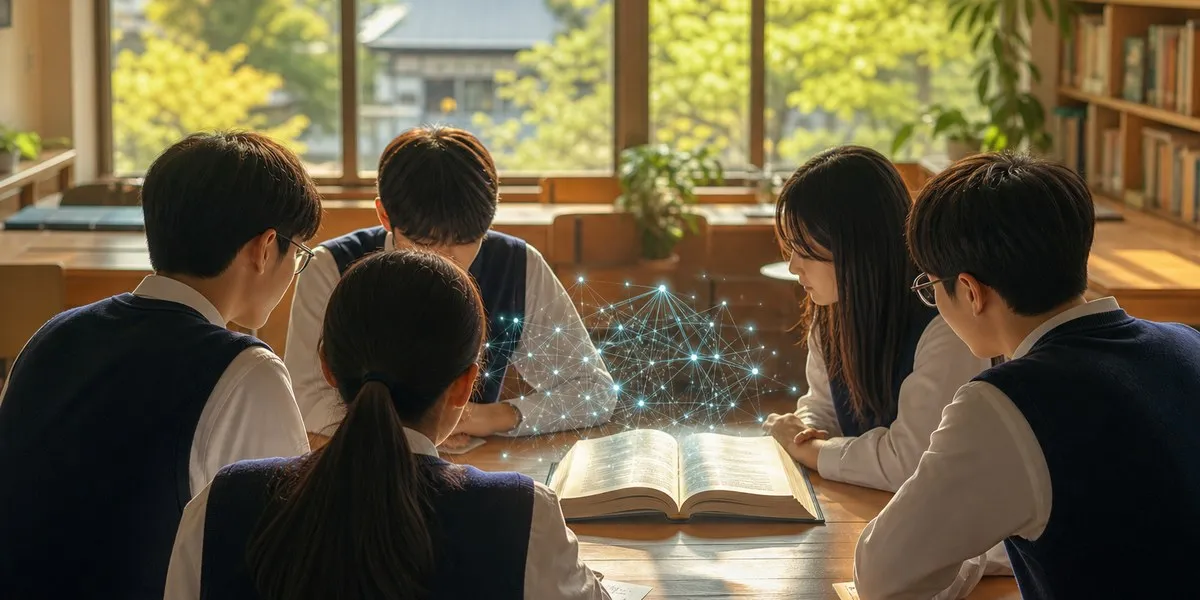
In South Korea, 120 college students and about 770 younger pupils are taking part in the Great Books program, based on the educational model of the U.S. St. John’s College. Last year, the authorities of the city of Chuncheon launched an academic partnership with the college to spread this approach, NPR reports.
Learning through discussions
Program participants read classic texts and discuss them in seminars. In particular, schoolchildren study Mary Shelley’s “Frankenstein,” works by Aristotle, William Shakespeare, Euclid, and Korean authors, including Nobel Prize laureate Han Kang.
Under the Great Books model, instructors do not lecture but guide the discussion. Students do not turn to external sources, including the internet, and instead rely on what they have read, their own reasoning, and exchanges of views with classmates. During one class, students discussed whether Frankenstein’s creature is human and later whether artificial intelligence can be considered human.
More current news is available on the UA.News Telegram channel Telegram.
A response to the spread of AI
Lee Young-hwa, a professor of English language and literature at Incheon National University who co-founded South Korea’s first Great Books program in 2019, believes that the traditional system leaves students little time for reading and reflection because they need to memorize facts for exams.
According to Organisation for Economic Co-operation and Development data cited in the report, 51% of South Korean students use artificial intelligence chatbots for learning at least once a week. Lee Young-hwa said that without the ability to think independently, students will find it difficult to assess the quality of answers generated by AI.
At a Chuncheon high school, program participants also read Martin Luther King Jr.’s 1963 “Letter from Birmingham Jail” and discussed which laws are just and when citizens should obey or disobey them. According to Lee Young-hwa, students connected these questions with the events of 2024, when citizens and lawmakers stopped an attempt by then-President Yoon Suk Yeol to impose martial law.




