
Study: Yarlung Tsangpo runoff may increase by up to 29% — South China Morning Post
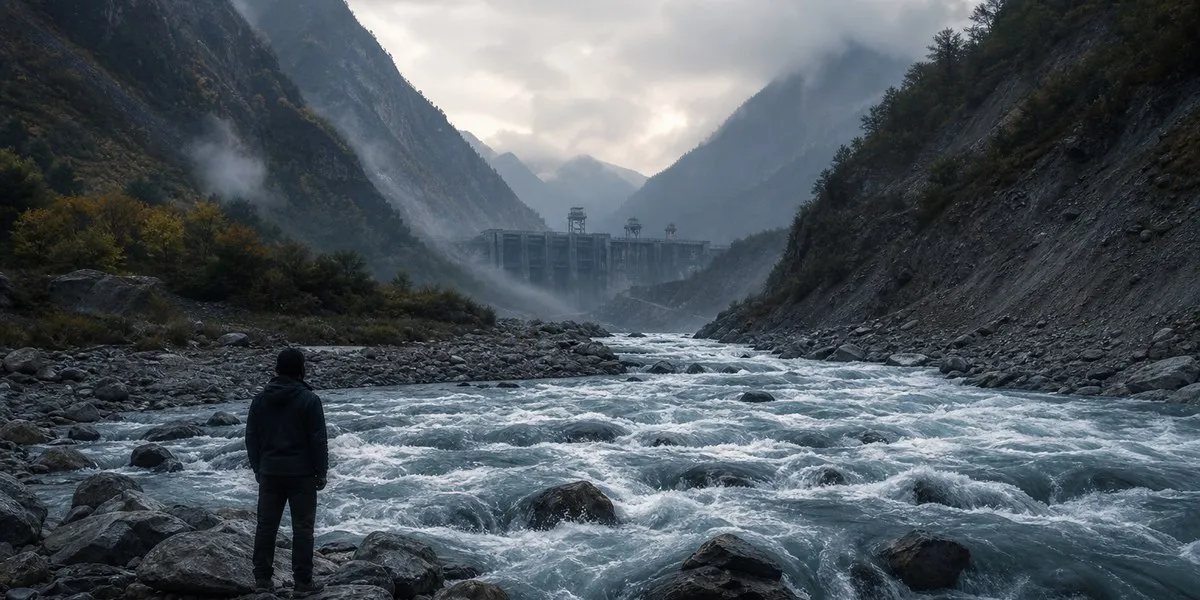
In China, researchers forecast an increase in the runoff of the Yarlung Tsangpo River during the 21st century and a higher probability of extremely high runoff. The river, where the world’s largest planned hydropower project is being built, then flows into India, where it is called the Brahmaputra.
Forecast through the end of the century
As the South China Morning Post reports, scientists from the Chinese Academy of Sciences and Yunnan University modeled monthly runoff near the Nuxia hydrological station for the period from 2030 to 2100. Under moderate- and high-emissions scenarios used by the Intergovernmental Panel on Climate Change, the figure may increase by about 20% and 29%, respectively, compared with the reconstructed historical period.
The researchers noted that future average annual runoff, according to their estimates, will exceed levels recorded both in reconstructed data and instrumental observations. At the same time, not only is average runoff expected to increase, but the probability of events with extremely high values is also expected to be higher.
More current news is available on the UA.News Telegram channel Telegram.
Data spanning seven centuries
To reconstruct the river’s hydrological history, the team used data on the width and density of tree rings. Samples of moisture-sensitive cypresses and spruces were collected in 2008–2020 at 11 high-altitude sites on the southeastern Tibetan Plateau. Together with data from the Nuxia station in the county-level city of Milin, this made it possible to reconstruct runoff for water years from 1325 to 2020.
Over 700 years, scientists identified 14 wet and 14 dry periods. They pointed out that warming on the Tibetan Plateau, which over the past century has occurred about twice as fast as the global average rate, is accelerating glacier melt, permafrost degradation, and reducing the duration of snow cover. The researchers called for future runoff to be considered in water infrastructure planning, transboundary risk assessments, flood-control measures, and the river’s environmental needs.
Dam project
The planned hydropower plant in Medog, also known as Motuo, in southeastern Tibet is expected to have an installed capacity of more than 60,000 megawatts. This is about three times more than China’s Three Gorges Dam, the world’s largest operating hydropower plant. The project has raised concerns in downstream India and Bangladesh over water supply and environmental issues.




