
Qatar’s LNG exports may fall to 0.6 million tonnes in October — Cyprus Mail
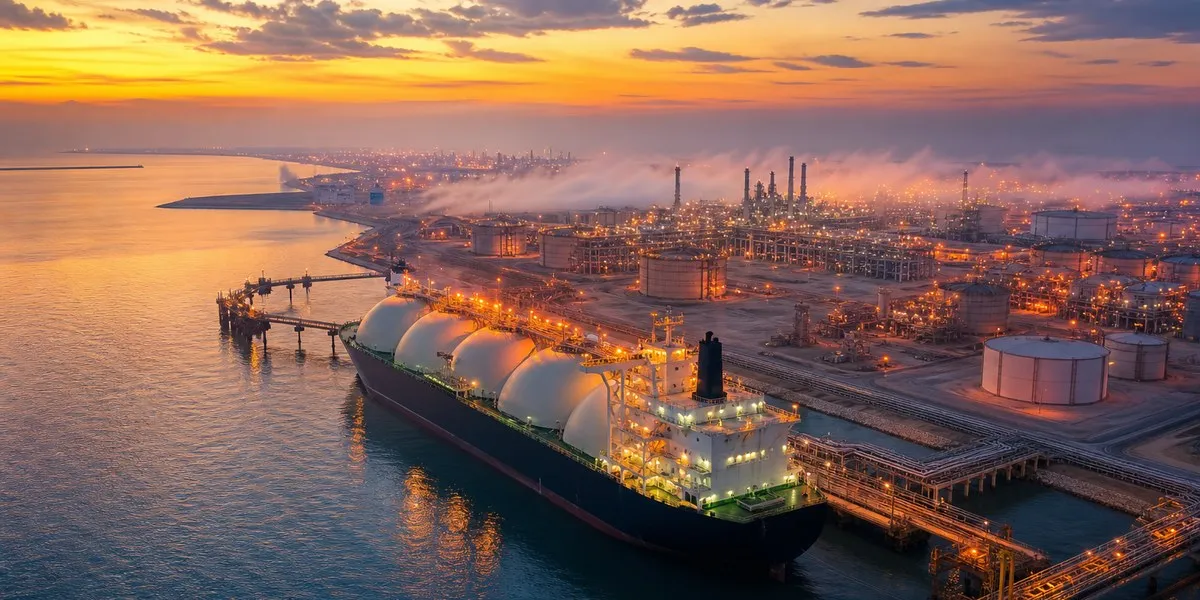
In Qatar, exports of liquefied natural gas remain significantly restricted despite a partial recovery in oil shipments through the Strait of Hormuz. According to Cyprus Mail, analytics company Kpler estimates that Qatari LNG shipments could decline to 0.6 million tonnes in October, down from 1.6 million tonnes in September. The publication notes that the decline is likely linked to an increase in attacks on vessels.
September’s figure was the highest since the start of the conflict, but it amounted to less than a quarter of the pre-war average level, according to Kpler. About one-third of the volume exported in September went to Kuwait, meaning it remained within the Persian Gulf. The remaining cargoes were sent to China, India and other Asian countries.
Oil shipments are recovering faster
Shipments of Middle Eastern oil through the Strait of Hormuz rose in September to around 80% of the pre-war level, reaching 16 million barrels per day, according to Kpler data. This enabled Saudi Arabia, the United Arab Emirates, Kuwait and Iraq to significantly increase production.
At the same time, LNG transportation is recovering much more slowly. Last month, QatarEnergy extended force majeure notices, indicating an inability to deliver cargoes to many customers in Asia and Europe. As Cyprus Mail notes, there are far fewer LNG tankers than oil tankers, and they are more expensive to operate, so carriers are reluctant to pass through the strait when there is a risk of attacks or a prolonged blockade.
More current news is available on the UA.News Telegram channel Telegram.
Constraints on production
Qatar is the world’s second-largest LNG producer after the United States and has capacity of nearly 80 million tonnes per year, or around one-fifth of global capacity. After hostilities began, the country was forced to shut down a significant part of the Ras Laffan complex. Iranian missile strikes, according to the publication, also disabled around 17% of export capacity.
To increase exports, Qatar needs to raise production at the North Field, which it shares with Iran. Condensate is produced alongside gas and requires separation and export. If it cannot be exported reliably, storage facilities may fill up quickly, limiting gas production. Qatar also has limited capacity to store LNG on land and on vessels.
The country is simultaneously implementing a programme to expand capacity to 142 million tonnes of LNG per year by 2030. However, the prospects for this project depend on stable and safe navigation through the Strait of Hormuz.




