
US recognizes helium as a critical material — Global News Canada
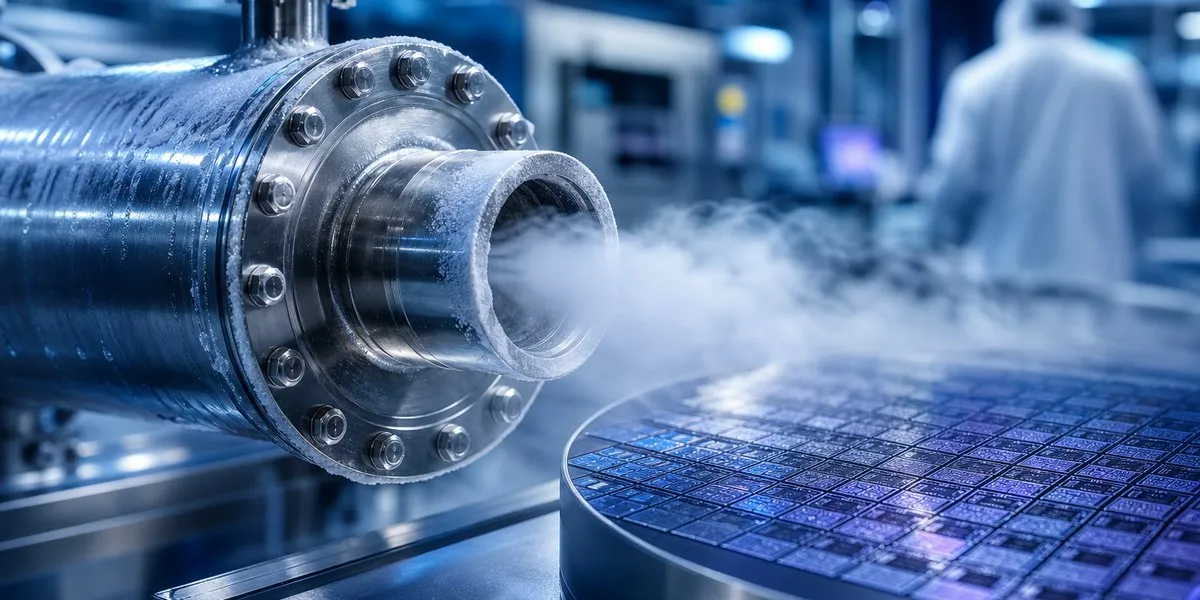
The US Department of Energy has added helium to the list of critical materials due to its importance for semiconductor production and the risks of disruptions in global supplies. As Global News reports, this decision provides broader opportunities for federal funding for helium producers and enhanced government monitoring of the industry.
Role in technology and energy
Helium is mainly obtained as a byproduct of natural gas processing. It is used in wind, solar, and nuclear energy, space exploration, medical imaging, and scientific work. The gas is also necessary for cooling, photolithography, and leak testing in semiconductor manufacturing.
Assistant Secretary of Energy Audrey Robertson noted that helium is difficult to replace due to its properties: it is non-flammable and has the lowest boiling point among gases. According to her, the country needs sufficient volumes of this resource for semiconductors, quantum and supercomputers, as well as superconducting magnets.
More current news is available on the UA.News Telegram channel Telegram.
Supply constraints
The United States is the world's largest producer of natural gas and helium. Other leading producers are Qatar and Russia. In 2025, the United States produced 81 million cubic meters of helium, or 43% of the global volume, of which 38 million cubic meters were exported. Since 2021, US production has remained at approximately 80 million cubic meters annually.
According to the publication, supplies from Qatar declined significantly after Iran closed the Strait of Hormuz amid Iran's war with Israel and the United States, as well as due to strikes on Qatar's infrastructure. Russia, an aggressor state, introduced temporary restrictions on helium exports in April to protect domestic reserves.
The US Department of Energy indicates that the country has significant helium reserves in Wyoming, Kansas, Texas, Oklahoma, Colorado, and Utah. At the same time, existing extraction facilities are operating at the limits of their capacity, while building new plants and obtaining permits require years.




