
Only one of seven Indian company projects is under construction in Nepal — Kathmandu Post
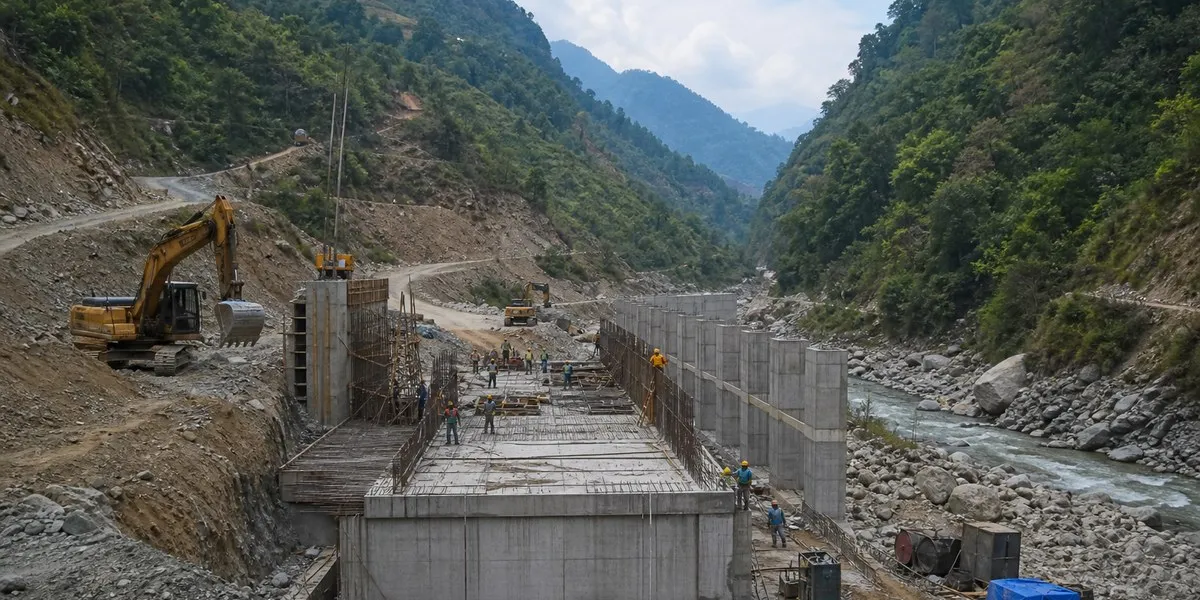
Of the seven major hydropower projects in Nepal with a total capacity of about 4,700 MW awarded to Indian state-owned and private companies, only one is under construction. This is the 900 MW Arun-III project in Sankhuwasabha district. As Kathmandu Post reports, the delays cast doubt on the country’s ability to implement plans to export electricity to India.
In January 2024, Nepal and India signed an agreement on exporting 10,000 MW of electricity over ten years. Nepal expects revenue from electricity supplies and a reduction in its trade deficit with India, which is the main buyer of Nepalese electricity.
The only active project
Construction of Arun-III began in 2018, but the initial five-year schedule has been revised repeatedly, including because of the Covid-19 pandemic. The generating component of the project is 77.5% complete, while the transmission line is 60% complete. Commercial generation was initially planned to begin by mid-April 2025, but the latest completion deadline has been moved to mid-March 2028.
More current news is available on the UA.News Telegram channel Telegram.
The project is being implemented by SJVN Arun-3 Power Development Company, a subsidiary of India’s state-owned SJVN Limited. Nepal is to receive 21.9% of the electricity generated by Arun-III free of charge, as well as royalties. A 253-kilometer, 400 kV transmission line is being built in parallel to connect the power plant with Sitamarhi in India.
Other projects and lines
Projects whose construction has not yet begun include the 900 MW Upper Karnali, the 679 MW Lower Arun, Arun-IV, West Seti, and Seti River-6. For Upper Karnali, Nepal’s Investment Board has accepted financing documents, allowing the project to move into the construction process. Negotiations on project development agreements are continuing for West Seti and Seti River-6.
Meanwhile, Nepal and India are expanding their cross-border power grid. Electricity imports and exports are already carried out through the Dhalkebar–Muzaffarpur line, while the under-construction Dhalkebar–Sitamarhi line is expected to provide export capacity of up to 1,650 MW. The Butwal–Gorakhpur line provides for a further up to 200 MW of exports.




