
Varda has three spacecraft in orbit, one growing crystals of a potential cancer drug — The Guardian
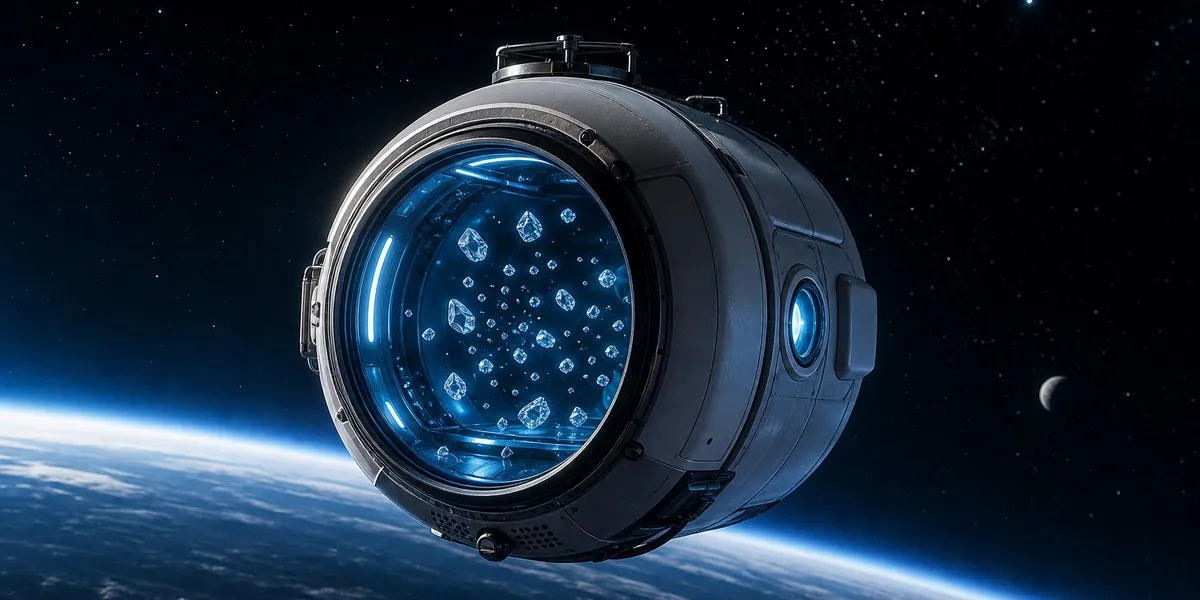
US-based Varda Space Industries simultaneously has three autonomous spacecraft in low Earth orbit, one of which is growing crystals of a potential cancer drug in microgravity. The company launched two spacecraft on a single rocket on October 1 and the third on October 20. The other spacecraft are testing thermal protection materials and navigation systems before returning through the atmosphere at hypersonic speed, The Guardian reports.
Crystals in microgravity
On Earth, particles in liquids settle under the influence of gravity, while differences in density create flows. This can hinder crystal growth. In microgravity, crystals can form in a more orderly way, explained Megan Christian, space manufacturing mission manager at the British organization Satellite Applications Catapult.
For pharmaceutical companies, the size, shape and structure of active ingredient crystals matter: they determine a drug's solubility, stability and method of administration. In some cases, this may make it possible to reformulate medicines that are currently administered intravenously into drugs for injection.
Autonomous laboratories in orbit
Varda uses uncrewed spacecraft delivered into orbit by SpaceX rockets. Inside are miniature laboratories where materials can be processed without astronauts' involvement. After the experiments are completed, the capsule separates from the spacecraft, enters the atmosphere and descends by parachute in an uninhabited area of Earth.
More current news is available on the UA.News Telegram channel Telegram.
The company has already returned capsules from orbit and plans another seven missions in 2027 and ten in 2028. Frequent launches are important for drug development, as long waits between experiments do not match the pace of modern pharmaceutical research, said Varda's chief strategy officer Michael Reilly.
Commercial and regulatory barriers
Manufacturing in space has been studied for decades, including on the International Space Station, which is planned to be retired around 2030. British company BioOrbit has already delivered a microwave-sized laboratory to the ISS as a step toward producing cancer drugs for self-administration.
At the same time, experts stress that orbital manufacturing will not be economically viable for all products. Key tasks include proving that the advantages of microgravity justify launch costs and ensuring stable reproducibility of results. According to the publication, the UK regulator MHRA is to publish a plan on applying existing drug circulation rules to medicines produced in orbit.




