
Researchers detect formation of reactive compounds on microplastics in water — Ars Technica
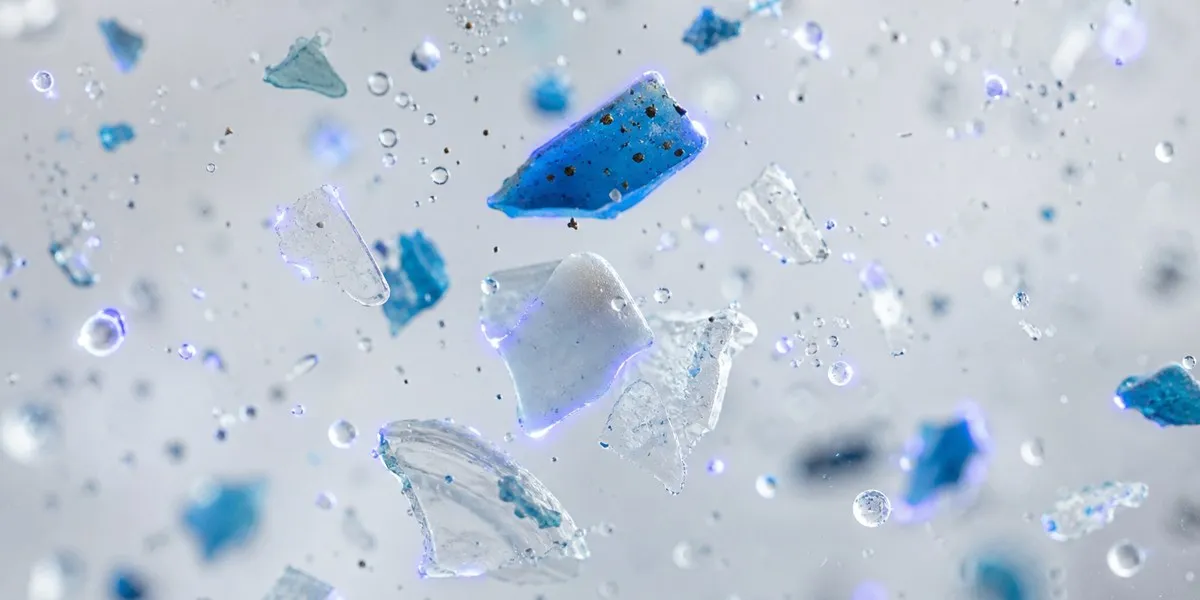
Scientists have found that hydroxyl radicals — highly reactive oxygen species — can form at the interface between microplastic particles and water. This was shown by experiments conducted by the team of Columbia University chemist Wei Min, Ars Technica reports. At the same time, the authors emphasize that the question of whether microplastics can directly cause disease in humans is still being studied.
Radicals on particle surfaces
In one experiment, scientists mixed polystyrene powder with water containing the yellow dye methyl orange. Over 10 days, the solution nearly lost its color and lost about 90% of the dye, which is broken down by reactive oxygen species. In ethanol and other solvents, the dye remained unchanged, indicating water's role in the process.
Electron spin resonance confirmed the presence of hydroxyl radicals in the water-and-polystyrene mixture. Another method, a fluorescent sensor, showed that the signal accumulated specifically on the surfaces of the plastic particles.
Researchers tested six common types of plastic: polyethylene, polypropylene, polystyrene, PVC, PET, and acrylic. All of them produced radicals, but the hydrophobic polyethylene and polypropylene showed the greatest activity. PET and acrylic, whose chemical groups attract water, were the least active.
More current news is available on the UA.News Telegram channel Telegram.
Effects on proteins and cells
The team suggests that the structure of several layers of water molecules changes near a water-repellent plastic surface. Modeling showed that under such conditions, hydroxide ions require less energy to form radicals. A negative electric charge that the plastic surface accumulates in water may additionally contribute to this.
To check whether the results could be explained by sample contamination, the scientists used several independent methods of detecting radicals. They also added a surfactant that coated the plastic and disrupted the water layer near its surface. As the amount of this substance increased, the particles' charge and the number of radicals decreased. At the same time, Wei Min acknowledged that the influence of impurities cannot be completely ruled out.
In subsequent tests, the protein lysozyme formed aggregates on the plastic surface, while adding caffeine, which absorbs radicals, largely stopped this process. Mouse red blood cells that came into contact with polystyrene particles broke apart into fragments; the level of damage for different types of plastic correlated with the number of radicals formed and persisted in blood serum.
The study was conducted mainly using fresh laboratory powder rather than particles that had been in the environment for a long time. Older and more oxidized particles produced somewhat weaker signals. The scientists also did not assess the effect of microplastic size, although they suggest that nanoparticles with a larger surface area may have a stronger effect. The team named assessing this mechanism's contribution to biological problems in animals and humans as its next task.




