
MIT develops implant for delivering drugs against glioblastoma — News-Medical
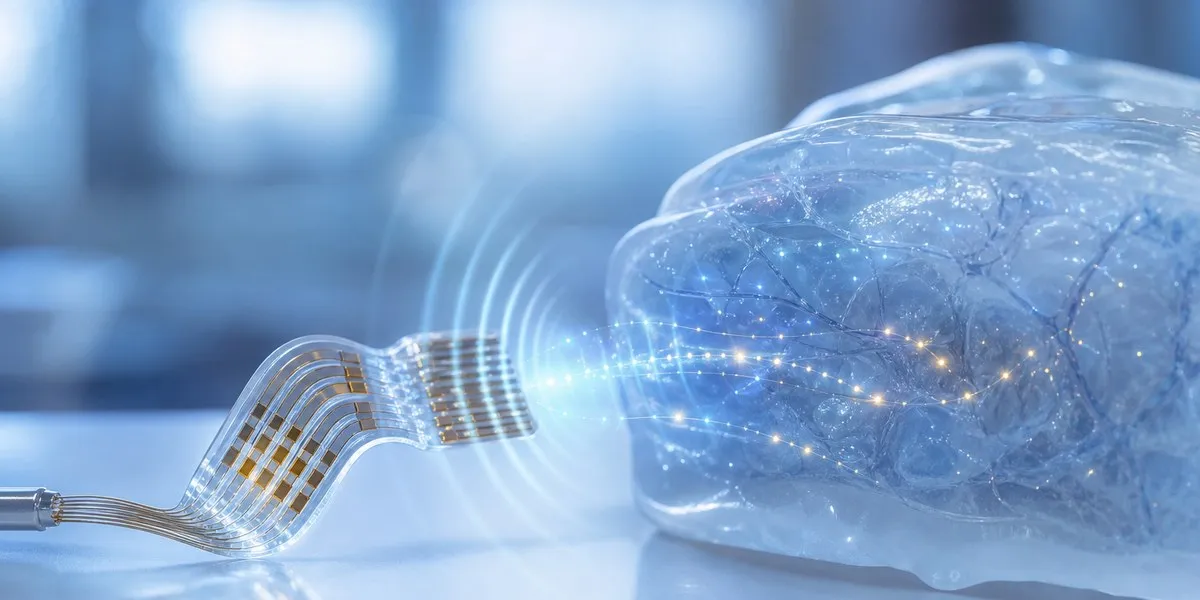
Researchers at the Massachusetts Institute of Technology have developed an implanted device for prolonged drug delivery to the brain, which could potentially be used after surgery to remove glioblastoma. The device has a drug reservoir and an array of 24 miniature ultrasound transducers intended to help molecules spread farther through brain tissue.
As News-Medical reports, the development was named LUCID — Long-term Ultrasound-enhanced Convective Injection Device. It is a flexible implant as thick as a sheet of heavy paper: the drug-delivery cannula was 3D-printed directly onto the ultrasound transducer array.
How the device works
The LUCID reservoir holds about 100 microliters of fluid. The drug is supplied through a passive osmotic pump, while the ultrasound exposure parameters can be adjusted wirelessly via Bluetooth. The device is also equipped with a small battery that can be charged wirelessly.
More current news is available on the UA.News Telegram channel Telegram.
Ultrasound waves create convective flows that can carry molecules over a greater distance. Mechanical vibrations can also temporarily increase the permeability of the blood-brain barrier. The researchers expect this will make it possible to expand therapeutic coverage of the area where tumor cells may remain after surgery.
Results of the first tests
In tests on a gel-like tissue model, delivery using ultrasound ensured significantly wider molecular distribution than without it. The system was also tested in mice using an MRI contrast agent: after activation of the ultrasound array, it spread farther through the brain.
The results were published in the journal Device. The scientists noted that the technology could potentially be used in the future not only for small molecules, but also for immunotherapy, nucleic acids, and gene therapies. For use in patients, they propose placing the cannula and ultrasound array inside the skull, while positioning the battery and electronic components outside.




