
Permanent daylight saving time in the US would add 2 billion dark school trips — News-Medical
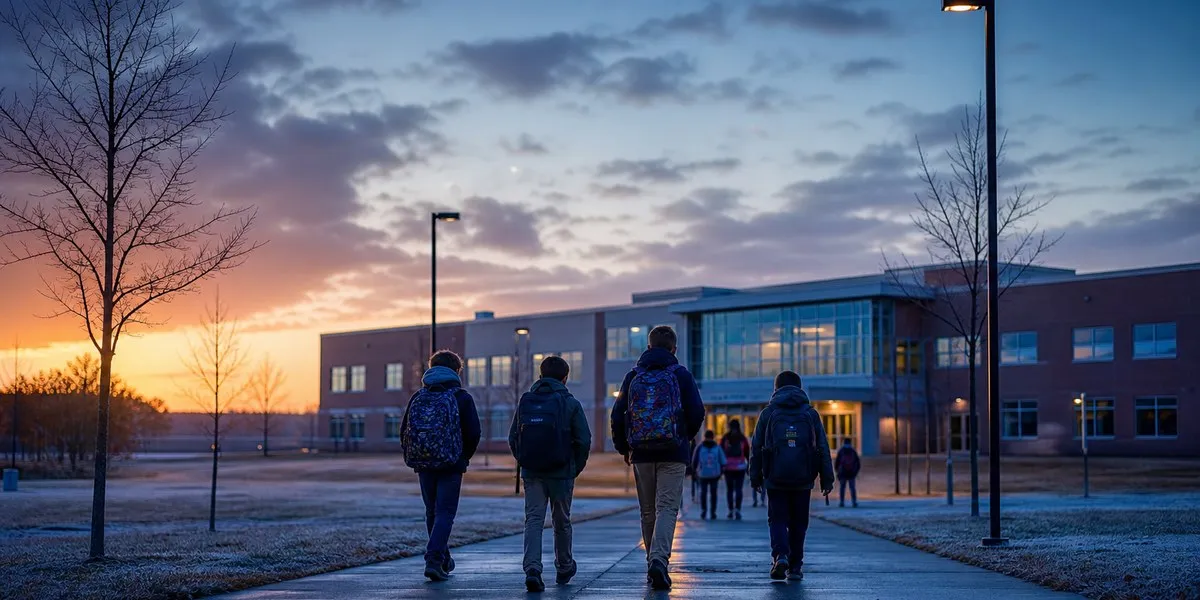
Researchers at the University of Washington calculated that introducing permanent daylight saving time in the United States would mean at least 2 billion additional school trips by students in darkness compared with the current system of seasonal clock changes. As News-Medical reports, the US House of Representatives approved a bill on permanent daylight saving time in the summer, but the document is currently not advancing in the Senate.
Calculations for states
Scientists analyzed data from 14 of the 19 states that had preliminarily approved such a transition. The calculations took into account school start times, the number of students, and the geographical location of schools. According to the authors' estimates, the number of school trips in darkness in Washington state would increase by nearly 35 million, and by 71 million in Georgia.
The change would affect communities at the western edge of time zones and areas with early school start times most strongly, the researchers concluded. In Mississippi and Alabama, where the average school start time falls before 8:00, the number of such trips could rise from about 2 million to more than 20 million in each state.
More current news is available on the UA.News Telegram channel Telegram.
Darkness and child safety
The authors also analyzed US data on traffic collisions. By their estimate, the likelihood of a fatal crash involving a school-age pedestrian during dark morning hours was approximately twice as high as after sunrise. The study was published on October 29 in the journal Current Biology.
In their nationwide assessment, the scientists assumed that students leave home at around 8:00. The study's lead author, Guadalupe Rodriguez Ferrante, noted that this is a rather late time, so the actual number of trips in darkness may be higher. The researchers also indicated that permanent daylight saving time could negate the benefits of later start times for high school students, introduced with consideration for the circadian rhythms of adolescents.




