
Signals predicting words found in the hippocampus under anesthesia — ScienceDaily
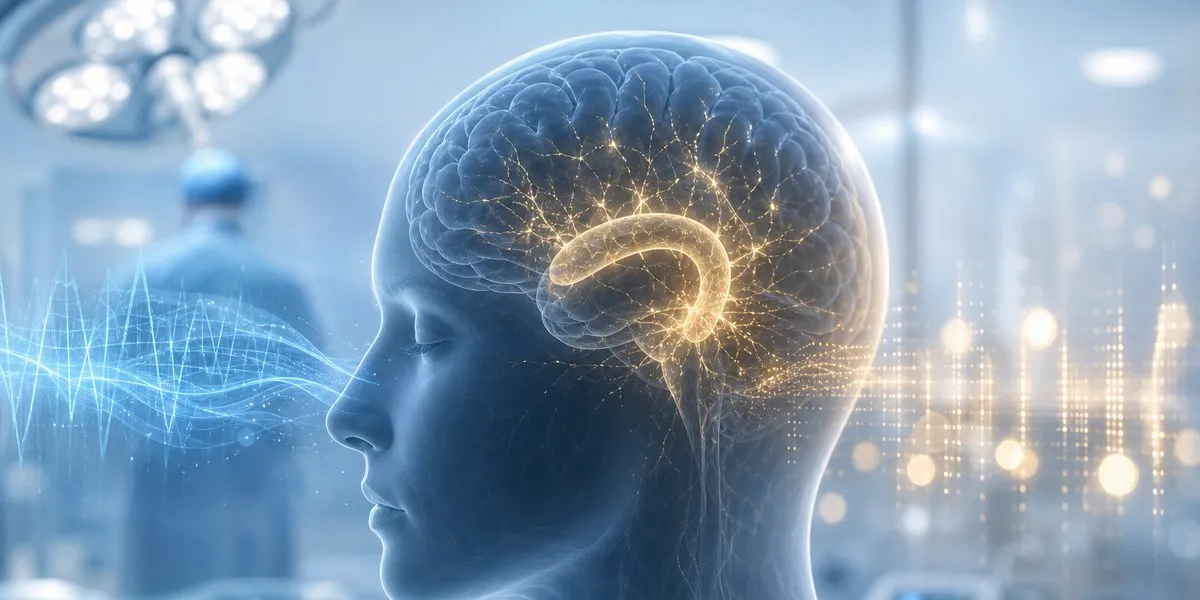
Researchers at Baylor College of Medicine found that the brains of patients under general anesthesia can process speech signals, distinguish word categories, and contain information suitable for predicting the next words in a sentence. The findings were published in the journal Nature, ScienceDaily reports.
Recordings of hippocampal activity
The study involved patients undergoing epilepsy surgery under general anesthesia. This allowed scientists to record activity in the hippocampus, a structure in the temporal lobe of the brain that plays an important role in learning and memory formation.
The team used Neuropixels probes, which can simultaneously record electrical signals from hundreds of individual neurons. During the first experiment, patients were played sequences of repeated tones, with a different sound appearing from time to time. Hippocampal neurons responded differently to such deviations and became better at distinguishing unusual tones over the course of the experiment. The authors link this to signs of neuroplasticity — the brain's ability to change its responses based on experience.
Response to words and prediction
In another part of the study, patients under anesthesia were played short stories. Patterns of neuronal activity contained information about different word categories, including nouns, verbs, and adjectives. According to the authors, this indicates that the hippocampus responded not only to sounds but also to semantic properties of speech.
More current news is available on the UA.News Telegram channel Telegram.
The scientists also identified information in neural activity that could be used to predict words that were to appear later in a sentence. This mechanism is called predictive coding: the brain uses previous context and acquired experience to form expectations about subsequent information.
Study limitations
The researchers stress that the results do not mean that patients under anesthesia consciously understood the stories. The work shows that certain complex information-processing processes may continue without awareness. At the same time, the experiments were conducted using one type of general anesthesia and focused only on the hippocampus. It is currently unknown whether similar processes persist during sleep, coma, or under other anesthesia methods.
The authors also believe that further study of such signals could be useful for developing brain-computer interfaces and communication-support technologies for people who have lost the ability to speak due to injuries or neurological diseases.




