
In the US, personalized gait modification may reduce knee osteoarthritis pain — ScienceDaily
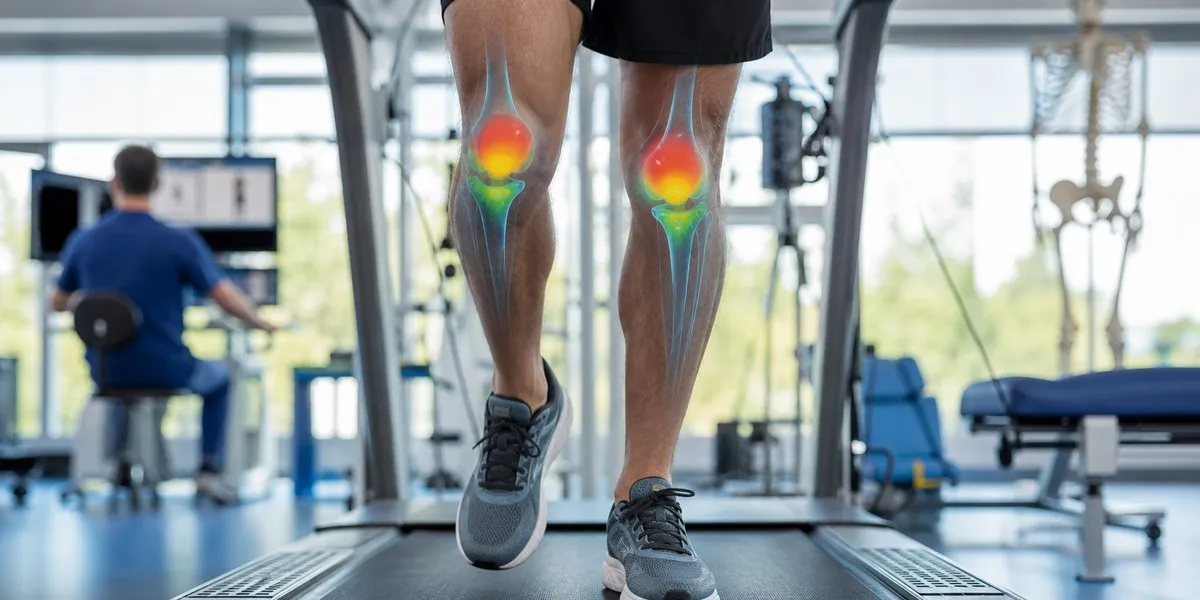
Researchers in the United States found that an individually selected change in foot position while walking may reduce pain in people with knee osteoarthritis. As ScienceDaily reports, in a year-long randomized placebo-controlled study, participants who received personalized gait training reported more noticeable pain relief than the control group.
How the study was conducted
The trial involved 68 people with mild or moderate osteoarthritis of the medial, or inner, compartment of the knee. At the beginning of the study, they underwent MRI scans and walked on a special treadmill with sensors. Scientists tested turning the toes inward or outward by 5 or 10 degrees and selected for each participant the option that best reduced the load on the affected area of the knee.
Half of the participants received personalized recommendations on a new foot angle, while the other half underwent similar sessions but maintained their usual foot placement. Both groups attended six weekly training sessions with biofeedback: a device on the lower leg vibrated when the foot deviated from the specified position. After the sessions ended, participants were advised to practice the new technique daily for at least 20 minutes.
More current news is available on the UA.News Telegram channel Telegram.
Results after one year
After one year, the average reduction in pain on a scale from 0 to 10 was 2.5 points in the personalized training group and 1.3 points in the sham-procedure group. In an exploratory analysis, a clinically significant reduction in pain was recorded in approximately 91% of participants in the main group and 66% of participants in the comparison group.
MRI also showed slower worsening of the T1rho measure, which is used to assess changes in cartilage composition, in the medial compartment of the knee. At the same time, another MRI measure showed no statistically significant difference between the groups. The results do not mean that cartilage was restored or that disease progression can be stopped.
The authors stress that the method should not be used independently by simply turning the feet inward or outward. For some people, turning the toes inward proved beneficial, while for others, turning them outward was beneficial, and an incorrectly selected option may fail to reduce or may even increase the load on the knee. The study included only selected patients for whom at least one of the gait patterns reduced joint load.




