
Scientists identify gamma-delta T cells capable of attacking small-cell lung cancer — ScienceDaily
Researchers at the Walter and Eliza Hall Institute of Medical Research (WEHI) have identified a type of immune cell capable of recognizing and destroying small-cell lung cancer cells. These are gamma-delta T cells, which can attack tumors even when they evade detection by conventional immune cells, ScienceDaily reports.
Link to treatment response
The study results were published in the journal Cancer Cell. An analysis of data from the IMpower133 and CASPIAN clinical trials showed that patients with stronger gamma-delta T-cell signatures were among those who benefited most from immunotherapy. According to the researchers, higher numbers of these cells in tumors were also associated with longer patient survival.
Small-cell lung cancer is one of the most aggressive forms of the disease: fewer than 7% of patients survive for five years after diagnosis. Tumors of this type often evade immune surveillance, meaning that only a small proportion of patients have a long-term response to immunotherapy.
More current news is available on the UA.News Telegram channel Telegram.
Testing on miniature tumors
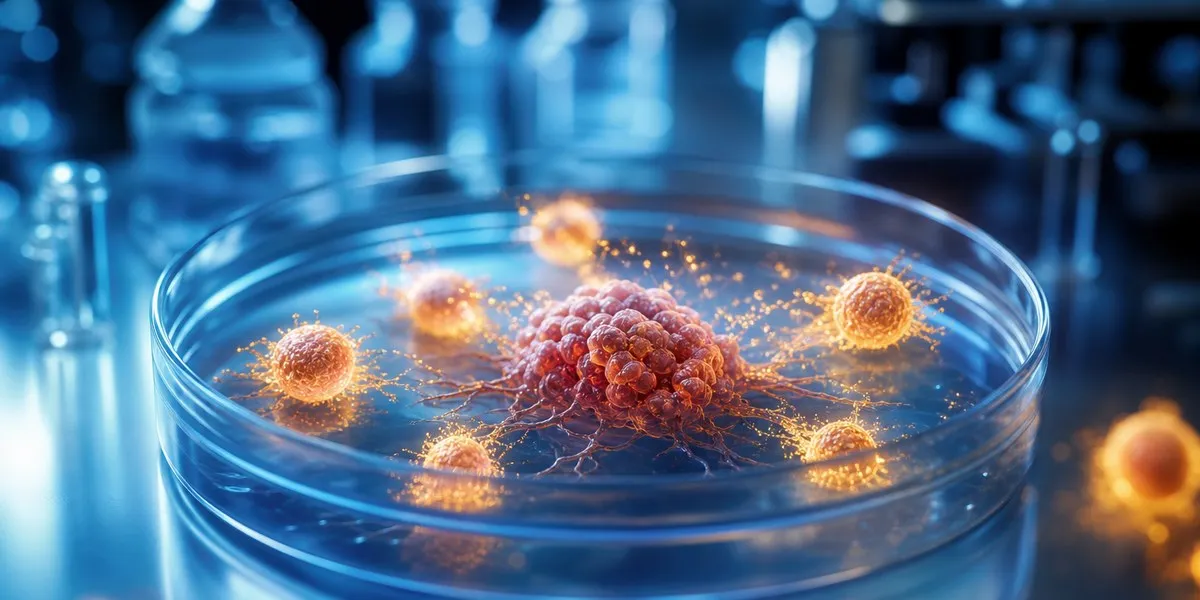
The scientists created laboratory models of miniature tumors using tissues donated by patients through the Victorian Cancer Biobank in collaboration with the Royal Melbourne Hospital. Gamma-delta T cells isolated from the blood of the same patients were added to these models. In laboratory experiments, the cells effectively detected and destroyed cancer cells.
The team also tested the effects of two drugs: tarlatamab, approved for the treatment of small-cell lung cancer, and zoledronate, which is used for osteoporosis and cancer-related bone diseases. Zoledronate increased the number of available gamma-delta T cells and improved their ability to recognize tumors, while tarlatamab helped bring immune and cancer cells together. Their combination enhanced the destruction of cancer cells in laboratory models.
The researchers are also considering an approach involving immune cell transfer: the cells can be collected, multiplied outside the body, and returned to the patient. WEHI, together with scientists from the Doherty Institute, is working on the further development of this area to create a new class of immunotherapy drugs against small-cell lung cancer.




