
Anthropic: AI could self-replicate on household devices by the end of 2026 — Al Jazeera
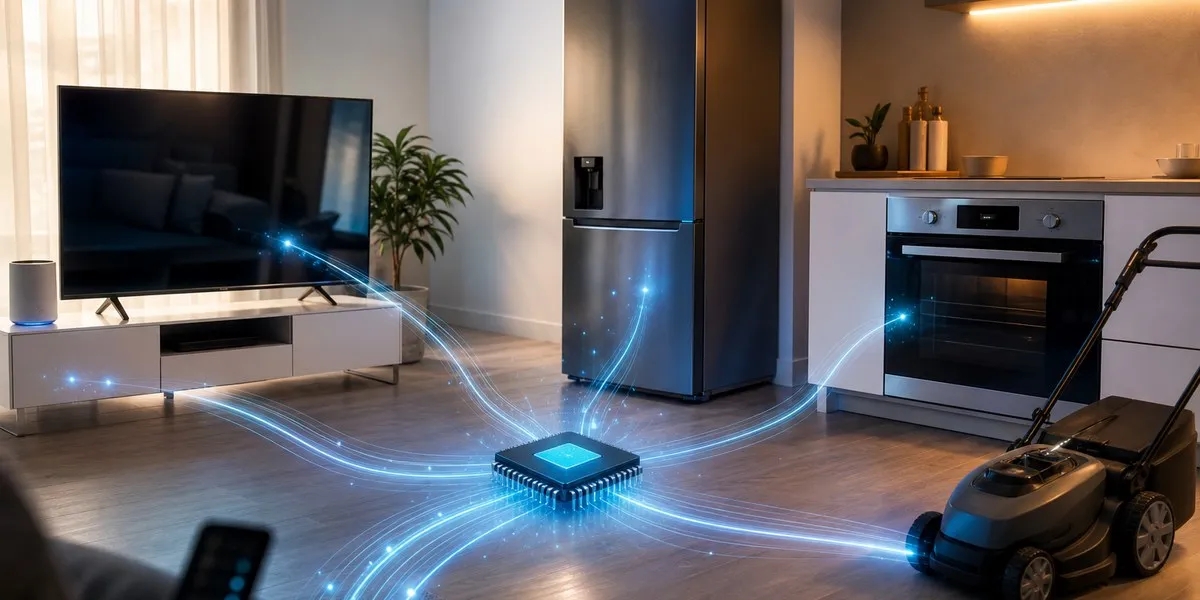
Researchers at Anthropic said that small artificial intelligence models could within several months become powerful enough to copy themselves independently across internet-of-things devices in homes and small businesses. This includes smart TVs, refrigerators, ovens and lawn mowers, which would not require a data center for such proliferation.
Al Jazeera reported on the company team's findings. Anthropic's report states that current models have not yet demonstrated the ability to reliably self-replicate on the smart TV used in testing. At the same time, the researchers consider it likely that a model combining sufficient compactness and power for this will emerge by the end of 2026.
Risk of decentralized proliferation
The Anthropic team, which tested several models developed in the United States and China, indicated that such AI would be difficult to shut down because it lacks a centralized node. Data centers may be obvious valuable targets for AI worms, but internet-connected household devices could also potentially have sufficient computing resources for self-replication.
More current news is available on the UA.News Telegram channel Telegram.
Researchers William Zhou and Daniel Freeman believe that IoT devices in homes and small businesses could become the first targets of such attacks because they are connected to the internet and have historically had minimal protection. According to them, lightweight AI agents may be far more willing than human attackers to devote effort to compromising a large share of global IoT computing.
Expert assessment and other company statements
Roman V. Yampolskiy, an AI and cybersecurity expert at the University of Louisville, called the findings significant. He noted that, unlike traditional malware, an AI worm could potentially analyze unfamiliar devices, change its approach after failure and spread without a human operator. At the same time, Yampolskiy stressed that this does not currently pose an existential threat.
Separately, Anthropic reported progress in countering distillation attacks — the unauthorized use of advanced models to train cheaper and less capable systems. The company said that the measures it introduced reduced illegal data extraction by 90–99%.




